
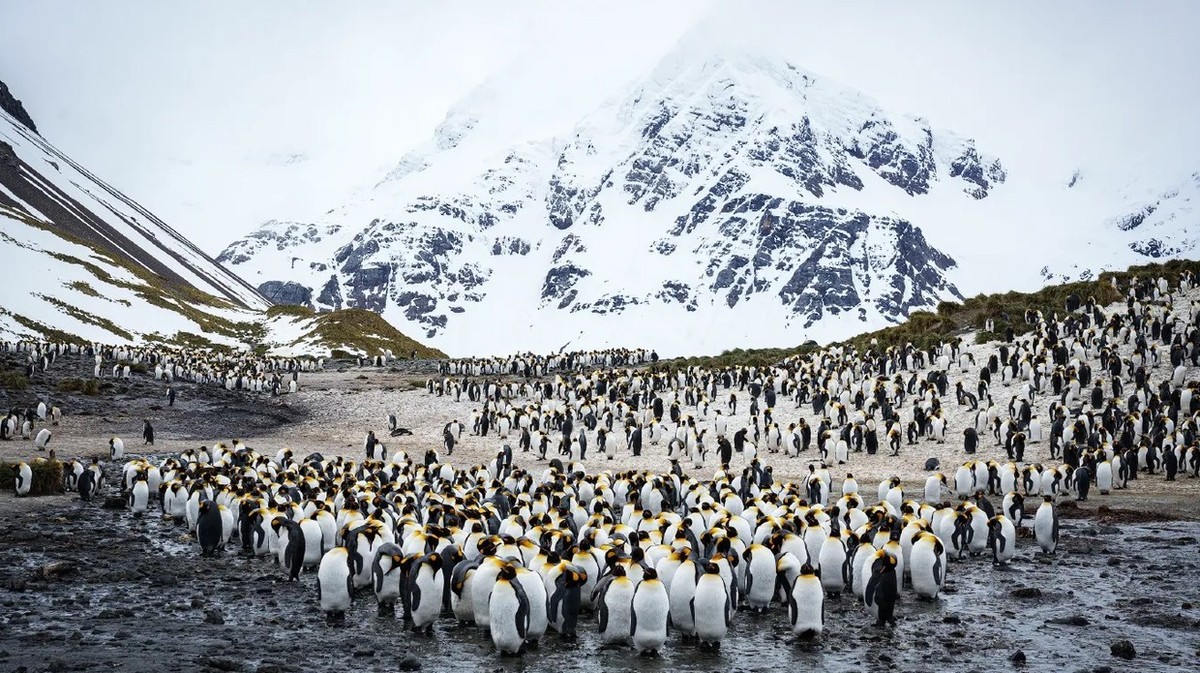
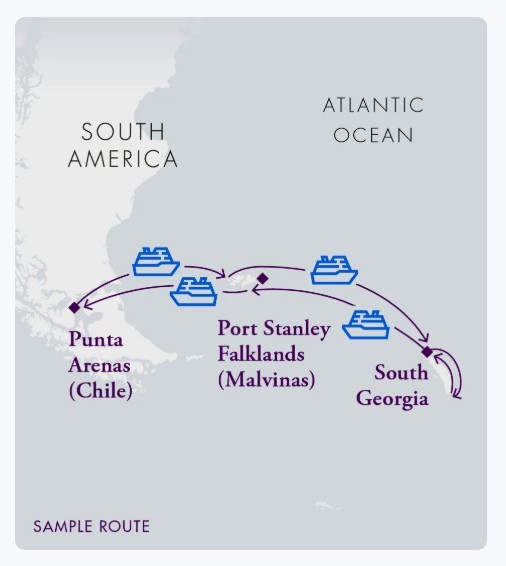
Set over 300 miles east of Patagonia, the Falkland Islands are in the heart of the South Atlantic Ocean. The islands host an impressive array of wildlife, from the world’s largest colony of Black-Browed albatrosses to three species of penguins not found in Antarctica: the golden-haired Rockhopper penguin, the black-banded Magellanic penguin, and the tangerine-cheeked King penguin. Although its proximity to Argentina suggests it was once part of South America, scientists believe the islands were once attached to the African continent. Consequently, this has lead to theories that the archipelago’s flora and fauna arrived through dispersal.
Home to a similar climate and topography as Tierra del Fuego, the archipelago’s two main islands, East Falkland and West Falkland, are the most commonly traversed. Although around 700 more rocky islands and islets make up the archipelago and cover a nearly 4,700 square-mile area.
With a long history of disputes over the land, the Falkland Islands are marked by times of war. France, Spain, and Argentina have all claimed the Falkland Islands at some point throughout history. However, since 1833 the United Kingdom claimed the archipelago as an overseas territory. On the other hand, today, around 3,200 settlers call the capital of Stanley in East Falkland home. Above all, the archipelago’s wildlife on land and sea truly set it apart. Creatures like the rare Striated caracara are often sighted circling above the area’s rocky coastline. Similarly, marine mammal species like Elephant seals, Fur seals, and Peale’s dolphins swim throughout the kelp forests of the icy South Atlantic waters.
- Diverse Penguin Species - Home to five penguin species including the Rockhopper and King penguins.
- Port Stanley - A charming seaside town that blends British heritage with stunning natural surroundings.
- Abundant Seabirds - A paradise for birdwatchers and wildlife enthusiasts.
Availability is always subject to confirmation. Please check with us before booking flights
Prices quoted here are often dependent on currency fluctuations. Please check with (01432 507450 or info@small-cruise-ships.com) for the very latest price, which may well be cheaper than the one advertised here.






Prices quoted here are often dependent on currency fluctuations. Please check with (01432 507450 or info@small-cruise-ships.com) for the very latest price, which may well be cheaper than the one advertised here.
Prices quoted here are often dependent on currency fluctuations. Please check with (01432 507450 or info@small-cruise-ships.com) for the very latest price, which may well be cheaper than the one advertised here.

Magellan Discoverer
Vessel Type: Small Ship Expedition
Length: 94 m
Passenger Capacity: 76
Built: 2026
Antarctica21's New State-Of-The-Art Polar Vessel
We are thrilled to announce an exciting development in the world of Antarctic exploration. Building on our legacy of providing boutique, small-ship expeditions to the White Continent, Antarctica21 is proud to introduce the latest addition to our fleet: Magellan Discoverer, set to embark on voyages in the 2026-27 Antarctic season.
Magellan Discoverer is a promise of innovative design and environmental stewardship, crafted as a sister ship to the esteemed Magellan Explorer. While mirroring its sibling in elegance and style, Magellan Discoverer charts its own course with remarkable enhancements.
Magellan Discoverer was built at the ASENAV shipyard in Valdivia, Chile, the same shipyard that built Magellan Explorer.
Magellan Explorer
| Length: | 91 metre |
|---|---|
| Built: | 2018 |
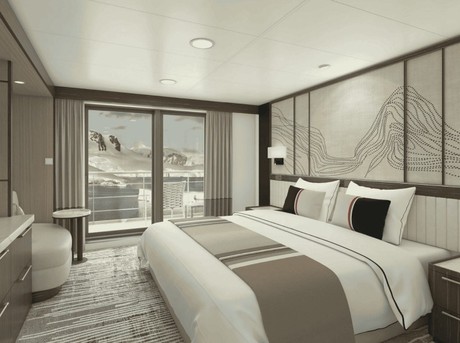
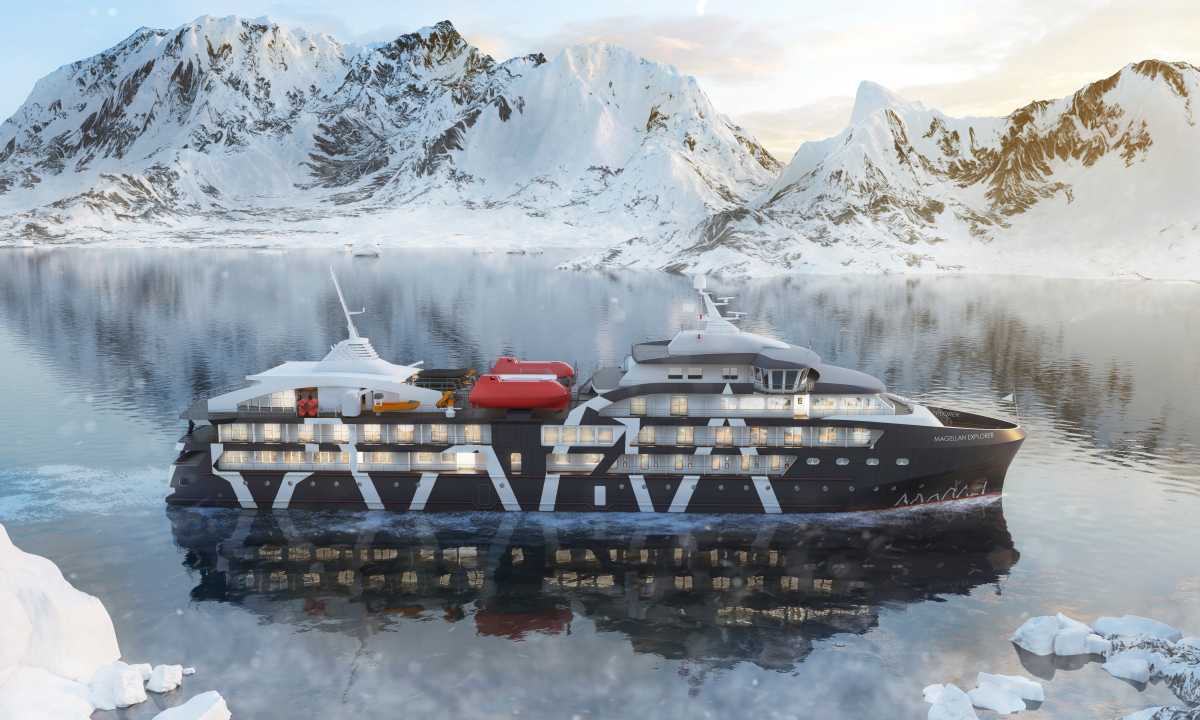
MV Magellan Explorer features 50 passenger suites and cabins in five categories of accommodation, including dedicated single cabins. The cabins are very spacious, ranging in size from 40 m2 (440 sq. ft.) to 20 m2 (220 sq. ft.). All double cabins have two twin beds that can be configured as one queen-size bed, offering great flexibility to our guests. 42 cabins feature a large window and a private balcony, while 8 cabins feature a porthole. All cabins feature a private bathroom and a sitting area.
Public areas include a large, forward-facing observation lounge, an observation deck, a dining room that accommodates all guests and expedition staff in a single sitting, two meeting rooms, a gift shop, a protected outdoor barbecue area, a gym, and a sauna. The bow of the ship is accessible to guests to offer expansive views during exploration. Optional adventure activities, such as kayaking and snowshoeing, are available.
Specific measures have been taken to minimize MV Magellan Explorer’s carbon footprint, including state-of-the-art engines that meet MARPOL’s stringent Tier III emission standards. To minimize fuel consumption, a waste heat recovery system recycles the heat produced by the ship’s engines and repurposes it to power the ship’s heating system and to warm the water used on board.


.jpg)
.jpg)
.jpg)
.jpg)