
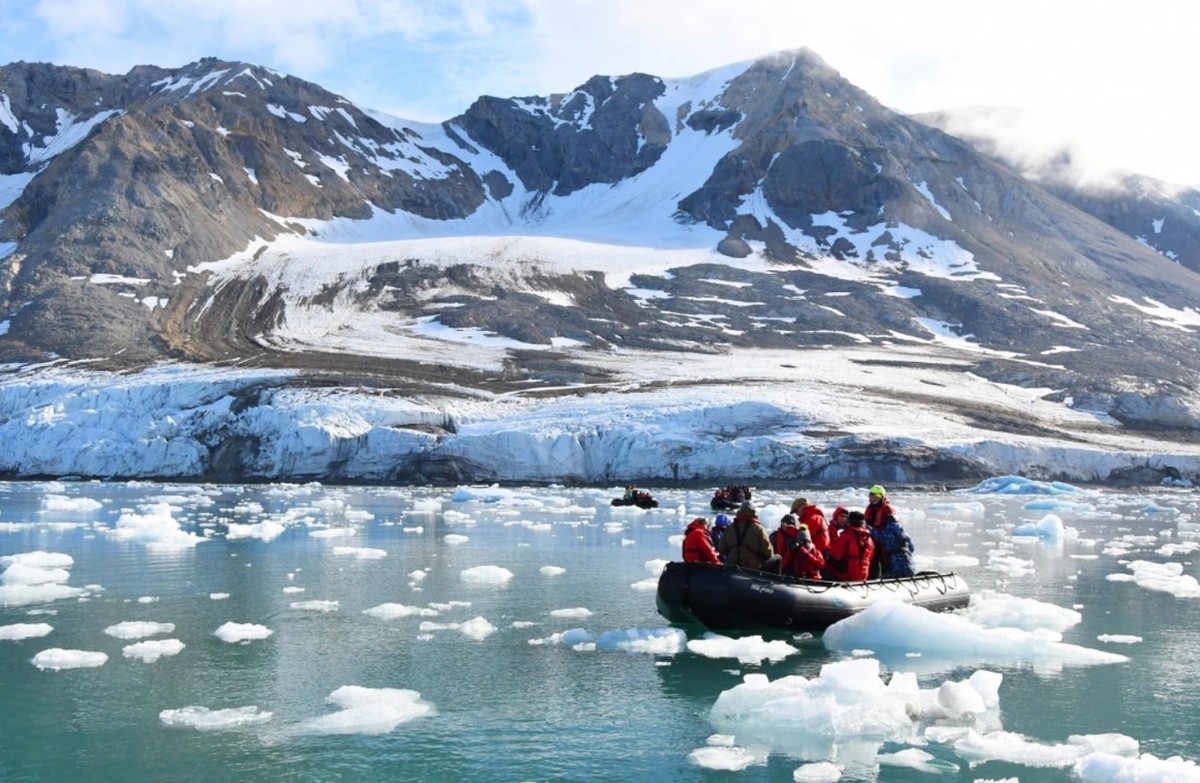
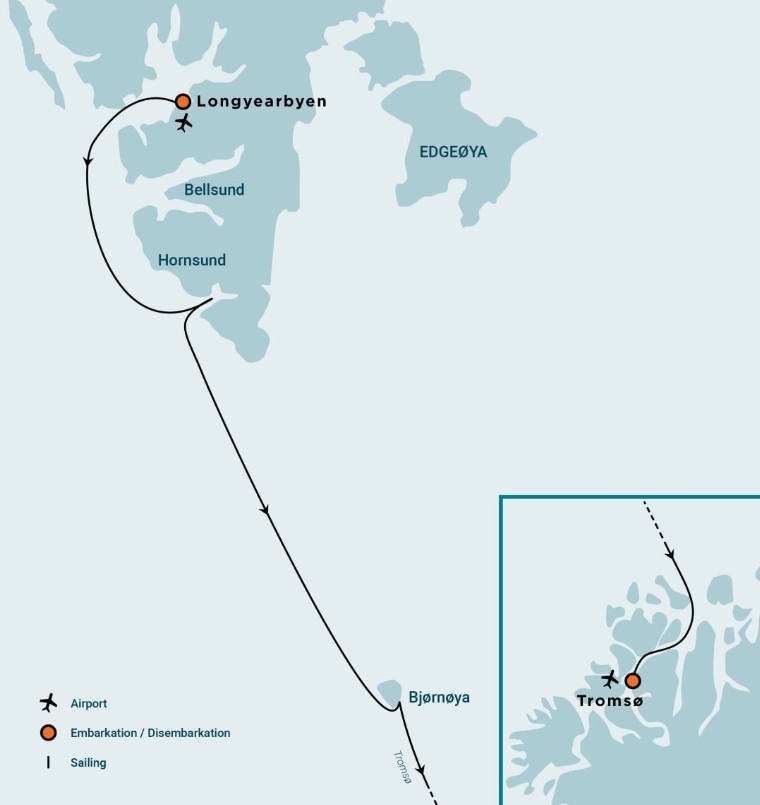
Chart the icy waters of Spitsbergen, exploring spectacular fjords and glaciers in Hornsund, a world of imposing sea cliffs and Arctic history. With seas rich in seals and whales, there are chances for spotting polar bears throughout. Before reaching Tromsø, a visit to remote Bear Island awaits.
- Bear Island - The southernmost island in the archipelago of Svalbard, Bear Island is known for its stark beauty and precipitous bird cliffs
- Hornsund - Part of the South Spitsbergen National Park, the Hornsund is a fjord found on the west side of Spitsbergen, on the southern tip of the island.
- Longyearbyen - The gateway to all things Svalbard, this small coal mining settlement is the capital of the realm of the polar bear
- Minke Whale - Though the smallest of the fin whales, these migrating mammals can let out a cry as loud as a plane taking off
Availability is always subject to confirmation. Please check with us before booking flights
Prices quoted here are often dependent on currency fluctuations. Please check with (01432 507450 or info@small-cruise-ships.com) for the very latest price, which may well be cheaper than the one advertised here.
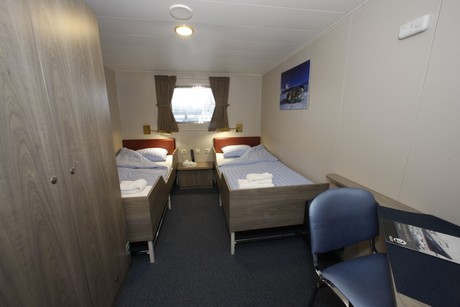
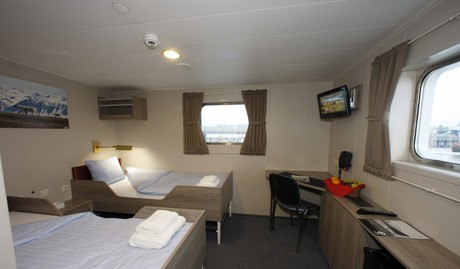
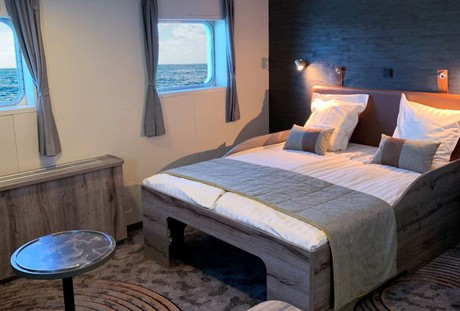
Prices quoted here are often dependent on currency fluctuations. Please check with (01432 507450 or info@small-cruise-ships.com) for the very latest price, which may well be cheaper than the one advertised here.
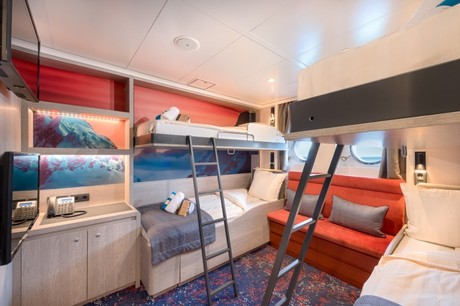
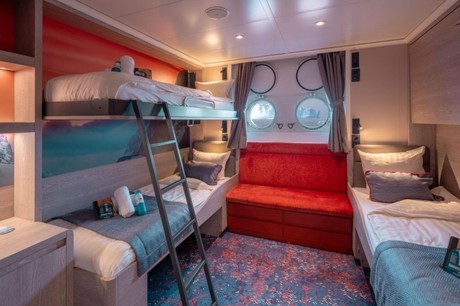
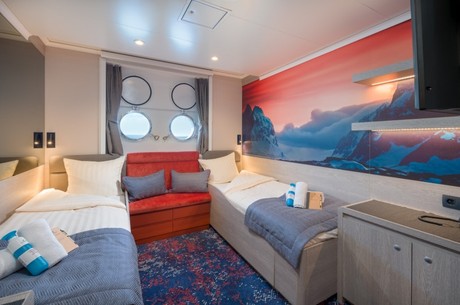
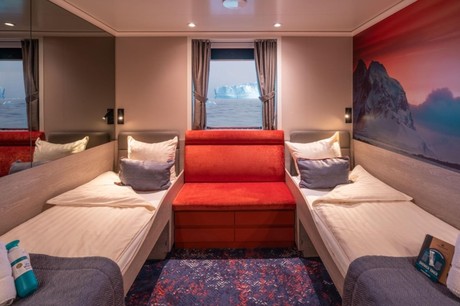
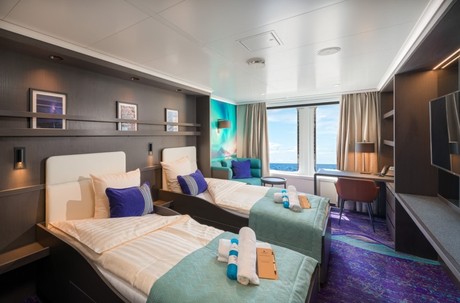
Prices quoted here are often dependent on currency fluctuations. Please check with (01432 507450 or info@small-cruise-ships.com) for the very latest price, which may well be cheaper than the one advertised here.
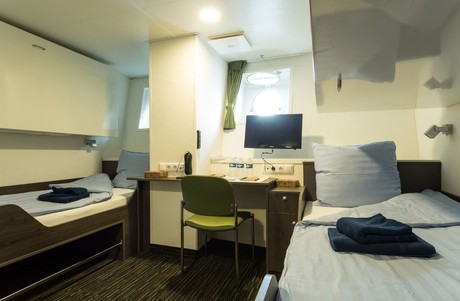
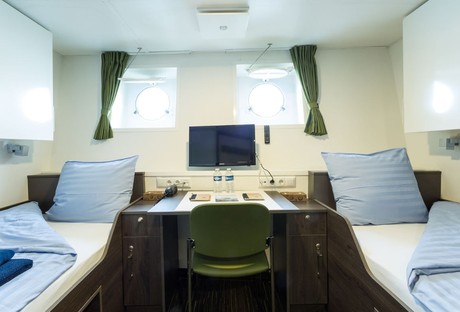
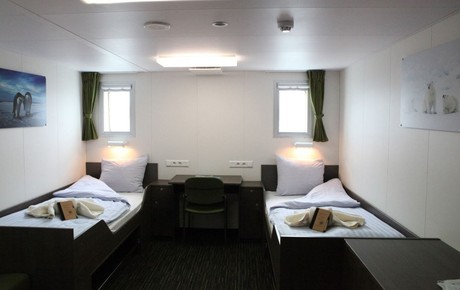
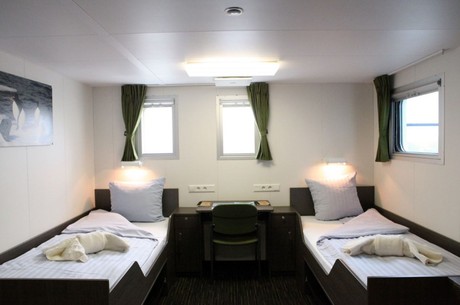

Hondius
| Polar Class | 6 |
|---|---|
| Built | 2019 |
| Length | 107 metres |
| Speed | 15 knots |
| Crew | 72 |
Hondius is the first-registered Polar Class 6 vessel in the world, meeting the latest and highest Lloyd’s Register demands for ice-strengthened cruise vessels. Hondius also exceeds the requirements of the Polar Code as adopted by the International Maritime Organization (IMO), allowing you to enjoy the polar regions as much as possible while impacting them as little as possible. Upon completion, Hondius will be the most flexible, advanced, innovative ice-strengthened vessel in the polar regions. It is optimized for exploratory voyages that provide you the utmost first-hand contact with the Arctic and Antarctica.
Hotel comfort, expedition class
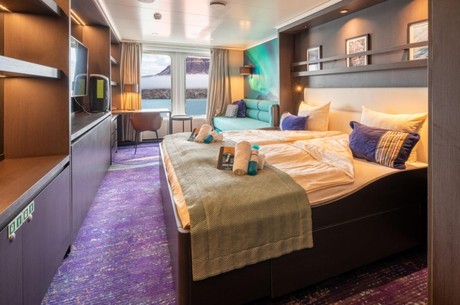
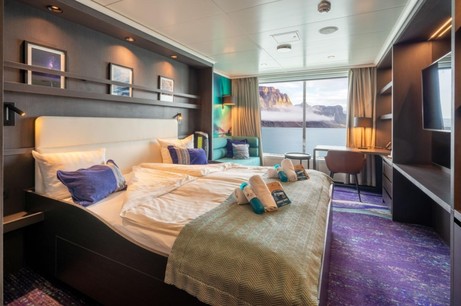
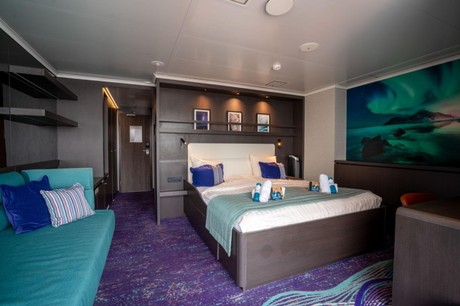
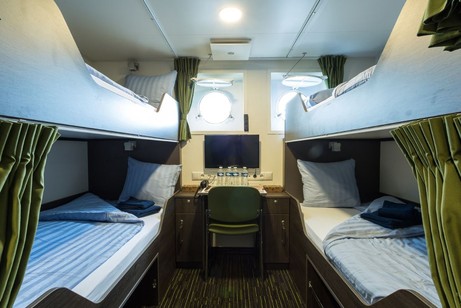
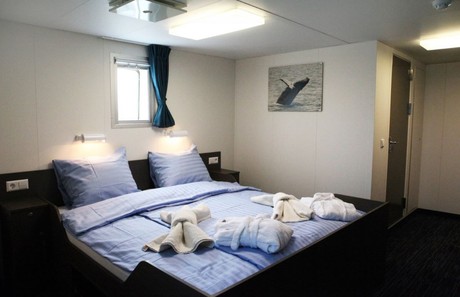
Hondius offers high-quality accommodation for 176 passengers in a range of suites and cabins. The spacious 'Hondius' suite (35 square metres, 377 square feet), six grand suites with balconies (27 square metres, 291 square feet), eight junior suites (19 to 20 square metres, 205 to 215 square feet), eight superior cabins (20 to 21 square metres, 215 to 226 square feet), 11 twin deluxe cabins, (19 to 21 square metres, 205 to 226 square feet), 14 twin window cabins (12 to 14 square metres, 129 to 151 square feet) as well as 28 twin porthole cabins, two triple porthole cabins, and four quadruple porthole cabins that vary in size from 12 to 18 square metres, or 129 to 194 square feet all offer a high level of accommodation. The passenger capacity certificate for Hondius is 196 persons.
One deck consists of a large observation lounge and separate lecture room, which are reserved for a wide variety of interactive workshops, exhibitions, and performances particular to Hondius. Though elegantly designed in stylish mid-century modern décor, this vessel holds true to Oceanwide’s distinctive cozy and informal atmosphere.
Swift & safe ship-to-shore operations
It is the philosophy of Hondius' managers to keep sea time as short as possible so that they can focus instead on fast, effective access to shore and near-shore activities. To give you the maximum contact with the nature and wildlife you traveled so far to see, they employ a tough fleet of rigid-hull inflatable Zodiac boats that guarantee swift and safe landing operations for all passengers at the same time. Hondius has two separate gangways and a sheltered indoor Zodiac embarkation platform that can also be used for special outdoor activities, such as kayaking.
The fast, flexible, friendly heart of the polar regions
The top priority is taking advantage of every wildlife and terrain opportunity as it occurs. To keep the itineraries flexible itineraries and the response time rapid, Hondius is equipped with advanced stabilizers and two main engines capable of powering the vessel up to 15 knots. But Hondius sacrifices no warmth to achieve its keen polar edge: You will have 72 crew and staff members (including expedition and hotel staff) at your service while on board, ensuring that what little time you do spend on the ship you will spend comfortably entertained.


Deck plans are for illustrative purposes only – The actual ship and cabin layout may differ.


Ortelius
| Length | 91 metres |
|---|
The ice-strengthened vessel “Ortelius” is an excellent vessel for Polar expedition cruises in the Arctic and Antarctica, providing possibilities to adventure remote locations such as the Ross Sea.
The vessel has the highest ice-class notation (UL1 equivalent to 1A) and is therefore very suitable to navigate in solid one-year sea ice and loose multi-year pack ice. “Ortelius” is a great expedition vessel for 100 passengers with lots of open-deck spaces and a very large bridge which is accessible to the passengers. The vessel is manned by 34 highly experienced crew, 15 international catering staff, including stewardesses, 6 expedition staff (1 expedition leader and 5 guides/lecturers) and 1 doctor.
”Ortelius” offers a comfortable hotel standard, with two restaurants, a bar/lecture room and a sauna. Ortelius' voyages are primarily developed to offer our passengers a quality exploratory wildlife program, trying to spend as much time ashore as possible. As the number of passengers is limited to approximately 100 on the “Ortelius”, flexibility assures maximum wildlife opportunities.
Passengers on a typical voyage range from in their 30s to their 80s, with the majority usually between 45 ― 65. Our expeditions attract independent travelers from around the globe who are characterized by a strong interest in exploring remote regions. The camaraderie that develops on board is an important part of the Oceanwide experience, and many passenger groups include several nationalities.
“Ortelius” was built in Gdynia, Poland in 1989, was named “Marina Svetaeva”, and served as a special purpose vessel for the Russian Academy of Science. The vessel is re-flagged and renamed “Ortelius”. Ortelius was a Dutch / Flemish cartographer. Abraham Ortelius (1527 – 1598) published the first modern world atlas, the Theatrum Orbis Terrarum or Theatre of the World in 1570. At that time, the atlas was the most expensive book ever printed.
What to Wear
In keeping with the spirit of expedition, dress on board is informal. Bring casual and comfortable clothing for all activities, and keep in mind that much of the scenery can be appreciated from deck ― which can be slippery. Bring sturdy shoes with no-slip soles, and make sure your parka is never far away in case one of our crew shouts “Whales!” over the loudspeaker and you have to dash outside in a moment’s notice. Opt for layers, as it is comfortably warm aboard the ship though often cold on deck.
Electric Current
The electrical supply aboard ship is 220v, 60Hz. Electrical outlets are standard European with two thick round pins, so some passengers may need a 220v/110v converter.
Tipping
The customary gratuity to the ship’s service personnel is made as a blanket contribution at the end of the voyage and is divided among the crew. Tipping is a personal matter, and the amount you wish to give is at your sole discretion. As a generally accepted guideline, we suggest 8 ― 10 euros per passenger per day. It is better for the crew if you give cash.
Smoking Policy
Ortelius has a non-smoking policy inside, though you can smoke in certain designated areas. We ask that you please respect the wishes of non-smokers and please never throw your cigarette ends overboard or anywhere except the designated bin.


_monica_salmang-oceanwide_expeditions_(2)_bw.jpg)
_monica_salmang_(1).jpg)

_monica_salmang_(7).jpg)


Deck plans are for illustrative purposes only – The actual ship and cabin layout may differ.


Plancius
| Length | 89 metres |
|---|---|
| Speed | 10-12 knots |
| Crew | 37 |
| Expedition staff | 8 |
| Doctor | 1 on board |
M/V "Plancius" was built in 1976 as an oceanographic research vessel for the Royal Dutch Navy and was named "Hr. Ms. Tydeman". The ship sailed for the Dutch Navy until June 2004 when she was converted into an expedition cruise ship..The vessel was completely rebuilt as a 114-passenger vessel in 2009 and complies with the latest SOLAS-regulations (Safety Of Life At Sea). M/v "Plancius" is classed by Lloyd's Register in London and flies the Dutch flag.
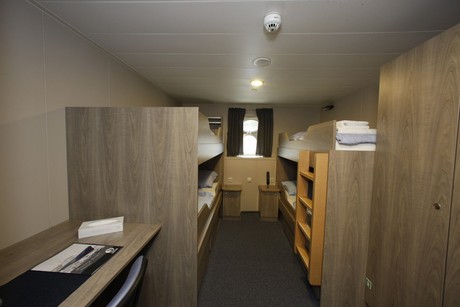
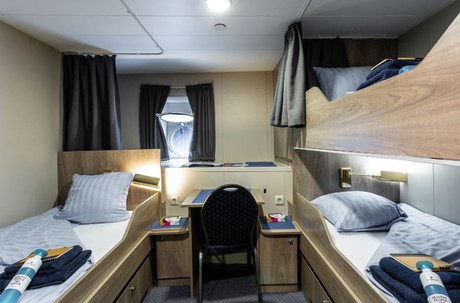
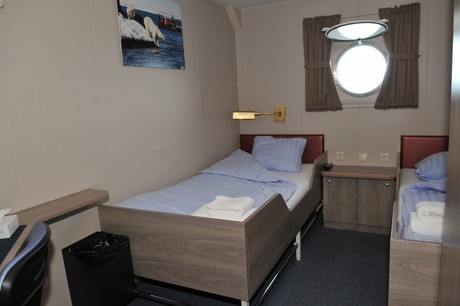
"Plancius" accommodates 114 passengers in 53 passenger cabins with private toilet and shower in 4 quadruple private cabins, 39 twin private cabins (ca. 15 square meters) and 10 twin superior cabins (ca. 21 square meters).All cabins offer lower berths (either two single beds or one queen-size bed), except for the 4 quadruple cabins (for 4 persons in 2x upper and lower beds).The vessel offers a restaurant/lecture room on deck 3 and a spacious observation lounge (with bar) on deck 5 with large windows, offering full panorama view.
Plancius has large open deck spaces (with full walk-around possibilities on deck 3), giving excellent opportunities to enjoy the scenery and wildlife. She is furthermore equipped with 10 Mark V zodiacs, including 40 HP 4-stroke outboard engines and 2 gangways on the starboard side, guaranteeing a swift zodiac operation.M/v "Plancius" is comfortable and nicely decorated, but is not a luxury vessel. Our voyages in the Arctic and Antarctic regions are and will still be primarily defined by an exploratory educational travel programme, spending as much time ashore as possible.
The vessel is equipped with a diesel-electric propulsion system which reduces the noise and vibration of the engines considerably. The 3 diesel engines generate 1.230 horse-power each, giving the vessel a speed of 10 - 12 knots. The vessel is ice-strengthened and was specially built for oceanographic voyages.M/v "Plancius" is manned by 17 nautical crew, 19 hotel staff (6 chefs, 1 hotel manager, 1 steward-barman and 11 stewards / cabin cleaners), 8 expedition staff (1 expedition leader and 7 guides-lecturers) and 1 doctor.
Ice class: Plancius was built for Ice conditions. To reach these ice-conditions she has a strengthened bow and stern. The hull is thicker and the whole construction on the waterline of the vessel is reinforced by using extra frames. Where the normal frame spacing is 65cm, we have on the bow-line and stern also frames in between so there the frame spacing is approx 30cm. Because Plancius was built to do surveys she has a special six blade bronze propeller, the shape of the propeller makes Plancius a very silent ship. Plancius has a Lloyds class notation 100A1 Passenger ship, Ice Class 1D at a draught of 5 meters (which is our waterline).Vessel Type: Expedition
_heiner_kubny-oceanwide_expeditions_088.jpg)


_heiner_kubny-oceanwide_expeditions_(4).jpg)
Deck plans are for illustrative purposes only – The actual ship and cabin layout may differ.

Includes
- Voyage aboard the indicated vessel as indicated in the itinerary.
- All meals throughout the voyage aboard the ship including snacks, coffee and tea.
- All shore excursions and activities throughout the voyage by Zodiac.
- Program of lectures by noted naturalists and leadership by experienced expedition staff.
- Free use of rubber boots and snowshoes on Plancius, Ortelius, Hondius and Janssonius.
- Free use snowshoes on Rembrandt van Rijn.
- On Spitsbergen voyages: Transfers and baggage handling between the airport, hotels and ship only for those passengers on the group flights to and from Longyearbyen.
- On Rembrandt voyages: Transfers and baggage handling between airport and ship at Constable Pynt on the chartered group flights.
- Luggage transfer from pick-up point to the vessel on the day of embarkation, in Ushuaia.
- Pre-scheduled group transfer from the vessel to the airport in Ushuaia (directly after disembarkation).
- All miscellaneous service taxes and port charges throughout the program.
- AECO fees and governmental taxes.
- Comprehensive pre-departure material.