Highlights
- Where Ancient Meets Baroque: Stroll through history with Ortigia’s Old Town, the grandeur of Noto and Lecce.
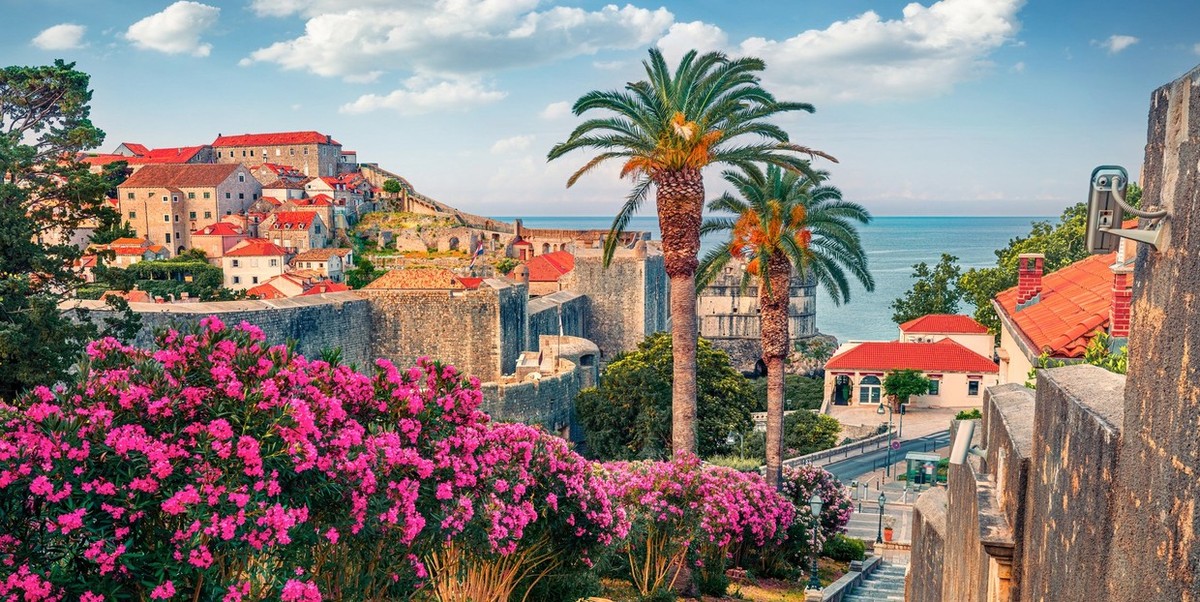
- Endless Summer Evenings: Enjoy long layovers in Croatia’s most vibrant summer hotspots.
- Waterfalls and Wading Pools: Krka is a hiker's paradise, where nature crafts an enchanting scene.
- See Venice from a VIP View: Indulge in an exclusive harbor passage directly past St. Mark’s Square.
Highlights
- Where Ancient Meets Baroque: Stroll through history with Ortigia’s Old Town, the grandeur of Noto and Lecce.
- Endless Summer Evenings: Enjoy long layovers in Croatia’s most vibrant summer hotspots.
- Waterfalls and Wading Pools: Krka is a hiker's paradise, where nature crafts an enchanting scene.
- See Venice from a VIP View: Indulge in an exclusive harbor passage directly past St. Mark’s Square.
Capacity: 96,
Types: Luxury Small Ship CruiseYachtSingle cabins
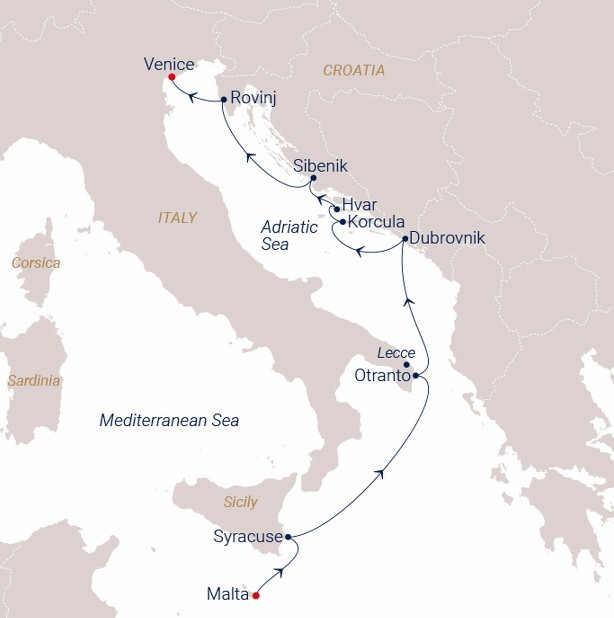
This itinerary charts a northbound voyage from Malta to Venice, weaving together Sicily, southern Italy, and the Adriatic coast. After departing Valletta, the route touches Syracuse before crossing open waters to Otranto, then continues to Croatia’s historic ports including Dubrovnik, Korčula, Hvar, Šibenik, and Rovinj, each offering a blend of fortified Old Towns, island landscapes, and waterfront culture. Scenic sailing days balance time ashore, including access to natural highlights near Šibenik, before the journey concludes with a rare approach into Venice, passing directly through the lagoon to the heart of the city.
Availability is always subject to confirmation. Please check with us before booking flights
Prices quoted here are often dependent on currency fluctuations. Please check with (01432 507450 or info@small-cruise-ships.com) for the very latest price, which may well be cheaper than the one advertised here.
Category F Upper/Lower Beds. From
£5319 GBP pp
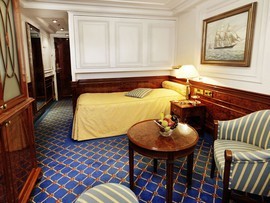
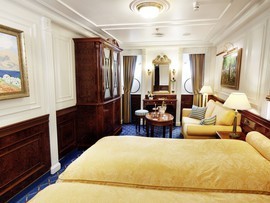
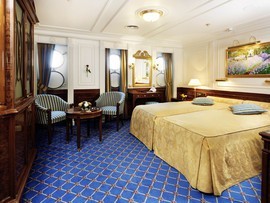
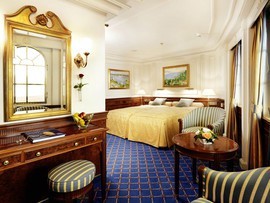
All the cabins have small sitting areas, a bright ambience, brightly coloured, spacious marble baths and plenty of space for all your personal belongings. No matter which cabin you choose, the cabin service will provide everything you need. Your pretty maritime home is tidied twice a day, the fruit bowl is refilled, and the daily programme is left out for you to read (not to mention all the extra little touches...).
These cabins are in the traditional windjammer style with upper and lower beds. They are located on the Cabin Deck.
Cabin size: Approx. 14 m². Furnishings: Two portholes, chair, table, TV with DVD player, mini-bar, dressing table, closet, safe, adjustable A/C
Bed: Upper and lower single beds (90 cm x 200 cm)
Bathroom: Approx. 3 m² with shower, WC, marble sink, golden fixtures, hair dryer, outlet for razor.
Category E. From
£6355 GBP pp
All the cabins have small sitting areas, a bright ambience, brightly coloured, spacious marble baths and plenty of space for all your personal belongings. No matter which cabin you choose, the cabin service will provide everything you need. Your pretty maritime home is tidied twice a day, the fruit bowl is refilled, and the daily programme is left out for you to read (not to mention all the extra little touches...).
The comfortable cabins in Category E are located on the Cabin Deck, where the hospital, sauna, swim platform and fitness area can be found.
Cabin size: No. 207-210 approx. 19 m². No. 211-217, 224-231 approx. 20 m². Furnishings: Two portholes, sofa, table, TV with DVD player, mini-bar, dressing table, closet, safe, adjustable A/C
Bed: Queen size bed (180 cm x 200 cm); can be separated into two single beds
Bathroom: Approx. 3 m² with shower, WC, marble sink, golden fixtures, hair dryer, outlet for razor.
Category D. From
£7389 GBP pp
All the cabins have small sitting areas, a bright ambience, brightly coloured, spacious marble baths and plenty of space for all your personal belongings. No matter which cabin you choose, the cabin service will provide everything you need. Your pretty maritime home is tidied twice a day, the fruit bowl is refilled, and the daily programme is left out for you to read (not to mention all the extra little touches...).
The Category D de luxe double-bed cabins are located on the Cabin Deck, where the hospital, sauna, swim platform and fitness area can be found.
Cabin size: Approx. 21 m².
Furnishings: Three portholes, two chairs, table, TV with DVD player, mini-bar, dressing table, closet, safe, adjustable A/C.
Bed: Queen size bed (180 cm x 200 cm) with two separate mattresses. Bathroom: Approx. 3 m² with shower, WC, marble sink, golden fixtures, hair dryer, outlet for razor
Category C. From
£7685 GBP pp
All the cabins have small sitting areas, a bright ambience, brightly coloured, spacious marble baths and plenty of space for all your personal belongings. No matter which cabin you choose, the cabin service will provide everything you need. Your pretty maritime home is tidied twice a day, the fruit bowl is refilled, and the daily programme is left out for you to read (not to mention all the extra little touches...).
The Category C deluxe double-bed cabins are located on the Promenade Deck, where the restaurant, boutique and the reception can be found. Cabin size: Approx. 20 m².
Furnishings: Panorama windows, two chairs, table, TV with DVD player, mini-bar, dressing table, closet, safe, adjustable A/C. Bed: Queen size bed (180 cm x 200 cm) with two separate mattresses
Bathroom: Approx. 3 m² with shower, WC, marble sink, golden fixtures, hair dryer, outlet for razor.
Category B. From
£8425 GBP pp
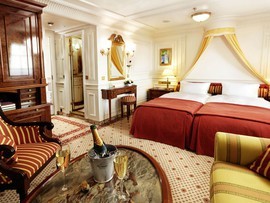
All the cabins have small sitting areas, a bright ambience, brightly coloured, spacious marble baths and plenty of space for all your personal belongings. No matter which cabin you choose, the cabin service will provide everything you need. Your pretty maritime home is tidied twice a day, the fruit bowl is refilled, and the daily programme is left out for you to read (not to mention all the extra little touches...).
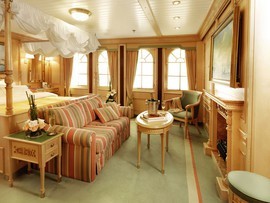
The spacious junior suites are conveniently located on the Promenade Deck, where the restaurant, boutique, and the reception can be found.
Cabin size: No. 303 approx. 22 m², No. 304 approx. 21,5 m², No. 305-319 approx. 23 m². Furnishings: Panorama window, seating area, decorative fireplace, console with TV/DVD and mini-bar, dressing table, walk-in closet, safe, adjustable A/C. Bed: Queen size bed (180 cm x 200 cm) with two separate mattresses; can be separated into two single beds. Bathroom: Approx. 3,2 m² with tub, WC, marble sink, golden fixtures, hair dryer, outlet for razor.
Category A. From
£9609 GBP pp
All the cabins have small sitting areas, a bright ambience, brightly coloured, spacious marble baths and plenty of space for all your personal belongings. No matter which cabin you choose, the cabin service will provide everything you need. Your pretty maritime home is tidied twice a day, the fruit bowl is refilled, and the daily programme is left out for you to read (not to mention all the extra little touches...).
The charming luxury owner suites are located on the Lido Deck where you can also find the library and the lounge. Cabin size: Approx. 27 m². Furnishings: Panorama window, sofa, table, chair, desk, decorative fireplace, TV and DVD player, mini-bar, dressing table, four closets, safe, adjustable A/C. Bed: King size canopy bed with two separate mattresses (90 cm x 200 cm). Bathroom: Approx. 4,2 m² with tub and separate shower, WC, marble sink, golden fixtures, hair dryer, outlet for razor