
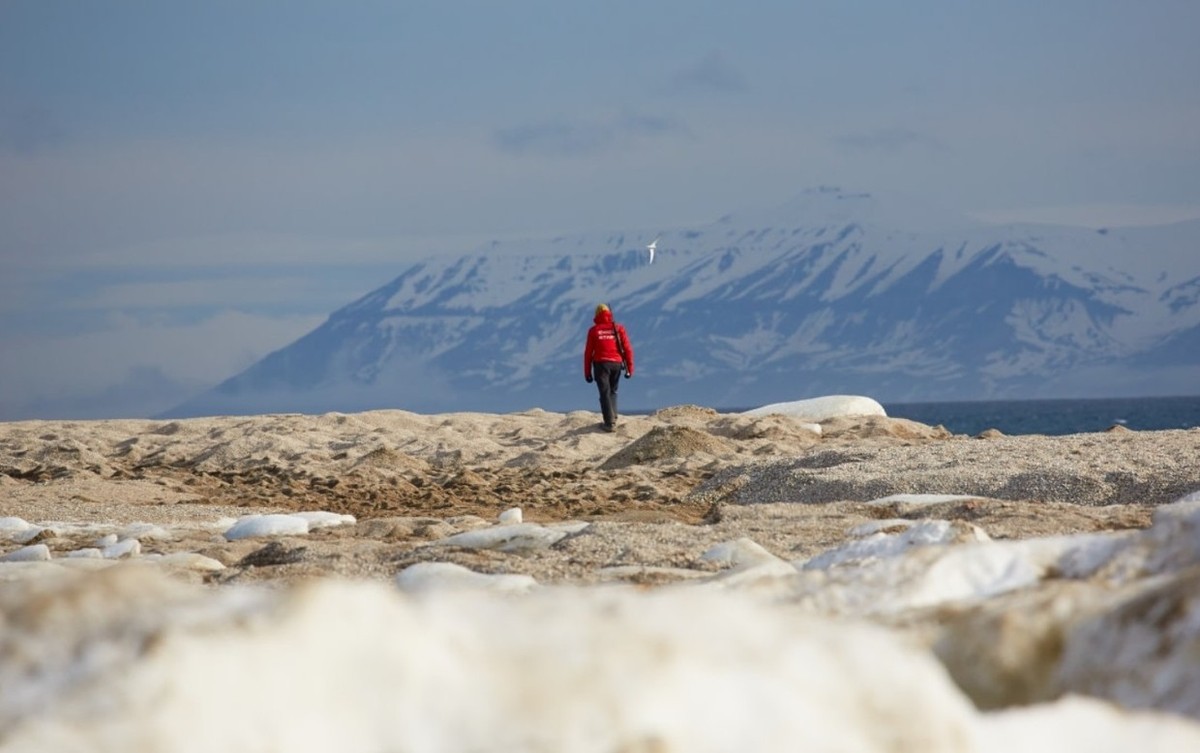
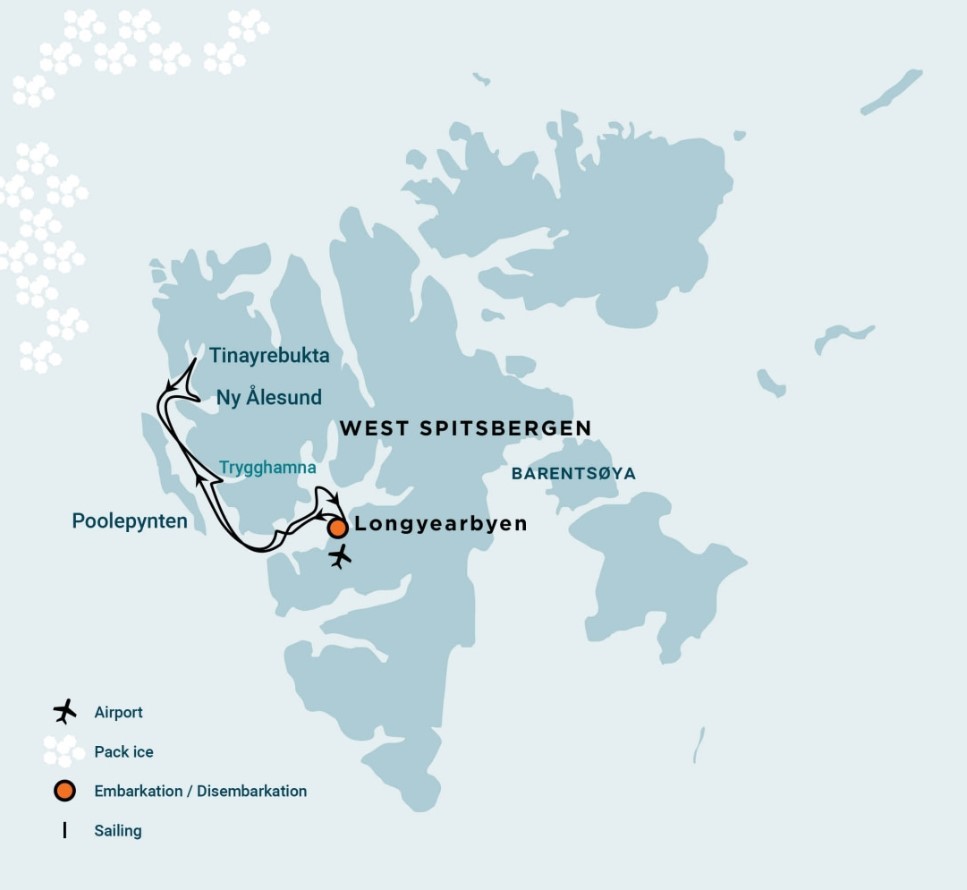
This 5-night voyage packs great value into a condensed time period, providing superb opportunities to encounter iconic Arctic wildlife, including polar bears, seals, and walruses, without the need for extended vacation leave! Venture to the edge of the pack ice, and discover vibrant seabird colonies as you explore historical remains and wildlife haul-out spots. For time-conscious adventurers, the trip of a lifetime awaits!
- Pack Ice - Formed when broken shards of sea ice freeze together, pack ice is also known as “ice pack” or simply “pack,” and is characterized by collective areas of free-floating ice
- Walrus - Spending two thirds of their lives in the water, these "tooth-walking sea horses" cuddle their calves in the same fashion as human mothers
- Polar Bear - Awe-inspiring icons of the circumpolar north, polar bears are majestic to behold, terrifying to confront, and as essential to the Arctic as ice and snow
Availability is always subject to confirmation. Please check with us before booking flights
Prices quoted here are often dependent on currency fluctuations. Please check with (01432 507450 or info@small-cruise-ships.com) for the very latest price, which may well be cheaper than the one advertised here.
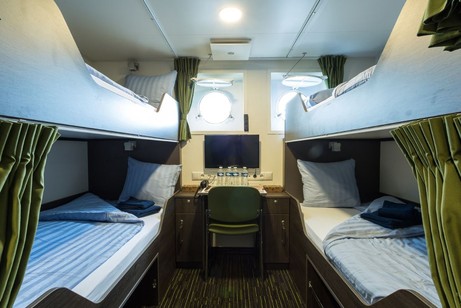
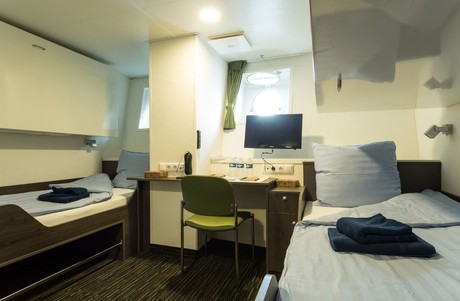
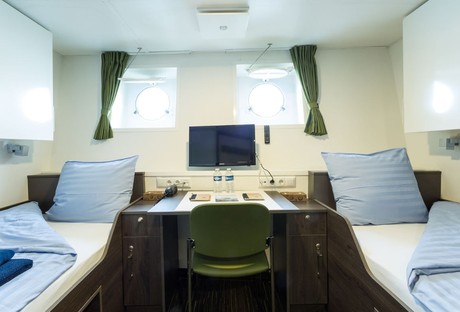
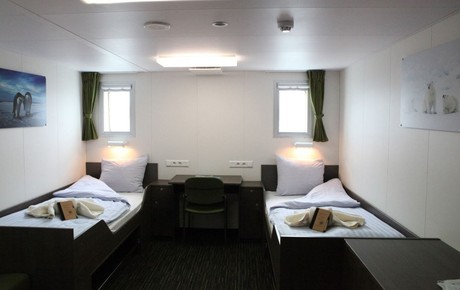
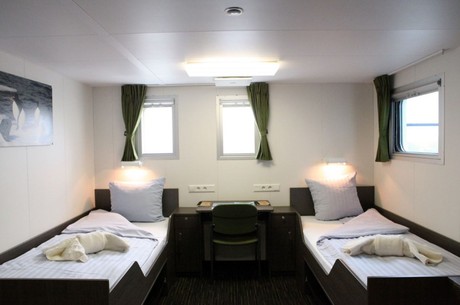
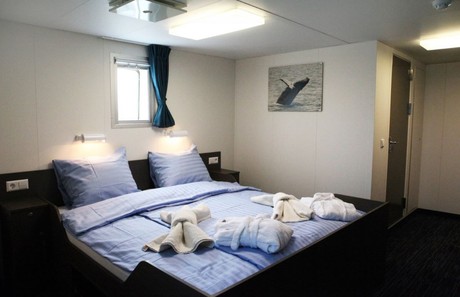
Prices quoted here are often dependent on currency fluctuations. Please check with (01432 507450 or info@small-cruise-ships.com) for the very latest price, which may well be cheaper than the one advertised here.

Ortelius
| Length | 91 metres |
|---|
The ice-strengthened vessel “Ortelius” is an excellent vessel for Polar expedition cruises in the Arctic and Antarctica, providing possibilities to adventure remote locations such as the Ross Sea.
The vessel has the highest ice-class notation (UL1 equivalent to 1A) and is therefore very suitable to navigate in solid one-year sea ice and loose multi-year pack ice. “Ortelius” is a great expedition vessel for 100 passengers with lots of open-deck spaces and a very large bridge which is accessible to the passengers. The vessel is manned by 34 highly experienced crew, 15 international catering staff, including stewardesses, 6 expedition staff (1 expedition leader and 5 guides/lecturers) and 1 doctor.
”Ortelius” offers a comfortable hotel standard, with two restaurants, a bar/lecture room and a sauna. Ortelius' voyages are primarily developed to offer our passengers a quality exploratory wildlife program, trying to spend as much time ashore as possible. As the number of passengers is limited to approximately 100 on the “Ortelius”, flexibility assures maximum wildlife opportunities.
Passengers on a typical voyage range from in their 30s to their 80s, with the majority usually between 45 ― 65. Our expeditions attract independent travelers from around the globe who are characterized by a strong interest in exploring remote regions. The camaraderie that develops on board is an important part of the Oceanwide experience, and many passenger groups include several nationalities.
“Ortelius” was built in Gdynia, Poland in 1989, was named “Marina Svetaeva”, and served as a special purpose vessel for the Russian Academy of Science. The vessel is re-flagged and renamed “Ortelius”. Ortelius was a Dutch / Flemish cartographer. Abraham Ortelius (1527 – 1598) published the first modern world atlas, the Theatrum Orbis Terrarum or Theatre of the World in 1570. At that time, the atlas was the most expensive book ever printed.
What to Wear
In keeping with the spirit of expedition, dress on board is informal. Bring casual and comfortable clothing for all activities, and keep in mind that much of the scenery can be appreciated from deck ― which can be slippery. Bring sturdy shoes with no-slip soles, and make sure your parka is never far away in case one of our crew shouts “Whales!” over the loudspeaker and you have to dash outside in a moment’s notice. Opt for layers, as it is comfortably warm aboard the ship though often cold on deck.
Electric Current
The electrical supply aboard ship is 220v, 60Hz. Electrical outlets are standard European with two thick round pins, so some passengers may need a 220v/110v converter.
Tipping
The customary gratuity to the ship’s service personnel is made as a blanket contribution at the end of the voyage and is divided among the crew. Tipping is a personal matter, and the amount you wish to give is at your sole discretion. As a generally accepted guideline, we suggest 8 ― 10 euros per passenger per day. It is better for the crew if you give cash.
Smoking Policy
Ortelius has a non-smoking policy inside, though you can smoke in certain designated areas. We ask that you please respect the wishes of non-smokers and please never throw your cigarette ends overboard or anywhere except the designated bin.


_monica_salmang-oceanwide_expeditions_(2)_bw.jpg)
_monica_salmang_(1).jpg)

_monica_salmang_(7).jpg)


Deck plans are for illustrative purposes only – The actual ship and cabin layout may differ.

Includes
- Voyage aboard the indicated vessel as indicated in the itinerary.
- All meals throughout the voyage aboard the ship including snacks, coffee and tea.
- All shore excursions and activities throughout the voyage by Zodiac.
- Program of lectures by noted naturalists and leadership by experienced expedition staff.
- Free use of rubber boots and snowshoes on Plancius, Ortelius, Hondius and Janssonius.
- Free use snowshoes on Rembrandt van Rijn.
- On Spitsbergen voyages: Transfers and baggage handling between the airport, hotels and ship only for those passengers on the group flights to and from Longyearbyen.
- On Rembrandt voyages: Transfers and baggage handling between airport and ship at Constable Pynt on the chartered group flights.
- Luggage transfer from pick-up point to the vessel on the day of embarkation, in Ushuaia.
- Pre-scheduled group transfer from the vessel to the airport in Ushuaia (directly after disembarkation).
- All miscellaneous service taxes and port charges throughout the program.
- AECO fees and governmental taxes.
- Comprehensive pre-departure material.