
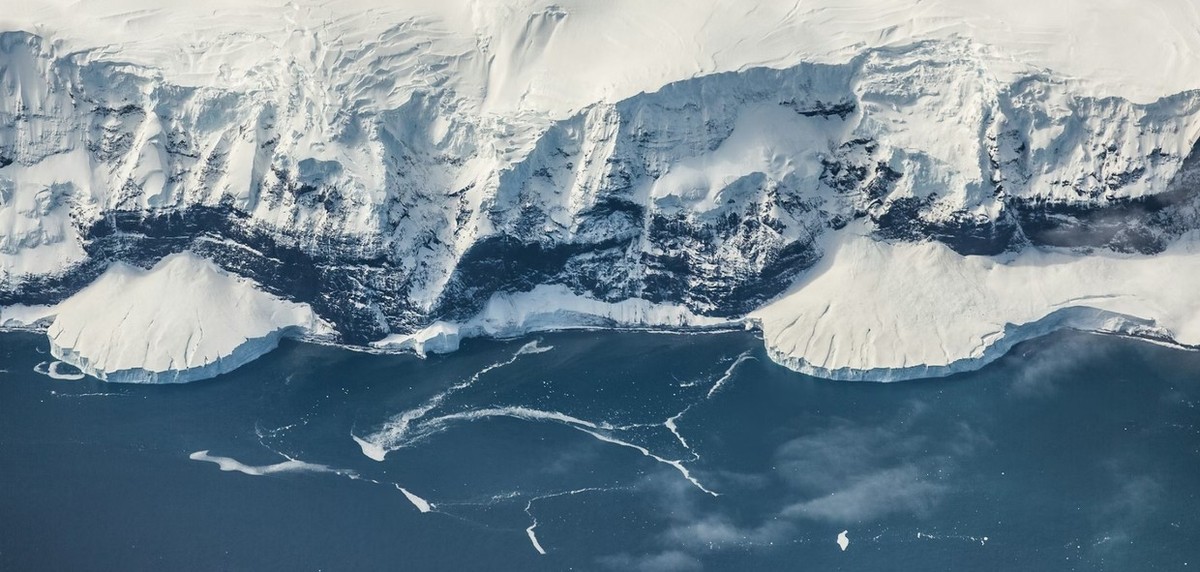
Even today after many decades of exploration, Antarctica remains a world apart, a majestic last frontier surpassing even the most jaded of travellers’ expectations.
It is hard to put into words the sheer grandeur of an Antarctic landscape. This most southern of continents, this desert of ice, is so unique and uncommon to man’s experience, that even the most dramatic of photographs pale into insignificance when one is confronted by the sheer magnitude, beauty and wonder of an Antarctic landscape.
During this voyage which is timed for the Antarctic spring, there will be the possibility of sighting seven different species of penguin. The spring is mating season for penguins and other species, and you can witness their spectacular displays of courtship ritual, nest building and such antics as stone stealing. This is also the time the pack ice begins to melt resulting in dramatic icebergs and, when in the Falklands and South Georgia, the spring flowers will be in bloom.
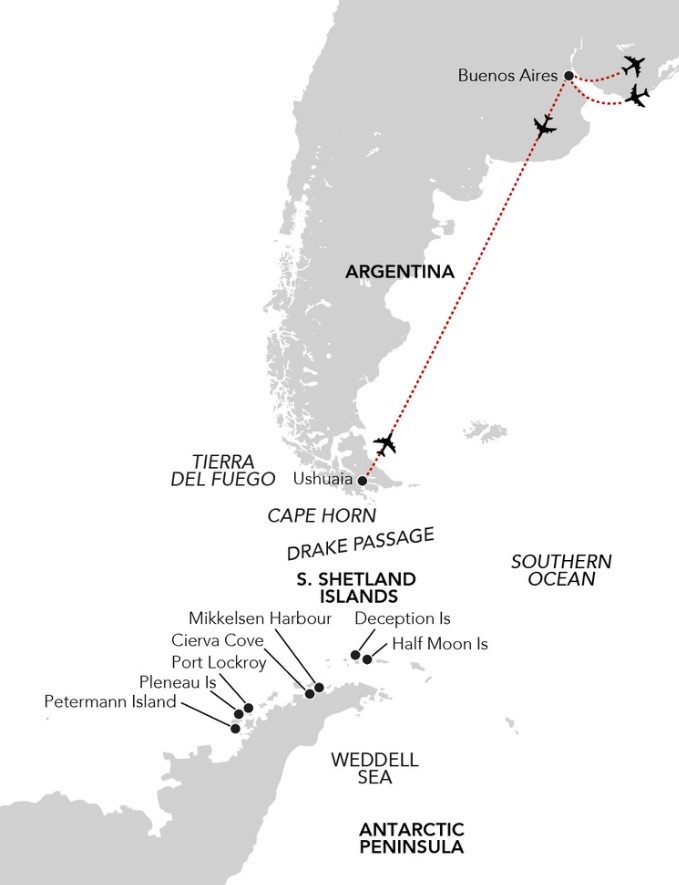
We sail from Ushuaia in Argentina to the Falkland Islands, a truly enchanting place with a unique character and staggering wildlife. This is the last sanctuary of the elegant albatross which soars gracefully against the blue sky, with colonies of elephant seals basking at the foot of vertiginous cliffs. Our next stop is the remote island of South Georgia, a wildlife haven reputed to have more wildlife per square metre than any other place on the planet. Watching the huge elephant seals fight for their harems and being greeted by hundreds of thousands of breeding king penguins are truly unbelievable experiences. We then continue to the most remote and isolated continent, Antarctica, where we explore dramatic landscapes with gigantic icebergs, scenic channels and bustling penguin colonies.
In between our landings and while at sea, you can pass the time on deck looking for wildlife, attend the series of lectures by members of the expedition team.
Alastair Fothergill, WWF Ambassador, is a director and co-founder of Silverback Films. Recent productions include Sir David Attenborough’s "A Gorilla Story", "Wild Isles" and "Our Planet" for Netflix. Alastair is behind 5 of the top 10 grossing natural history cinema films ever.
Alastair joined the BBC Natural History Unit in 1983 and was appointed Head of the Unit in November 1992, aged 32. Alastair’s collaborations with Sir David Attenborough include "The Trials of Life", "Life in the Freezer", "The Blue Planet", "Frozen Planet", "Planet Earth" and its companion feature film "Earth".
In November 2012, Alastair left the BBC to set up his own production company Silverback Films. Alastair is a fellow of the Royal Television Society and of the Royal Geographic Society, who awarded him their gold medal in 2012. He has honorary doctorates from the University of Durham, Bristol, Hull and York St. John.
Alastair will join us on this trip as Special lecturer. On board, he will share fascinating insights from his many film projects around the world, particularly from the Polar regions.
Learn more about Alastair Fothergill.
Availability is always subject to confirmation. Please check with us before booking flights
Prices quoted here are often dependent on currency fluctuations. Please check with (01432 507450 or info@small-cruise-ships.com) for the very latest price, which may well be cheaper than the one advertised here.

Ocean Nova
| Ice Class: | Ice 1B, E0 (Hull Ice 1A) |
|---|---|
| Cabins | 37 |
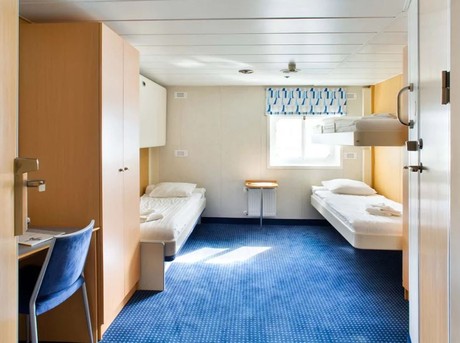
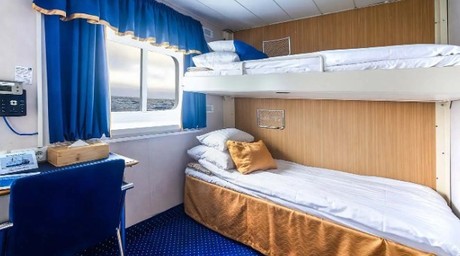
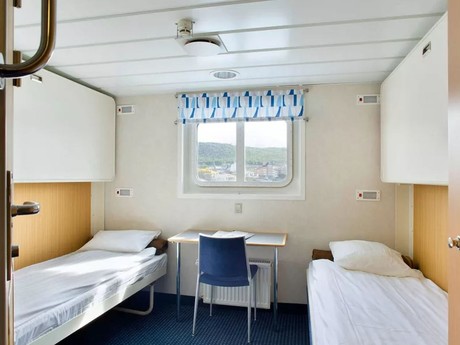
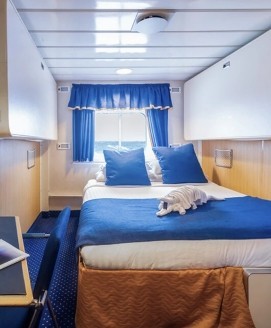
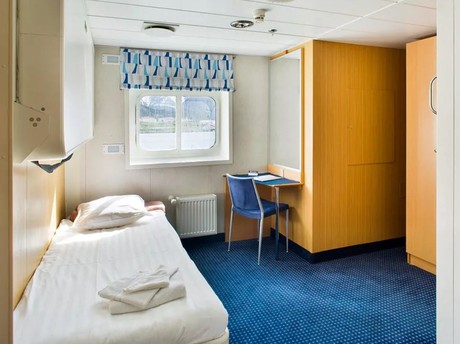
The ice-strengthened 73 metre long expedition ship Ocean Nova was built in Denmark in 1992 with high ice class to serve Greenland’s west coast. In 2004 to 2005 she was completely refurbished and has now a career as a small and comfortable expedition ship. The Ocean Nova can accommodate 86 passengers (but is often limited to 65 - 80 for some cruises) in single, double and triple cabins, all with sea-view and private facilities. The double cabins have either twin beds. The triple cabins have upper and lower beds. In your cabin you will also find a desk with chair and ample storage space for clothes and equipment.
In the dining room you are treated to delicious meals in between landings and in the panorama lounge you can enjoy a drink with a breathtaking view of the surrounding polar landscape. This is where on board specialists entertain and educate you with lectures on polar biology, history, geology and conservation. There is also a library with panoramic views and a good selection of polar books. On board there is a satellite phone, gym and medical doctor. Passengers are welcome on the bridge around the clock and there is always something to see or search for from the spacious observation decks. The ship has North European officers and there is a friendly and informal atmosphere on board. Travelling with this small expedition ship offers an entirely different experience and perspective than you can get on a larger and more conventional cruise ship.
Cabins are spread over two decks and include cabins for the single traveller, double and triple cabins, all with sea-view and private facilities. The comfortable dining room located on the Upper deck seats all passengers in a single sitting and offers delicious meals with a mixture of table service and buffet. The informal dining arrangement adds to the friendly atmosphere onboard and meals are a great chance to discuss all you have seen with your fellow travellers, and for the expedition team to share their knowledge.
With one of the highest ice classes (1B) and a 2000 hp diesel engine, Ocean Nova is a small but sturdy expedition vessel just as at home in the icy waters of Svalbard as she is in a tranquil Scottish loch. The ship has a crew of 34, including North European officers, whose prime concern is your safety as well as ensuring wildlife sightings and weather conditions are maximised. For your safety there are two fully enclosed lifeboats and a medical clinic onboard.


_sandrawalser.ch.jpg)
.jpg)
Deck plans are for illustrative purposes only – The actual ship and cabin layout may differ.
