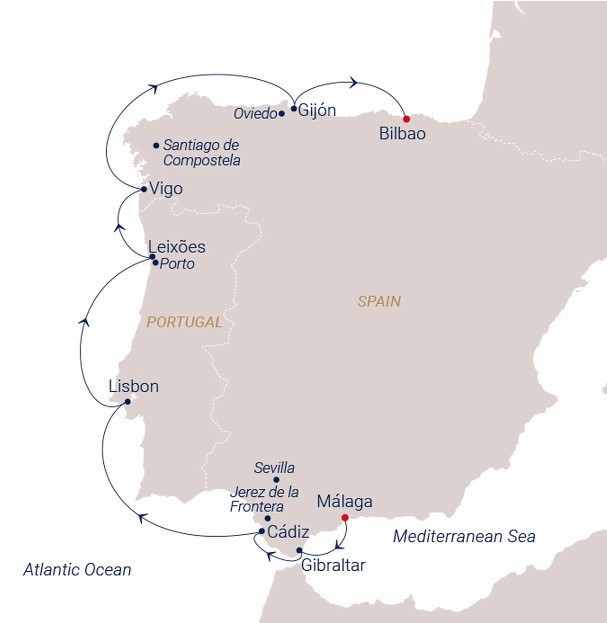
This coastal voyage follows the Iberian Peninsula from southern Spain to the green shores of northern Spain, combining historic ports, scenic river passages, and days under sail. Departing Málaga, the route explores Andalusia’s maritime legacy with calls in Gibraltar and Cádiz before entering Portugal via a dramatic passage along the Tagus to Lisbon. Further north, Porto and Vigo reflect the region’s deep connections to trade, wine, and pilgrimage routes, while sailing days provide a measured rhythm at sea. The journey concludes along Spain’s Atlantic coast in Gijón and Bilbao, where rugged landscapes and strong regional identities define the character of the north.
- Very British: The enclave of Gibraltar and its striking Monkey Rock are iconic landmarks along our stops.
- Royal Seville: Grand palaces and Moorish splendor define this Andalusian jewel.
- Vibrant Lisbon: The charismatic explorer capital perched on seven hills.
- Sip on Sherry and Port Wine: Visit the wine cellars of Porto and Jerez de la Frontera.
- Thrilling Santiago de Compostela: Inspiring pilgrimage site and destination of the Way of St. James.
- Medieval Oviedo: Stroll through the Asturian capital along ancient cobblestone streets.
Availability is always subject to confirmation. Please check with us before booking flights
Prices quoted here are often dependent on currency fluctuations. Please check with (01432 507450 or info@small-cruise-ships.com) for the very latest price, which may well be cheaper than the one advertised here.
Málaga has spruced itself up. In 2003, the Museo Picasso opened in a 16th century Renaissance palace and is dedicated to the artist's extensive life's work. This historic old city invites you to take a stroll and its buildings gleam like new. And above everything towers the Alcazaba, a mighty walled fortress. The port was completely redesigned when the city was opened to the sea and you can now take a lovely stroll along the promenade. In Malaga's hinterland you can see the most beautiful aspects of traditional Andalusia. From a distance the typical Andalusian villages look like white dabs of paint shining out from the brown of the barren mountain landscape.
Considering that Gibraltar covers an area of only around 2.6 square miles, the British enclave is home to astonishing contrasts. Red telephone booths, double-decker buses and high tea on one side, Spanish architecture and tapas bars on the other. Today, Gibraltar is a city of border crossers: Shopping enthusiasts from all over the world stroll along Main Street, which runs through the old town. An unmistakable landmark is the striking Upper Rock, which is easily reached by a cable car. At the top, not only the stunning views across the strait to Africa are likely to impress you, but also the hordes of cute Macaques.
The old city of Cádiz, around 3,000 years old, has a picturesque location on a narrow headland, right by the Playa de la Caleta with its elegant beachside promenade. Visit the Andalusian capital of Seville and you will be transported back to the heyday of Moorish splendour and rule, but also the age of discovery. This town sits on the Guadalquivir River was a center of Spanish maritime trade with the New World. Many buildings in the old town are registered as UNESCO World Heritage Sites, including the splendid Moorish Alcazar fortress and the huge Gothic Cathedral of Santa Maria de la Sede. Seville is a fun-loving city that is still at the center of Andalusian culture and is considered the proud birthplace of Flamenco.
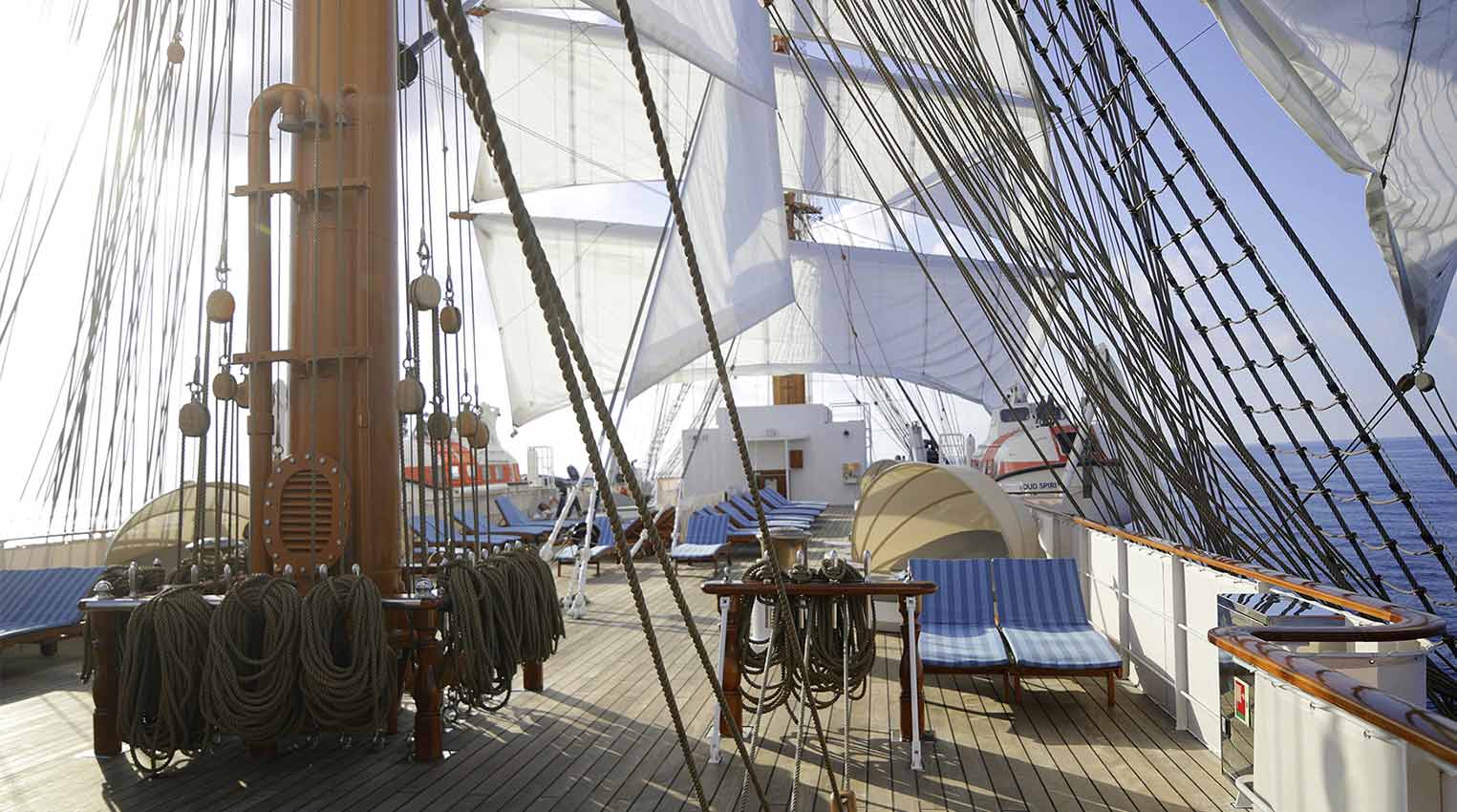
Climbing the rigging, untying ropes, setting sails – today is all about sailing. Time to lean back and relax in the deck chair and watch the passionate crew hoisting the sails by hand.
The most beautiful approach to the Portuguese capital is to travel up the River Tagus. One of the city's most famous landmarks has been greeting visitors right on the estuary since 1521 – the Torre de Belém. This is a UNESCO World Heritage Site and transports you back to the glory days when Portugal was a naval power. There are many landmarks, such as the facades of the houses decorated with azulejos tilework and the ancient trams that rattle through the city. But Lisbon has many different sides. Joie de vivre comes face to face with the melancholy of Fado music, winding lanes in the old city meet wide boulevards, while magnificent churches and austere monasteries show the two sides of former religious faith.
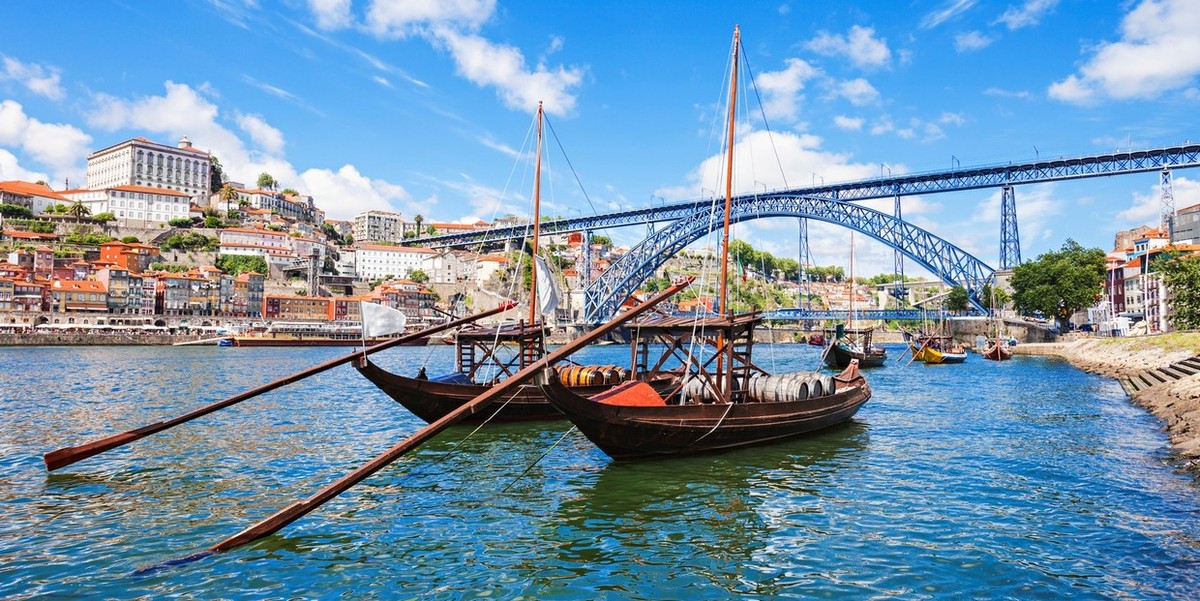
Porto considers itself the country's secret capital. The narrow lanes of the historic old town "Ribeira", a UNESCO World Heritage Site, extend in terraces up the slope overlooking the Douro. The former working class district has blossomed into a beautifully restored trendy neighbourhood. A student of Gustave Eiffel created the bold design for the bridge, which stretches over the river in a wide arc and links the Ribeira with Vila Nova da Geia and its 50 port wineries that lie on the other side. The best way to reach the incredible Douro Valley and the countryside of the Alto Douro wine region, also a UNESCO World Heritage Site, is by river.
Norman warriors, Turkish pirates and English privateers – for centuries, armies from all over the world attacked Vigo. For its protection, the city on the Atlantic built huge fortresses whose ruins still characterize the cityscape today. From the castle hill, there is a magnificent view over the red roofs of Vigo to the Cíes Islands National Park, large parts of which incorporate the sea and three uninhabited islands. Along beautiful hiking trails along imposing cliffs, dune landscapes and small forests, discover the diverse flora and fauna. Another well-kept secret is its stunning beaches: a British newspaper even called Playa de Rodas the most beautiful beach in the world.
Climbing the rigging, untying ropes, setting sails – today is all about sailing. Time to lean back and relax in the deck chair and watch the passionate crew hoisting the sails by hand.
As an old port metropolis and capital of the Costa Verde or Green Coast, Gijón looks back on a long seafaring tradition. Especially in the quaint fishing quarter of Cimadevilla, colorful, rambling houses exude the charm of times gone by. About 18 miles away, Oviedo was once the residence of the independent kingdom of Asturias. Today, the picturesque old town is a UNESCO World Heritage Site. The best starting point for a walk along the well-kept cobblestone streets (for instance, to the famous cider taverns) is Oviedo's cathedral with its Gothic spire of openwork stone.
Bilbao has always been an important port and industrial city. In 1993, Bilbao was a pilgrimage destination for lovers of modern art and avant-garde architecture. The Guggenheim Museum, with its idiosyncratic and unique design by famous architect Frank O Gehry, showcases everything that is important within its 11,000 square meters (118,403 foot). Steel used to be manufactured in Bilbao and it now plays a major role here, since other renowned architects have also been inspired to give Bilbao an attractive, distinctive look. Cross the futuristic Calatrava Bridge to reach the old town, where you can take a delightful stroll round the lanes and enjoy the art of Basque cuisine.
Itineraries are subject to change.
Sea Cloud Spirit
Building a three-mast full-rigged ship with traditional rigging in the 21st century may seem a little unusual. For SEA CLOUD CRUISES it is a commitment to true passion for sailing. With her clear, classic line she follows the example of her elegant windjammer sisters, but goes completely new ways. An entire deck with balcony cabins, an exclusive wellness and SPA area, a fitness room with sea view, a bistro on deck as an evening alternative to “fine dining” in the restaurant – the youngest member of the SEA CLOUD family offers plenty of room for individuality in addition to genuine windjammer romance.
The SEA CLOUD SPIRIT combines traditional windjammer experience with 21st century comfort with up to 136 passengers.
Cabins
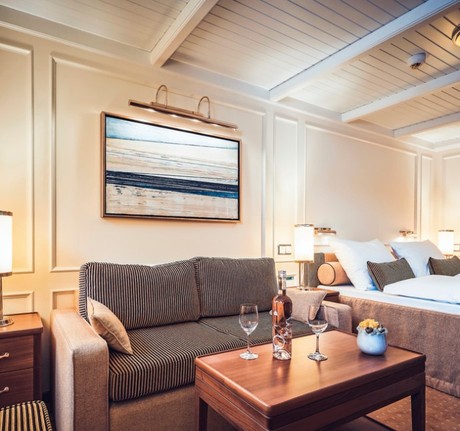
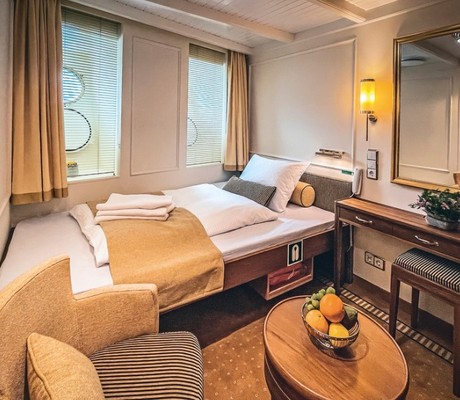
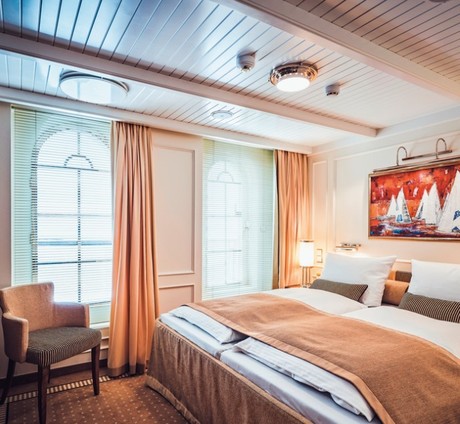
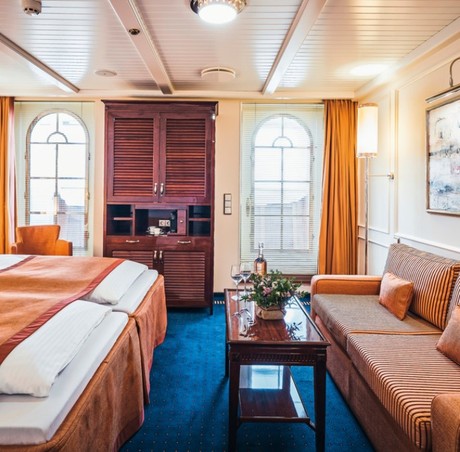
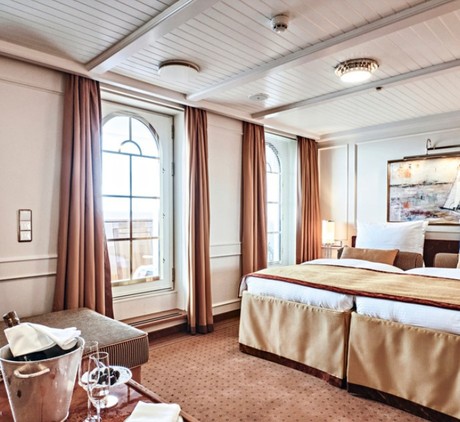
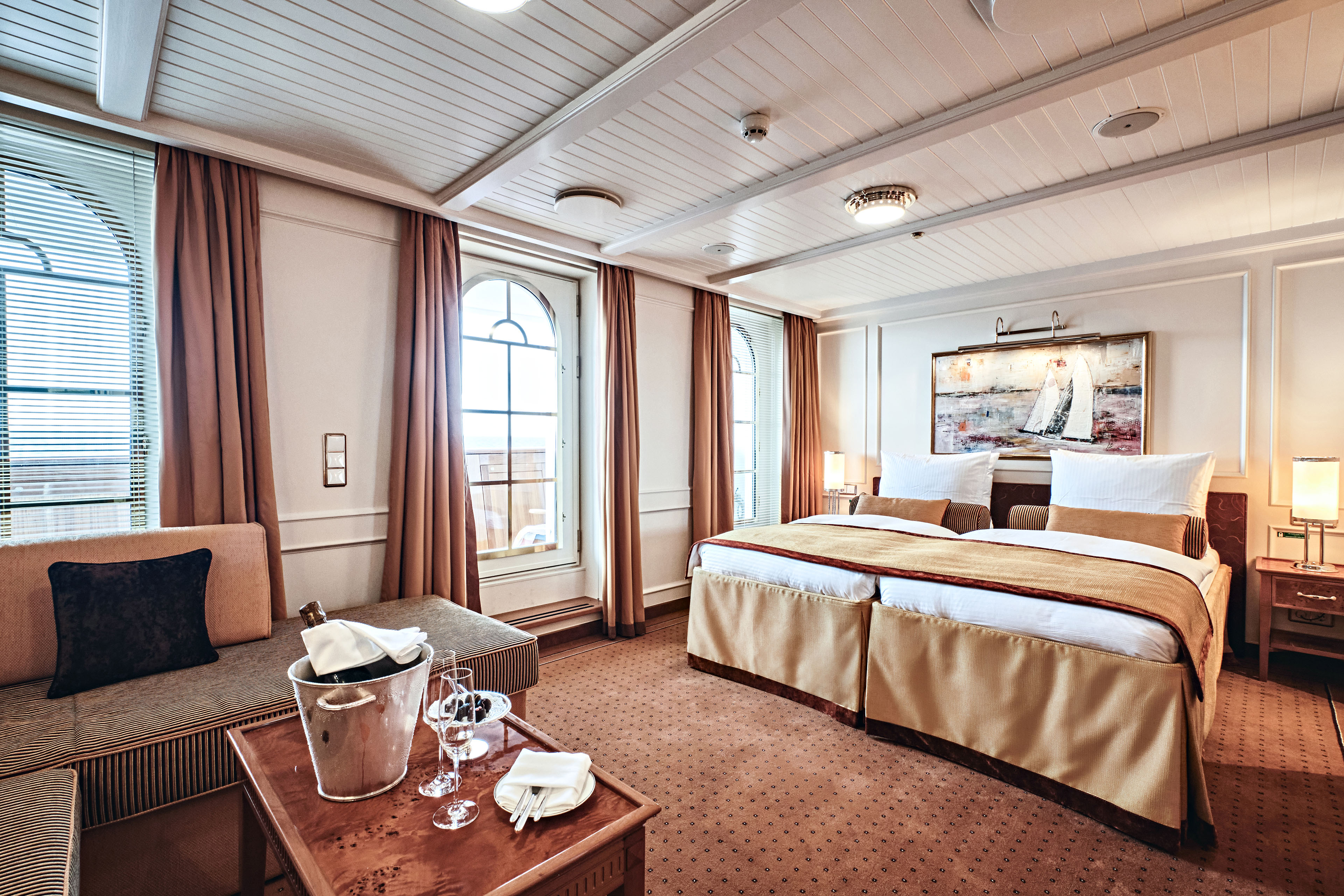
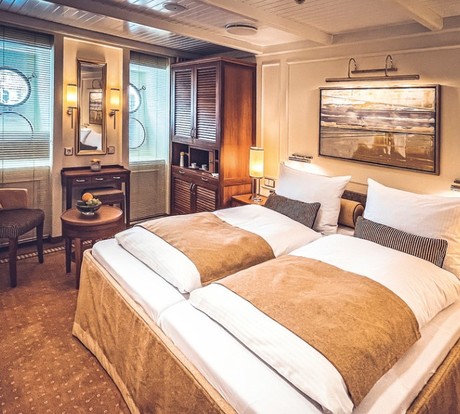
Even more comfort: of the 69 cabins from the owner suite to the superior outside cabin, almost half have balconies or windows to open.
Public areas
Spacious decks, a generous wellness and SPA area, fitness with sea view and much more: on board the SEA CLOUD SPIRIT, one does not only enjoy the freedom under sails.
Deck plans are for illustrative purposes only – The actual ship and cabin layout may differ.