
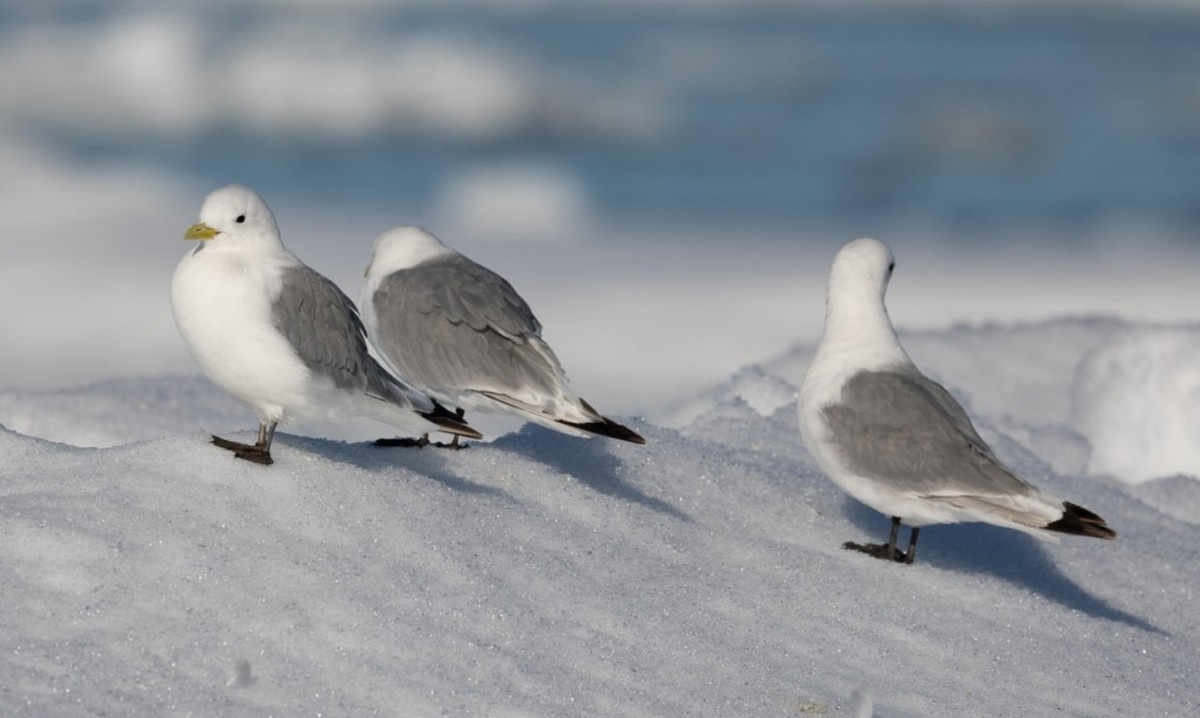
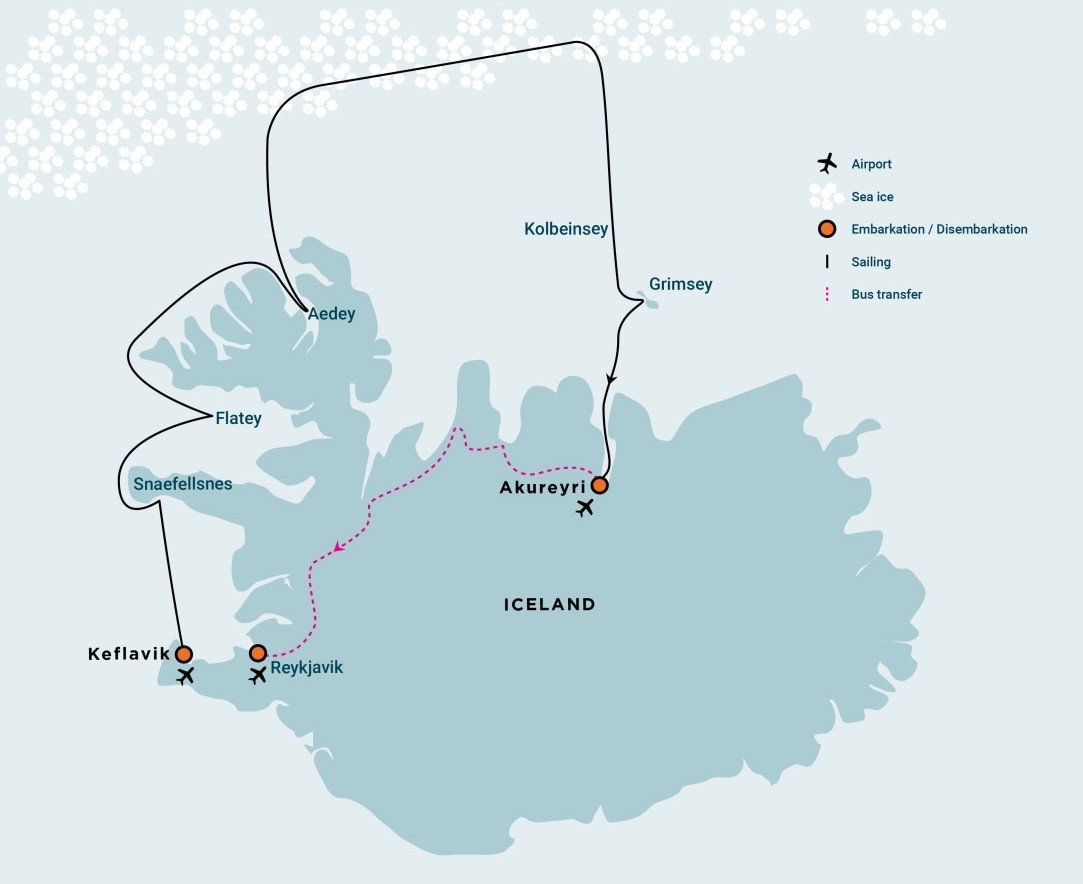
Enter a world of Norse mythology, wild, dramatic coastlines, and seabirds in their thousands as you voyage from Iceland, crossing the Arctic Circle and encountering the fringes of the sea ice, with good possibilities of viewing seals, whales, and a lonely polar bear. Seabirds will be your constant companions as you visit islands, skerries, and fjords before landfall in Akureyri, Iceland.
Solstice: -
The midnight sun is a phenomenon that occurs during the Arctic summer, when the sun is visible for a full 24 hours in fair weather. The summer solstice in Longyearbyen falls on 21 June, when the sun reaches its highest altitude of the year above the northern horizon at midnight. It will not be until late August that the sun fully goes down again, and then only for a few minutes. Join us in experiencing this fascinating phenomenon during our voyage through the Arctic wilderness of Svalbard.
- Akureyri - The cultured capital of north Iceland
- Atlantic puffin - These horn-beaked auklets have nicknames both jocular and solemn: "sea clowns" for their facial hues, "little brothers of the north" for the monk-like tones of their plumage
- Humpback Whale - Also known as "great-winged newfoundlanders" for their wing-like flippers, these cetaceans earned their more contemporary name by the way they bow their backs before a dive
Availability is always subject to confirmation. Please check with us before booking flights
Prices quoted here are often dependent on currency fluctuations. Please check with (01432 507450 or info@small-cruise-ships.com) for the very latest price, which may well be cheaper than the one advertised here.
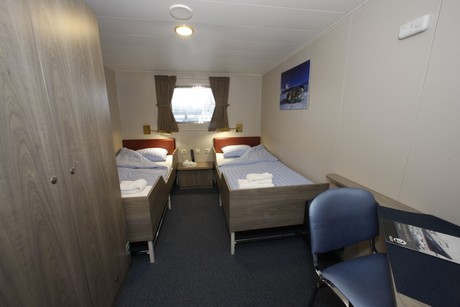
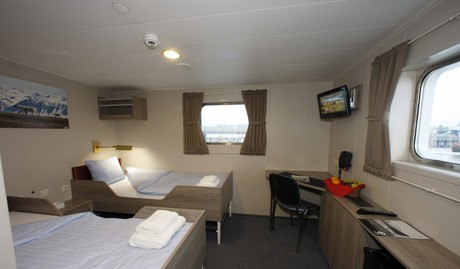
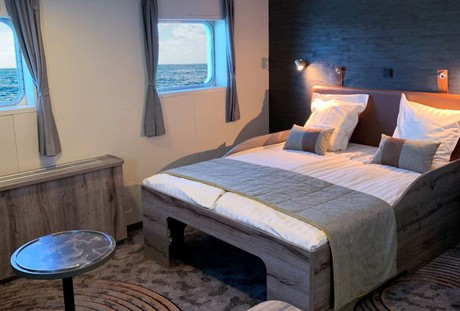

Plancius
| Length | 89 metres |
|---|---|
| Speed | 10-12 knots |
| Crew | 37 |
| Expedition staff | 8 |
| Doctor | 1 on board |
M/V "Plancius" was built in 1976 as an oceanographic research vessel for the Royal Dutch Navy and was named "Hr. Ms. Tydeman". The ship sailed for the Dutch Navy until June 2004 when she was converted into an expedition cruise ship..The vessel was completely rebuilt as a 114-passenger vessel in 2009 and complies with the latest SOLAS-regulations (Safety Of Life At Sea). M/v "Plancius" is classed by Lloyd's Register in London and flies the Dutch flag.
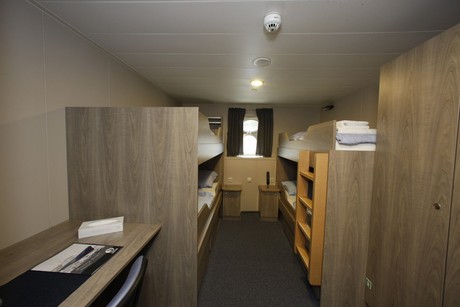
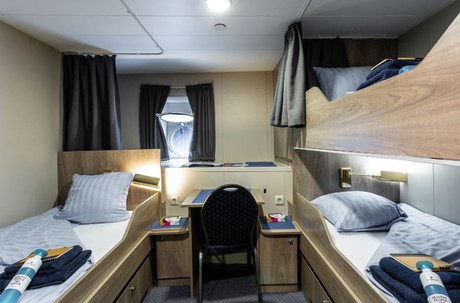
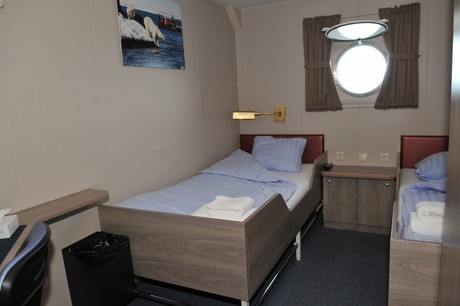
"Plancius" accommodates 114 passengers in 53 passenger cabins with private toilet and shower in 4 quadruple private cabins, 39 twin private cabins (ca. 15 square meters) and 10 twin superior cabins (ca. 21 square meters).All cabins offer lower berths (either two single beds or one queen-size bed), except for the 4 quadruple cabins (for 4 persons in 2x upper and lower beds).The vessel offers a restaurant/lecture room on deck 3 and a spacious observation lounge (with bar) on deck 5 with large windows, offering full panorama view.
Plancius has large open deck spaces (with full walk-around possibilities on deck 3), giving excellent opportunities to enjoy the scenery and wildlife. She is furthermore equipped with 10 Mark V zodiacs, including 40 HP 4-stroke outboard engines and 2 gangways on the starboard side, guaranteeing a swift zodiac operation.M/v "Plancius" is comfortable and nicely decorated, but is not a luxury vessel. Our voyages in the Arctic and Antarctic regions are and will still be primarily defined by an exploratory educational travel programme, spending as much time ashore as possible.
The vessel is equipped with a diesel-electric propulsion system which reduces the noise and vibration of the engines considerably. The 3 diesel engines generate 1.230 horse-power each, giving the vessel a speed of 10 - 12 knots. The vessel is ice-strengthened and was specially built for oceanographic voyages.M/v "Plancius" is manned by 17 nautical crew, 19 hotel staff (6 chefs, 1 hotel manager, 1 steward-barman and 11 stewards / cabin cleaners), 8 expedition staff (1 expedition leader and 7 guides-lecturers) and 1 doctor.
Ice class: Plancius was built for Ice conditions. To reach these ice-conditions she has a strengthened bow and stern. The hull is thicker and the whole construction on the waterline of the vessel is reinforced by using extra frames. Where the normal frame spacing is 65cm, we have on the bow-line and stern also frames in between so there the frame spacing is approx 30cm. Because Plancius was built to do surveys she has a special six blade bronze propeller, the shape of the propeller makes Plancius a very silent ship. Plancius has a Lloyds class notation 100A1 Passenger ship, Ice Class 1D at a draught of 5 meters (which is our waterline).Vessel Type: Expedition
_heiner_kubny-oceanwide_expeditions_088.jpg)


_heiner_kubny-oceanwide_expeditions_(4).jpg)
Deck plans are for illustrative purposes only – The actual ship and cabin layout may differ.

Includes
- Voyage aboard the indicated vessel as indicated in the itinerary.
- All meals throughout the voyage aboard the ship including snacks, coffee and tea.
- All shore excursions and activities throughout the voyage by Zodiac.
- Program of lectures by noted naturalists and leadership by experienced expedition staff.
- Free use of rubber boots and snowshoes on Plancius, Ortelius, Hondius and Janssonius.
- Free use snowshoes on Rembrandt van Rijn.
- On Spitsbergen voyages: Transfers and baggage handling between the airport, hotels and ship only for those passengers on the group flights to and from Longyearbyen.
- On Rembrandt voyages: Transfers and baggage handling between airport and ship at Constable Pynt on the chartered group flights.
- Luggage transfer from pick-up point to the vessel on the day of embarkation, in Ushuaia.
- Pre-scheduled group transfer from the vessel to the airport in Ushuaia (directly after disembarkation).
- All miscellaneous service taxes and port charges throughout the program.
- AECO fees and governmental taxes.
- Comprehensive pre-departure material.