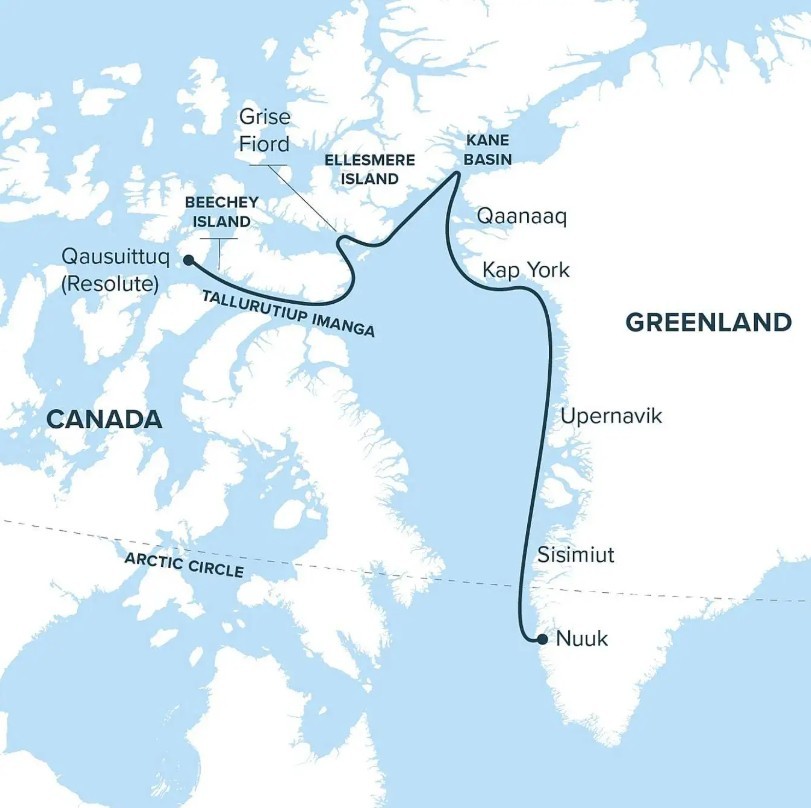
This voyage links the remote channels of the Canadian High Arctic with the dramatic coastline of West Greenland, framed by a creative lens through the presence of a McMichael curator and Group of Seven scholar. The route moves from the historic sites of Beechey and Devon Island to the stark mountain landscapes of Ellesmere and the narrow waterways of Kane Basin, where ice, wildlife, and immense geological forms dominate the experience. Community visits in Grise Fjord, Qaanaaq, and Nuuk reveal Arctic life shaped by tradition and resilience, while landings in places such as Alexandria Fjord, Kap York, and Qeqertarsuaq expose contrasting environments—from sheltered oases to volcanic shores and towering ice formations. As the voyage shifts south along Greenland’s coast, travellers gain both a deep geographical perspective and a richer artistic understanding of how northern landscapes have inspired generations.
- Tracing the landscapes that shaped historic expeditions and iconic Canadian art.
- Rare access to Ellesmere Island, Kane Basin, and remote Greenlandic communities.
- Immersive interpretation from an expert curator linking natural forms with artistic vision.
Availability is always subject to confirmation. Please check with us before booking flights
Prices quoted here are often dependent on currency fluctuations. Please check with (01432 507450 or info@small-cruise-ships.com) for the very latest price, which may well be cheaper than the one advertised here.
Arrive by charter flight from Ottawa and step into Qausuittuq, set on gravel flats and moraine beneath the glow of continuous summer light. The community’s history of relocation in 1953 intertwines with its present role as a hub for Arctic research and travel. As you prepare to embark aboard the Ocean Nova, take time to orient yourself to the stories and landscapes that shape this place.
Come ashore on Beechey Island, where Arctic history feels near enough to touch. This windswept National Historic Site holds the graves of Franklin’s men and echoes of Inuit knowledge that helped uncover their fate. Here, Inuit knowledge has been central to uncovering the fate of Franklin’s lost ships, reshaping how this history is understood. As you walk the shoreline, the stark beauty invites reflection on exploration, endurance, and cultural memory—threads that still weave through this storied place.
Sail through Tallurutiup Imanga, one of Canada’s largest marine protected areas, alive with whales, seals, and seabirds. Beneath towering cliffs and drifting ice, the sea glimmers with shifting light. Step ashore on Devon Island, the world’s largest uninhabited island, where glaciers meet the sea and tundra unfolds in broad, glacial valleys. Here, light and silence create their own compositions, inviting stillness, reflection, and a deep sense of the Arctic’s living beauty.
Set amid stark mountains and sweeping tundra, Aujuittuq, “the place that never thaws,” is Canada’s northernmost community. Here, residents share powerful stories of their families’ 1953 relocation from northern Québec and Mittimatalik—stories of resilience and adaptation that continue to shape life here. Walking the tundra with local hosts, you’ll learn how deep knowledge of land, sea, and season sustain this community of enduring strength, ingenuity, and culture that define life at the top of the world.
Explore the rugged coastline of Ellesmere, Canada’s most northerly island. Towering mountains, vast ice caps, and deep fjords define this northern wilderness. The austere beauty recalls Lawren Harris’s Arctic visions—landscapes of pure form and luminous stillness.
Sail into Kane Basin, where Ellesmere Island and Greenland nearly meet. Glaciers tower, sea ice drifts, and the shifting Arctic light transforms every moment. For generations, Inuit navigated these passages with skill and insight—long before explorers heading toward the Pole followed in their wake.
Framed by steep glacial cliffs and mirrored waters, Alexandria Fjord reveals a softer side of the High Arctic. In late summer, tundra mosses and wildflowers lend muted colour to the valley beneath sheltering peaks. Here, the stillness feels sacred—as though the land itself was holding its breath.
Set against a backdrop of mountains and drifting sea ice, Qaanaaq is one of the world’s northernmost towns and a centre of Inughuit culture. Here, knowledge of the land, sea ice, and animals continues to shape daily life, alongside modern influences. Traditions such as dog-sledding and hunting remain vital to community identity, reflecting deep connections to place. Meeting residents offers a rare opportunity to experience a way of life defined by continuity, adaptation, and enduring northern relationships.
Step ashore at Kap York, where meteorite fragments once provided iron for tools. You’ll walk shores where geology, history, and human ingenuity intersect. Feel the stark forms and elemental contrasts of the landscape and recall the Group of Seven’s Arctic canvases, where every line and shadow carried story and spirit.
Spend a day at sea as the ship sails south along Greenland’s rugged coast. Attend lectures, workshops, and cultural presentations that bring Arctic history, art, and ecology into sharper focus. From the deck, watch for whales surfacing among icebergs and seabirds soaring overhead, each fleeting moment a study in movement and light.
Nestled amongst a maze of islands, Upernavik is a town where past and present meet on the edge of the Arctic. Visit Greenland’s oldest museum, founded in 1959, with exhibits housed in historic buildings that share stories of Inuit life and colonial history. This is also where a young Knud Rasmussen—later known for his Thule Expeditions—spent part of his youth learning the skills and traditions that shaped his future. As you wander among brightly painted houses and gaze over a sea strewn with ice, you’ll feel how deeply place and story intertwine here.
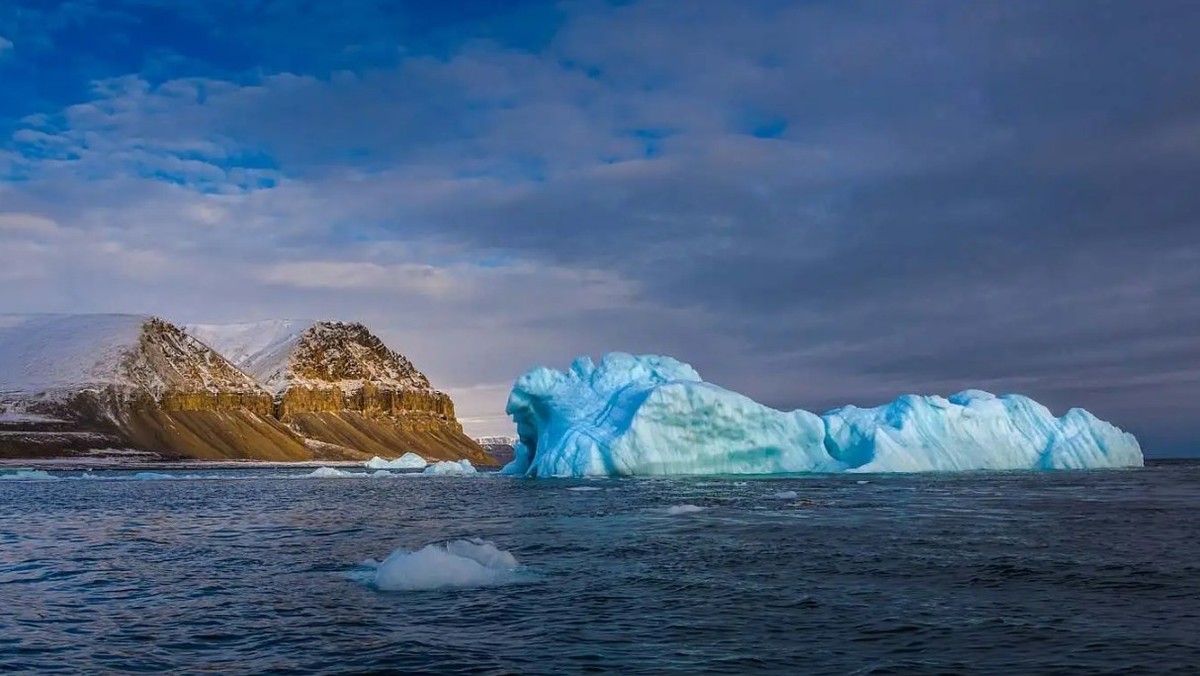
Sail among towering glaciers and drifting bergs, each one a shifting sculpture in white and blue. Fjords echo with the sound of calving ice, and mountains rise sheer above waters crowded with floes. The scale and geometry here—immense, elemental, ever-changing—recall the stark forms the Group of Seven once sought to capture in paint.
Visit Qeqertarsuaq on Disko Island, a place shaped by volcanic forces and known for striking geological contrasts. Black sand beaches meet basalt cliffs, while icebergs drift past offshore. Hike to a waterfall that cascades down from the high tundra plateau, carving bright paths through dark rock. The juxtapositions here—fiery geology against icy seas, flowing water against frozen forms—echo the Group of Seven’s fascination with elemental contrasts.
Cruise along the dramatic Sisimiut coast, where mountains rise sharply from the sea and small settlements cling to the shoreline. This region reflects Greenland’s seafaring traditions, with communities deeply tied to land and water. As you sail, the shifting light across jagged peaks creates endless new scenes—each one a masterpiece of Arctic colour and form.
Your voyage concludes in Nuuk, Greenland’s vibrant capital. Explore its lively streets and visit museums that celebrate Inuit art and history. Here, traditional knowledge and modern life come together in creative conversation. Like the artists who once looked north for inspiration, you’ll return home with your vision reshaped by northern light and the enduring power of curiosity.
Published itineraries are examples only, weather, ice, government regulations, and community requests may necessitate changes to the planned schedules. These sometimes necessary adjustments present exciting opportunities for exploration, discovery, and adventure.
Ocean Nova
| Ice Class: | Ice 1B, E0 (Hull Ice 1A) |
|---|---|
| Cabins | 37 |
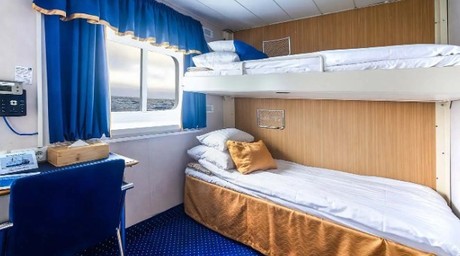
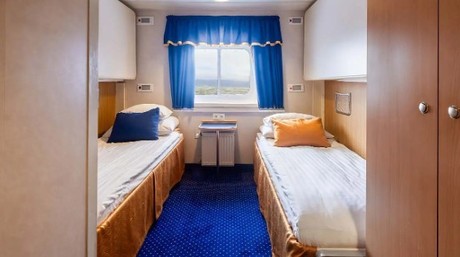
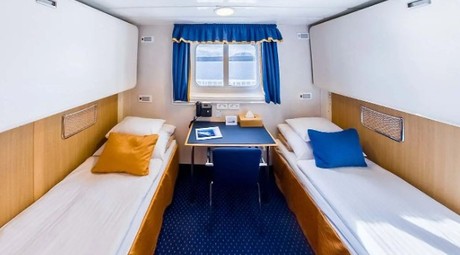
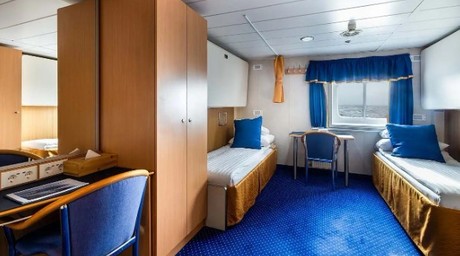
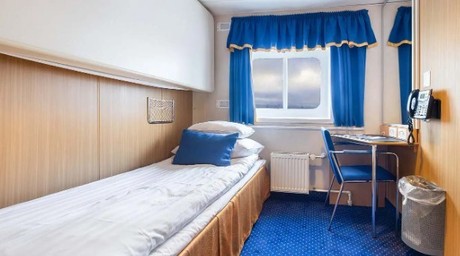
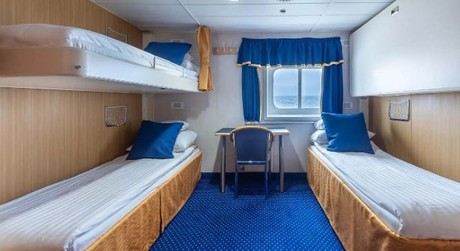
The ice-strengthened 73 metre long expedition ship Ocean Nova was built in Denmark in 1992 with high ice class to serve Greenland’s west coast. In 2004 to 2005 she was completely refurbished and has now a career as a small and comfortable expedition ship. The Ocean Nova accommodates 86 passengers in single, double and triple cabins, all with sea-view and private facilities. The double cabins have either twin beds. The triple cabins have upper and lower beds. In your cabin you will also find a desk with chair and ample storage space for clothes and equipment.
In the dining room you are treated to delicious meals in between landings and in the panorama lounge you can enjoy a drink with a breathtaking view of the surrounding polar landscape. This is where on board specialists entertain and educate you with lectures on polar biology, history, geology and conservation. There is also a library with panoramic views and a good selection of polar books. On board there is a satellite phone, gym and medical doctor. Passengers are welcome on the bridge around the clock and there is always something to see or search for from the spacious observation decks. The ship has North European officers and there is a friendly and informal atmosphere on board. Travelling with this small expedition ship offers an entirely different experience and perspective than you can get on a larger and more conventional cruise ship.
Cabins are spread over two decks and include cabins for the single traveller, double and triple cabins, all with sea-view and private facilities. The comfortable dining room located on the Upper deck seats all passengers in a single sitting and offers delicious meals with a mixture of table service and buffet. The informal dining arrangement adds to the friendly atmosphere onboard and meals are a great chance to discuss all you have seen with your fellow travellers, and for the expedition team to share their knowledge.
With one of the highest ice classes (1B) and a 2000 hp diesel engine, Ocean Nova is a small but sturdy expedition vessel just as at home in the icy waters of Svalbard as she is in a tranquil Scottish loch. The ship has a crew of 34, including North European officers, whose prime concern is your safety as well as ensuring wildlife sightings and weather conditions are maximised. For your safety there are two fully enclosed lifeboats and a medical clinic onboard.
Deck plans are for illustrative purposes only – The actual ship and cabin layout may differ.
Book before 28 January, 2026 and save 25%
Save 25% early bird discount on selected 2027 departures
Offer valid if booked before 28/01/2026
Subject to availability
Offer can be withdrawn at any time
Offer is only valid on specific departures
Only applies to new bookings