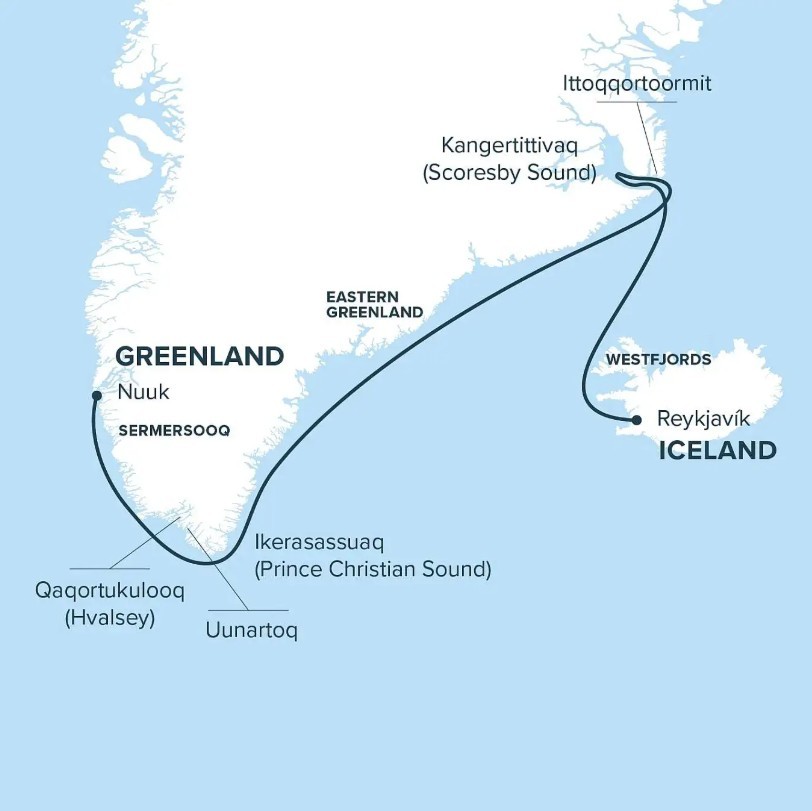
A traverse from Iceland’s remote Westfjords into the glacier-forged landscapes of East Greenland, centred on the vast Scoresby Sound fjord system. The route blends towering basalt walls, drifting ice, and broad tundra valleys with a visit to Ittoqqortoormiit, one of the Arctic’s most isolated communities. Southern Greenland adds narrow mountain passages, geothermal pools, and Norse archaeological sites before the voyage ends in Nuuk.
- Scoresby Sound: immense fjords, sheer cliffs, drifting pack ice, and high wildlife potential.
- Ittoqqortoormiit: extreme isolation, living Inuit culture, and sea-ice proximity.
- Prince Christian Sound to Hvalsey: tight channels, mountain spires, hot springs, and Norse ruins.
Availability is always subject to confirmation. Please check with us before booking flights
Prices quoted here are often dependent on currency fluctuations. Please check with (01432 507450 or info@small-cruise-ships.com) for the very latest price, which may well be cheaper than the one advertised here.
Reykjavík rises from steam and sea—colourful homes scattered across lava fields, the air hints of salt and the scent of sulfur. Beneath the streets, geothermal warmth hums quietly, as if the earth itself were breathing. It’s a city of storytellers, where old sagas live comfortably beside cafés, music, and modern art.
Before departure, take time to wander the harbourfront or step into the National Culture House, where the Poetic Edda and Norse sagas rest in their original manuscripts. As evening settles, lights shimmer across Faxaflói Bay. The ship turns north, first toward the Westfjords, then onward to Greenland—vast, glacial, and alive with promise.
In Iceland’s far northwest, mountains drop straight into the sea. The air has the organic scent of seaweed; the wind breathes through the grass. Puffins and guillemots wheel over basalt cliffs, their cries carried on the breeze.
Travel along this rugged coast by Zodiac and on foot, pausing where tide pools reflect the sky. The Westfjords invite a slower rhythm—time to stand still, to listen, to let the landscape speak for itself. As the ship sails away, the cliffs fade into mist, and the open sea beckons.
A day for inner and outer horizons—a time of learning as much about the mind as the sea’s edge. The Atlantic deepens to cobalt; fulmars follow the ship’s wake. Conversation, presentations, and hands-on workshops fill the lounge, or perhaps you would prefer a quiet corner on deck to watch the changing sea. Ahead lies Greenland—its first icebergs already visible on the edge of vision.
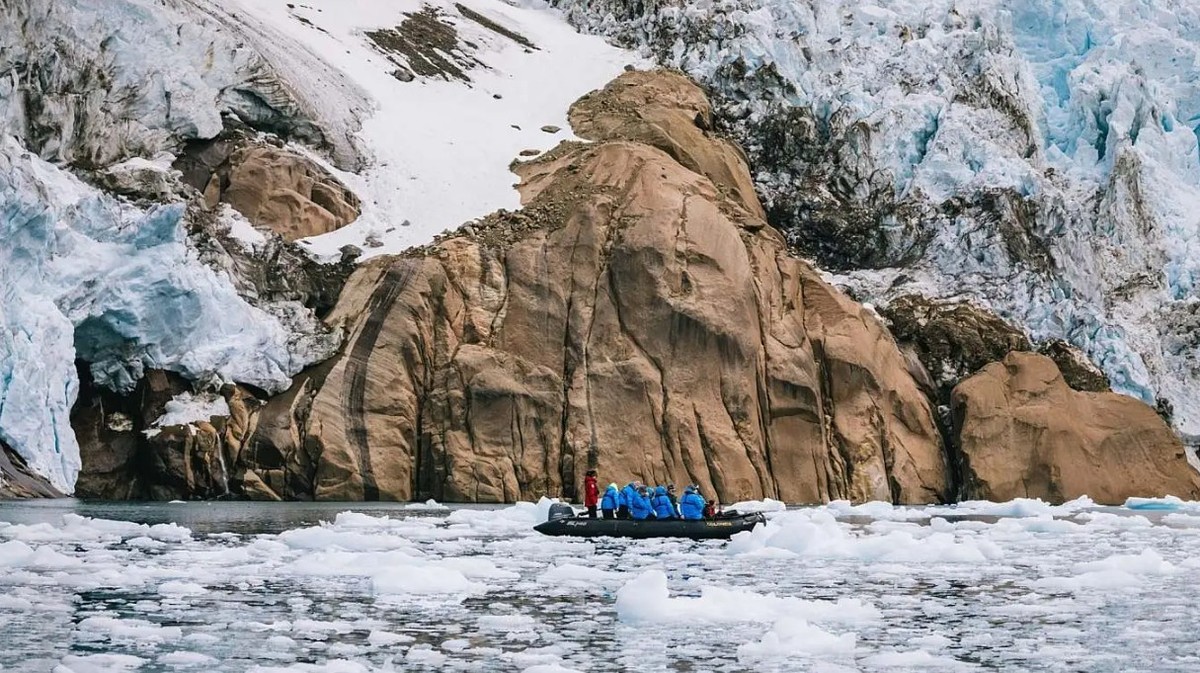
Kangertittivaq—Scoresby Sound—is a labyrinth of fjords, islands, and ice reaching deep into East Greenland. Mountains rise sharply from still water; glaciers move with patient force. The light shifts constantly—from silver to blue, from glow to shadow.
Days spent exploring by Zodiac and on foot draw you deep into this seldom-visited landscape. Each landing offers a new glimpse of Arctic life: saxifrage bright against stone, the possibility of muskox grazing on slopes, the clean silence between echoes of calving ice.
Along the shore, traces of ancient Inuit camps show how long this landscape has been lived in and understood. Inuit cultural interpreters, who travel with us, share stories of ice, animal, and season, connecting past to present in ways no map can capture.
Evenings bring calm and reflection. Icebergs drift past like sculpted memory; the midnight sun hovers low, painting the water in impossible blues and golds. Ahead lies Ittoqqortoormiit, a far-northern community where the stories of land and sea meet and evolve.
At the mouth of Kangertittivaq lies Ittoqqortoormiit, one of the world’s northernmost communities, where brightly painted homes stand against sea, ice, and tundra. Life follows the rhythm of the seasons—hunting, fishing, and gathering—each activity shaped by deep knowledge of place and weather.
The local economy flows with these patterns: seal, narwhal, and muskox hunting; fishing for Arctic char; and the making of art and crafts in narwhal tusk, soapstone, and sealskin. Some residents work in guiding, education, or public service, while expedition visits and small-scale tourism add new layers of exchange. Yet the heart of life here remains close to the land and sea, bound to the movement of ice and the return of light.
Visitors are welcomed ashore by local hosts who share stories of their community and connection to the environment. Children’s laughter mingles with the sound of sled dogs and the creak of sea ice. This is a place of continuity, not distance—where knowledge, tradition, and creativity sustain daily life. From here, the ship follows the coast south along Greenland’s eastern edge, where glimpses of the island’s vast ice sheet appear now and then along the mountainous fringe.
Farther south along Greenland’s east coast, the scenery grows wilder and more intricate. Mountains lean over the sea, glaciers split and tumble, and icebergs turn slowly in calm fjords the colour of steel and turquoise.
Zodiac cruises and landings bring travellers close to the cliffs, where ice and stone meet in sculpted silence. When conditions allow, hikes ashore offer a chance to feel the land underfoot and take in its stillness. In calm weather, reflections blur sea and sky until the world feels weightless. The ship then turns again toward open water—the route bending south into another shade of blue.
As we travel south along Greenland’s east coast, the rhythm of the sea sets the tone for the day—calm, steady, and full of quiet wonder. The fjords give way to open water, and the coastline drifts by in shades of ice and rock, glacier and mist. Out on deck, guests linger to trace the slow movement of bergs, watch seabirds trace the wind, and feel the pulse of the North in every rolling swell.
Inside, the atmosphere is easy and engaging. An expedition team member might share stories of Greenland’s geology, wildlife, or Inuit heritage, while others enjoy reading, journaling, or conversation over coffee. There’s laughter on deck, the creak of the ship in gentle swells, and time to simply watch the world unfold. As the light shifts across the water, the day becomes both restful and rich—a pause between destinations that deepens connection to this vast and beautiful coast.
Sailing through Ikerasassuaq, one of the world’s most dramatic waterways, jagged peaks of gneiss and granite rise in wild, serrated lines, streaked with waterfalls and glaciers. This is the moment to be on deck—watching light and ice shift with every turn—as the Irminger and Labrador Seas meet through Uummannarsuaq, the islands of the Cape Farewell Archipelago at Greenland’s southern tip.
Calving ice cracks through the air; fog curls between cliffs; sunlight slides down the mountainsides. It’s a passage that humbles and renews. South Greenland now opens ahead, lush with life.
At Uunartoq, hot springs steam beside a cold bay—a meeting of extremes that feels almost ceremonial. Nearby stand the ruins of Qaqortukulooq (Hvalsey), once a Norse farmstead. Its stone church still holds its shape after six hundred years. The last written record from the colony describes a wedding here in 1408.
Today, only wind and birds move through the valley. Moss softens the stones; history feels close enough to touch. As the ship sails westward, the landscape grows greener, warmed by the North Atlantic Current that softens the climate along these southern coasts. It was in this area that Erik the Red established his settlements and, some say, named the island "Greenland"—perhaps to attract settlers, or perhaps inspired by this genuinely fertile and temperate shore.
Sermersooq—the “place of many glaciers”—unfolds into deep valleys, bright tundra, and fjords lined with wildflowers in summer. This is a coastline alive with movement and sound: the sharp call of white-tailed eagles overhead, the sweep of glaucous gulls and kittiwakes along the cliffs, and now and then the soft exhale of a minke or humpback whale just beyond the bow. Beyond these fjords, the journey’s final harbour awaits.
The voyage ends in Nuuk, Greenland’s capital—a city alive with art, language, and everyday life. On the waterfront, fishing boats, families, and sea ice share the same horizon.
Nuuk feels both timeless and forward-looking—a community rooted in tradition and alive with new ideas. As departure approaches, the northern light lingers, carrying the sense that the story continues—and that, in some quiet way, you are now part of it.
Published itineraries are examples only, weather, ice, government regulations, and community requests may necessitate changes to the planned schedules. These sometimes necessary adjustments present exciting opportunities for exploration, discovery, and adventure.
Ocean Victory
| Vessel Type | Luxury X-Bow®-Infinity Class Vessel |
|---|---|
| Launched | 2020 |
| Cabins | 93 |
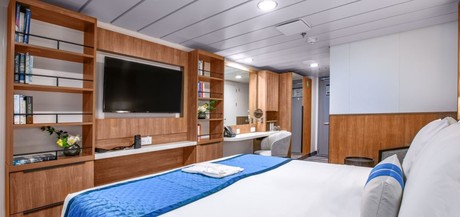
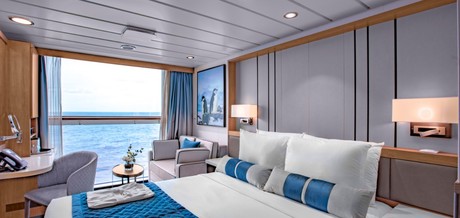
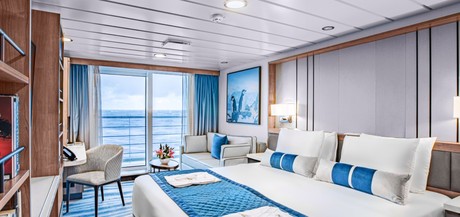
This stylish cruise ship, built specifically for small ship expeditions to the Polar Regions, features cutting edge technology mixed with great comfort.
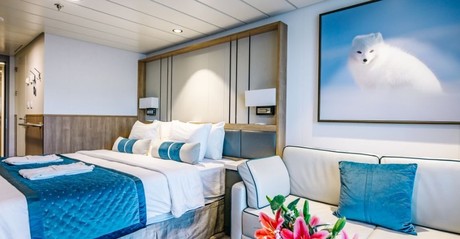
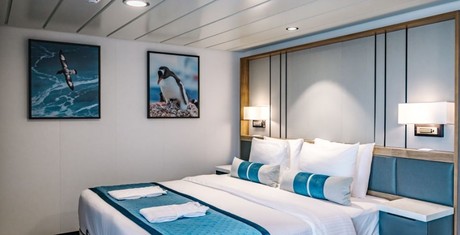
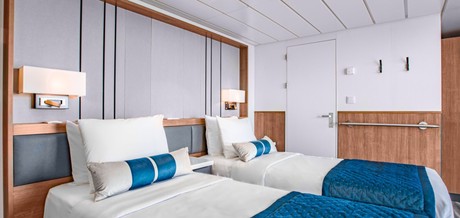
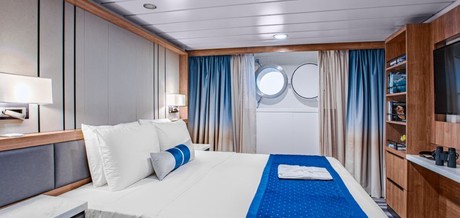
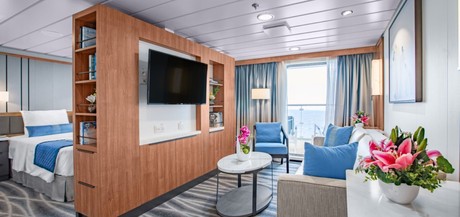
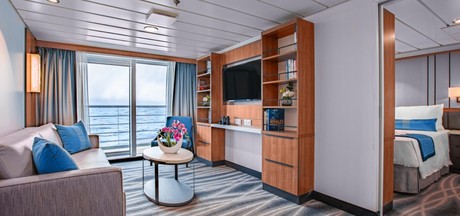
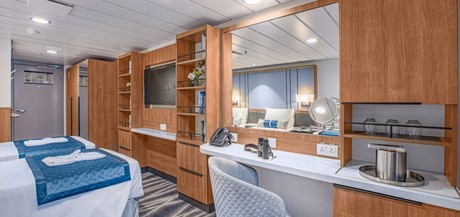
With a total of 93 comfortable cabins for our guests, all with a view of the ocean, (and 90% with their own balcony), several restaurants, a wellness area, an Albatros Nordic Bar, an open deck dining facility, a modern lecture lounge, and other amenities, the vessel will also be environmentally-friendly onboard, with an implementation of the Green Initiative Program, ensuring both absolute comfort and sustainability for our guests.
Now, for the technical details:
With the highest Polar code 6 and Ice class 1A, Ocean Victory is the ideal vessel for small-ship cruising due to her sturdy construction and X-Bow®-Infinity class, which provides high stability in rough weather and allows for the smoothest movements on high waves, and a Solas 2012 classification which facilitates a safe return to port.
The vessel is part of a brand new generation of low-energy vessels, with 4 diesel engines and 2 electro engines, all controlled electronically to optimize speed and fuel consumption.
Restaurant & bar
Dinner always starts with delicious hot soups, cold cuts and crisp, fresh salads. Several choices of entrees are offered each evening, to accommodate different tastes and dietary requirements; always including a meat choice, fish choice and vegetarian choice.
After dinner, freshly prepared desserts, including ship-made ice cream or cakes are a great way to end a meal and satisfy any sweet tooth.
A selection of wines and beers is available to perfectly compliment your visit to our restaurant… and if you’re interested in relaxing during your time off from activities and landings, delight onboard Ocean Atlantic by raising your glass to the experience of a lifetime!
Our bar is fully equipped with a variety of cocktails, beers, non-alcoholic beverages and more, to quench your thirst and reward the explorer in you.
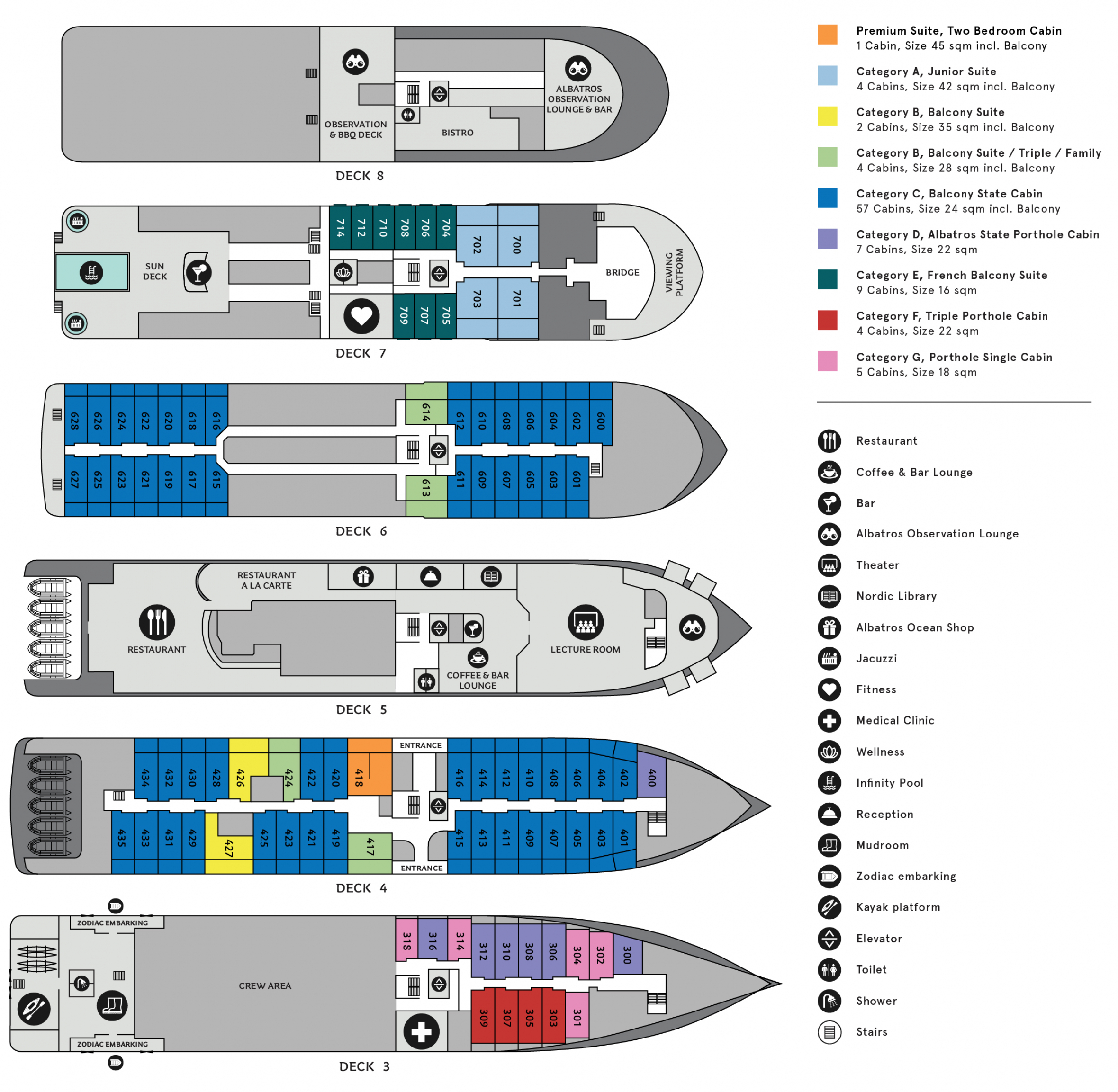
Deck plans are for illustrative purposes only – The actual ship and cabin layout may differ.
Book before 28 January, 2026 and save 25%
Save 25% early bird discount on selected 2027 departures
Offer valid if booked before 28/01/2026
Subject to availability
Offer can be withdrawn at any time
Offer is only valid on specific departures
Only applies to new bookings