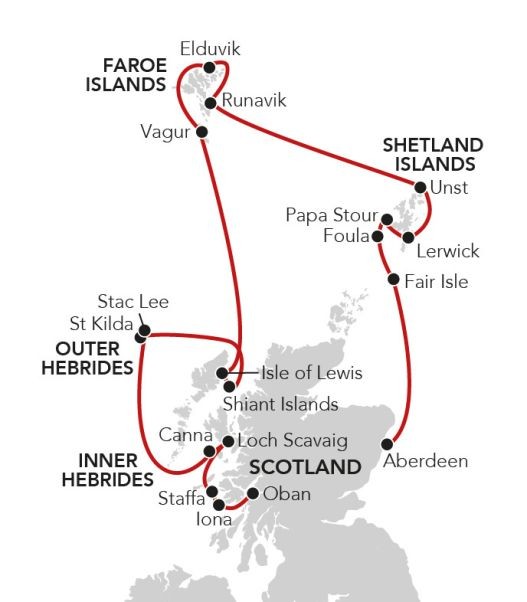
This expedition cruise is one of our most popular and will appeal to those who prefer their islands deserted, but with abundant bird and wildlife. True, Noble Caledonia can bring you all over the world, visiting all manner of exotic and wonderful places yet it is also true that some of the finest scenery, fascinating history and most endearing people are found close to home and nowhere is this truer than the islands off Scotland’s indented coastline which form stepping stones into the Atlantic. During this unique voyage, we will journey along rugged coastlines and visit once inhabited islands venturing far north to the Orkney, Shetland and Faroe Islands combined with our time in the wonderful Hebrides.
We have been operating cruises around the tip of Scotland for many years and this itinerary truly conveys the multiple benefits of small ship cruising. With our fleet of Zodiacs we are able to make calls into some of the remote and uninhabited islands that surround the Scottish coast and cruise close to shorelines and cliffs crowded with birdlife. Few ships make the journey to these outer islands and we are grateful to therefore be able to explore these wonderful places aboard the all-suite MS Hebridean Sky with just 100 or so fellow passengers and our expert expedition team. To combine the small communities of North Ronaldsay, Foula and Unst with uninhabited St Kilda into one itinerary is rare and when combined with the Shetland capital of Lerwick and the small village of Elduvik in the Faroe Islands, such an itinerary allows us to understand the history, witness the wildlife and experience the culture of these remote and beautiful islands.
- Remote island expedition from Orkney and Shetland to the Faroes and Outer Hebrides
- Exceptional seabird, wildlife, and cliff scenery including St Kilda and Staffa
- Deep archaeology and culture spanning Neolithic sites, Norse heritage, and Gaelic history
Availability is always subject to confirmation. Please check with us before booking flights
Prices quoted here are often dependent on currency fluctuations. Please check with (01432 507450 or info@small-cruise-ships.com) for the very latest price, which may well be cheaper than the one advertised here.
Embark the MS Hebridean Sky this afternoon. Transfers will be provided from Aberdeen Airport and Aberdeen Railway Station at a fixed time. Sail this evening.
Enjoy a leisurely morning on board as we cruise to the Orkney Islands arriving in the early afternoon at the northernmost isle of North Ronaldsay. The birdlife here is prolific as the wetland habitats support the wildfowl and wader species, whilst the rugged coastline provides nesting sites for seabird colonies. If weather conditions permit, a series of walks will include the bird observatory and we also hope to view the seals hauled up on the beaches. Those wishing to explore further can visit the lighthouse with views over the nearby islands, or the wool mill where yarn is produced from the island’s seaweed eating sheep.
This morning we visit Foula, one of Britain’s most remote inhabited islands. Apart from a narrow coastal strip of more fertile croftland, Foula is an expanse of peat and moorland rising steeply to five dramatic peaks. Translated as ‘Bird Island’ from Old Norse the island is designated as a Special Protection Area for Birds and is home to the world’s largest colony of great skuas, known locally as bonxies, which compete fiercely with Arctic skuas for breeding territories. Kittiwakes and Arctic terns return annually to nest whilst the cliffs teem with puffins, shags and fulmars. Over lunch we will sail the short distance to Papa Stour where we will use our Zodiacs to explore the stunning cliff scenery, sea stacks, arches, blowholes and coastal caves which are home to Arctic skua and large numbers of Arctic terns.
From the Shetland capital, we have a choice of tours today, maybe visit the remarkable archaeological site of Jarlshof. The site was uncovered by a violent storm in the winter of 1896/7, revealing an extraordinary settlement site embracing at least 5000 years of human history. The site contains a remarkable sequence of stone structures – late Neolithic houses, a Bronze-Age village, an Iron-Age broch and wheelhouses, several Norse longhouses, a Medieval farmstead and the 16th century laird’s house. Alternatively, visit Sumburgh Head, the southernmost point of the Shetland mainland. Here the steep cliffs are home to colonies of puffins, fulmars, guillemots and shags with each species occupying different areas of the cliffs. Also see the Sumburgh Head Lighthouse, the oldest in Shetland having been constructed in 1821, whilst from the viewing points we may also spot whales and dolphins in the water. Both tours return to the vessel for lunch followed by an afternoon at leisure to explore this historic port. Perhaps wander through its narrow stone lanes or maybe visit the excellent Shetland Museum, containing artefacts from shipwrecks and the whaling era. Tonight we will enjoy the company of local musicians on board.
We arrive over breakfast at the northern island of Unst. Unst is Britain’s most northerly inhabited island and at the Heritage Centre we will learn about the islanders’ struggles over the centuries and the industries that have prospered whilst the Unst Boat Haven is dedicated to the history of the island’s distinctive wooden boats which descend from Viking craft. We will also visit Saxa Vord with views over Hermaness National Nature Reserve and Muckle Flugga stacks which are home to thousands of gannets and puffins as well as rare Arctic-alpine plants. Spend the afternoon at sea as we cruise towards the Faroe Islands.
Our first call in the Faroe Islands is at Runavik which due to its sheltered location in the Skalafjordur has been used as a port since the Vikings. Leaving the port we will drive to the beautiful village of Saksun, an isolated settlement situated beneath steep majestic mountains. We visit Duvugaroar, an old farmhouse, which is now a museum and a traditional Faroese wooden church in Kollafjord. This afternoon is free to explore the small town of Runavik. Maybe visit the Forni Historical Museum, the Church of Glyvrar and the boathouse. There will also be the opportunity to join our naturalists for a walk around Lake Toftavatn seeing the rich birdlife, Faroese flora and the statue of the shepherd and his dog.
Today we enjoy the benefits of small ship cruising as we make our way to the north of the island of Eysturoy and the small traditional village of Elduvik. Located at the end of a lush valley and surrounded by mountains, the village has a resident population of 12 who will welcome us ashore. Villagers will lead walks around the town including the colourful houses and the church and hear stories of the history, myths and culture of the region. Those feeling active may wish to join a strenuous yet scenic hike along the old village path through the Skoratind hills to neighbouring Oyndarfjordur, enjoying views of the nearby island of Kalsoy and the hills of Funningur.
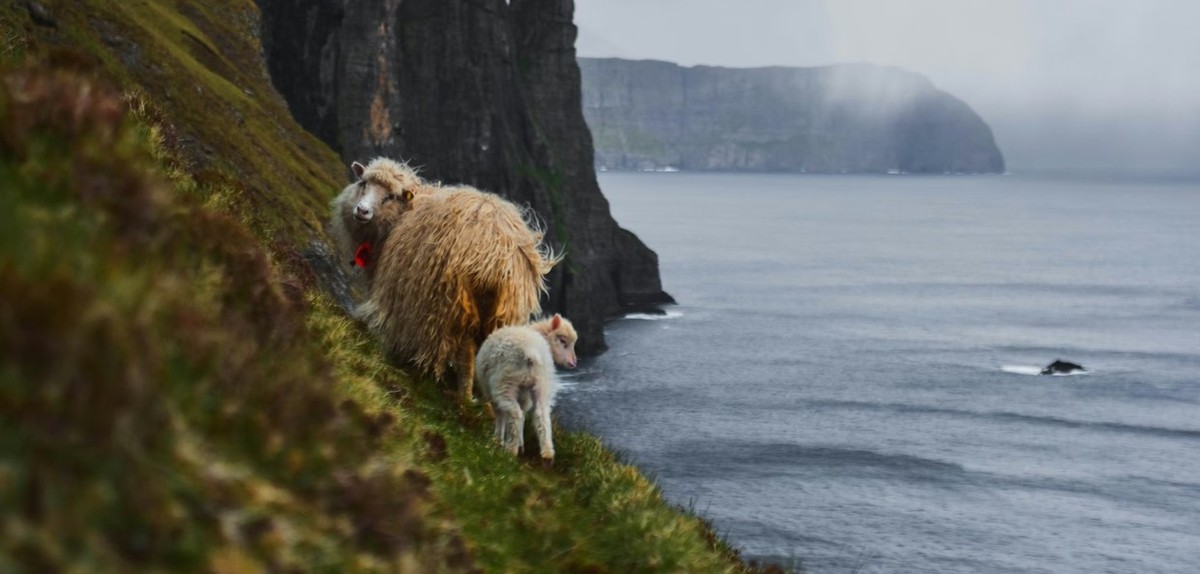
Our final call in the Faroes will be at Suduroy, the southernmost island of the group. From the port of Vagur we have a choice of activities. Choose to join an island tour passing the beautiful scenery as we drive between the villages seeing the stunning geology, fjords, tunnels and architecture of the island as well as the southernmost point and the Akraberg lighthouse. In Porkeri we will take the ridge-top road which winds up the mountainside for wonderful views towards the steep cliffs on the west coast, the Beinisvoro promontory to the north and the luscious grass slopes to the east. To locals, this delivers the essence of the Faroe Islands with mountains and fjords, villages and valleys, birds, sheep and nature. Alternatively, those feeling active may wish to join a hike to Hvaanhagi, a beautiful, uninhabited place north of Tvoroyri on the east coast of Suduroy. The view is fantastic towards the three islands of Litla Dimun, Stora Dimun and Skuvoy. There are sheep and birds, a valley with a lake and beautiful high mountains. Spend the afternoon at sea as we return to Scotland.
On leaving the island capital of Stornoway, we will head across the island of Lewis to the beautiful west coast. Described as Scotland’s Stonehenge, the Callanish Standing Stones date from around 3000 BC. There are a total of 32 stones in a circular and avenue design. The stones stand like a petrified forest on the flat top of a peninsula which reaches out into East Loch Roag. We also visit the Dun Carloway Broch, probably built sometime in the last century BC, it would have served as an occasionally defensible residence for an extended family complete with accommodation for animals at ground floor level. Our next stop is the Gearrannan Blackhouse Village, a reconstructed settlement of traditional black houses which were made using dry stone masonry and have thatched roofs, distinctively weighted down with rocks. Visit the small museum, enjoy a display of a typical crofting activity such as weaving and take in the views of this dramatic site on the wild Atlantic coast. This afternoon we will board the Zodiacs for a cruise around the spectacular basalt cliffs of the Shiant Islands, a group of little islands located a few miles off the shores of Lewis. This is an excellent place to spot puffins, razorbills, guillemots, seals and hopefully white-tailed eagles.
We spend the morning at St Kilda, a remarkable uninhabited archipelago some fifty miles beyond the Outer Hebrides. Dominated by the highest cliffs and sea stacks in Britain, Hirta, St Kilda’s main island was occupied on and off for at least two thousand years, with the last 36 Gaelic speaking inhabitants evacuated at their own request in 1930. Immediately after the evacuation, the island was bought by the Marquess of Bute to protect the island’s thousands of seabirds including puffin and fulmars and in 1957 it was bequeathed to The National Trust for Scotland. St Kilda is one of the few UNESCO World Heritage Sites with dual status reflecting its natural and cultural significance. The local ranger will join us on board before our expedition staff lead guided walks on the island. Later, we will cruise past one of the largest gannetries in the world at Stac Lee. The impressive stacs rise 170 metres from the sea and are home to up to 60,000 breeding pairs of northern gannet.
The island of Canna is run as a single farm and bird sanctuary by the National Trust for Scotland and enjoys the best harbour in the Small Isles, a hornshaped haven. The fertile soil and its diversity of habitats mean that the island has an incredibly rich plant life with 248 native flowering plants recorded. During our time on the island we will see Canna House and wander across grassy basalt plateaus to the 600 foot cliffs on the north shore. Over lunch we cross to the lovely Loch Scavaig on the island of Skye. Just beyond is the freshwater Loch Corruisk with its breathtakingly beautiful view over the Cuillins. This is great walking country and our expedition team will run a series of hikes for all interests. For those who prefer a less energetic afternoon our Zodiacs will explore the coast looking out for seals.
At first light we arrive at Staffa where the perpendicular rock face features an imposing series of black basalt columns, known as the Colonnade, which has been cut by the sea into cathedralesque caverns, most notably Fingal’s Cave. Weather permitting, we will use our Zodiacs to explore closer. We will sail over lunch to Iona which has been occupied for thousands of years and has been a place of pilgrimage and Christian worship for several centuries. It was to this flat, Hebridean island that St Columba fled from Ireland in 563 and established a monastery. Here his followers were responsible for the conversion of much of pagan Scotland and Northern England. No less than 62 Scottish Kings are buried in the Abbey. Visit the Abbey or perhaps walk along the white sandy beaches or go in search of the corncrake amongst the irises.
Disembark the MS Hebridean Sky after breakfast. Transfers will be provided to Glasgow Central Railway Station and Glasgow Airport at a fixed time.
Itineraries are subject to change.
Hebridean Sky
| Length | 90 metres |
|---|---|
| Built/refurbished | 1992/2016 |
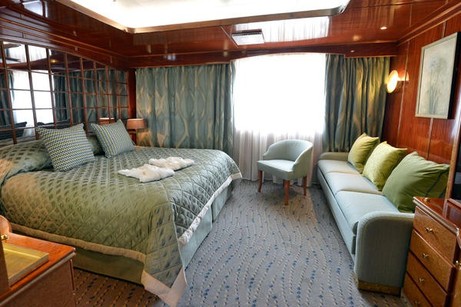
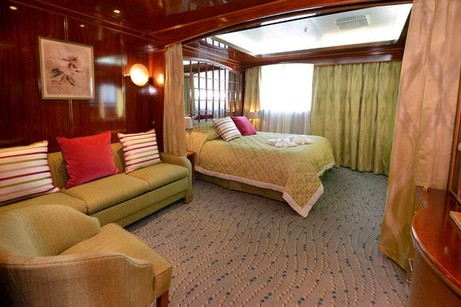
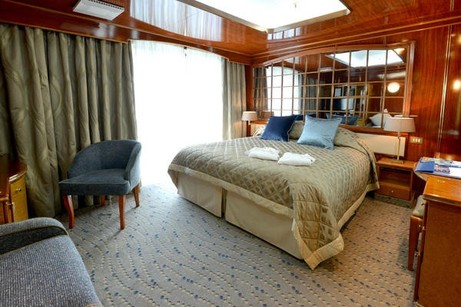
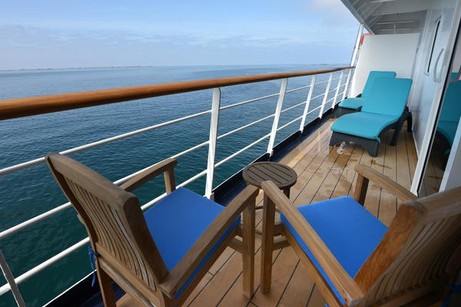
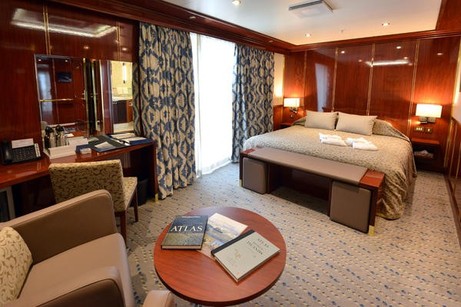
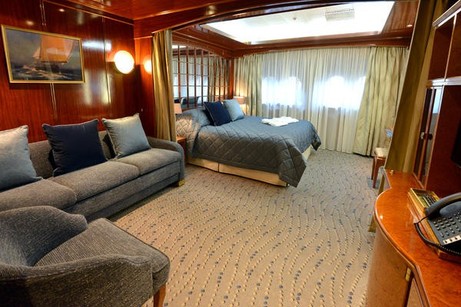
Hebridean Sky has always been known for its effortless elegance, impeccable service and atmosphere of charm and camaraderie. Now we add increased adventure options and an on-site Passenger Service Representative. Hebridean Sky is the perfect blend of luxury and adventurous exploration. Is it a luxury ship? An adventure ship? It’s both! The vessel underwent a multi-million pound refurbishment in Sweden in Spring 2016.
ONBOARD DINING
Great expeditions require great food! We are pleased to offer daily changing breakfast, lunch and dinner menus with an emphasis on providing well balanced and nutritional cuisine. Our team of international chefs has boat loads of creativity and you are sure to experience a variety of interesting dishes throughout your voyage. The restaurant is located on Deck 2 and our service team looks forward to providing a memorable dining experience.
IMPECCABLE SMALL-SHIP AMENITIES
Returning from excursions, passengers enjoy complimentary refreshments, afternoon tea and all-day coffee in The Club, a gracious space for relaxation, surrounded by panoramic windows. Other Sea Explorer features include:
- Library with Internet access
- Lounge with audiovisual facilities
- Dining room
- Wraparound sun deck with Jacuzzi
- Exercise room
- Medical facilities with available doctor
- Elevator serving all passenger decks
- Swimming/zodiac platform
Please note deck plan may vary.
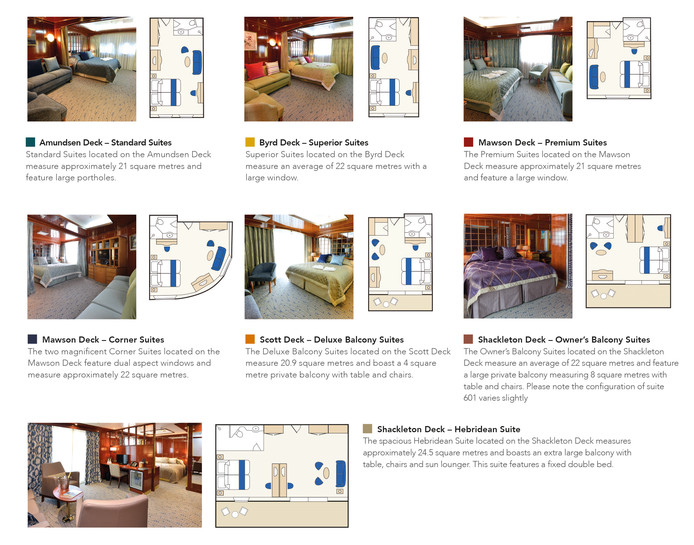
Deck plans are for illustrative purposes only – The actual ship and cabin layout may differ.