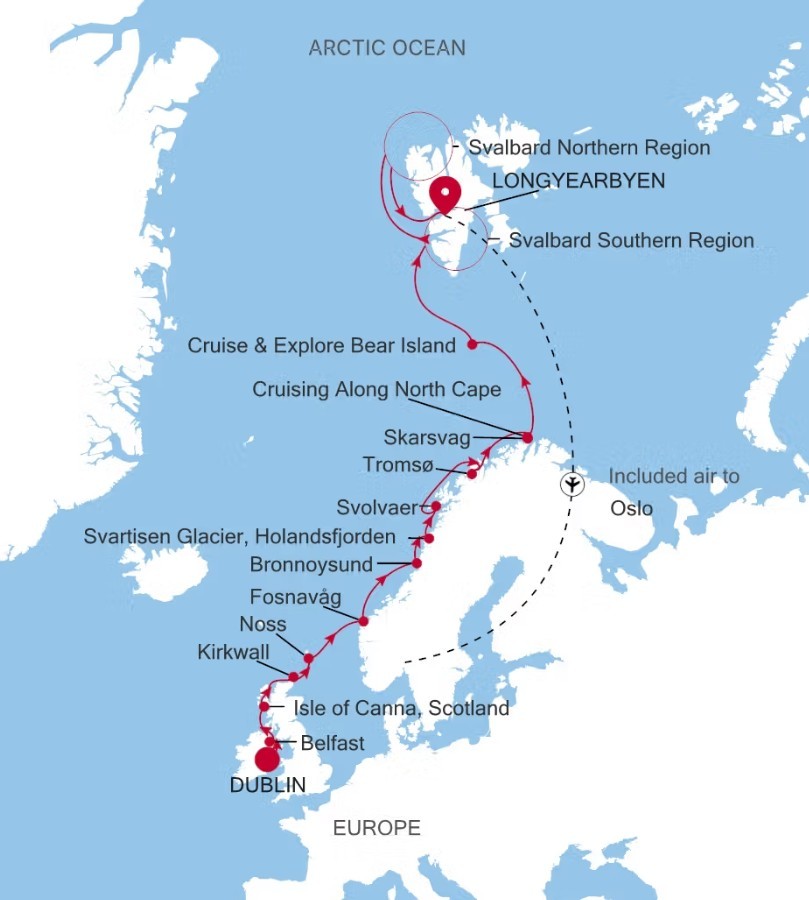
Venture through Northern Europe’s majestic landscapes — from dramatic fjords and glaciers to a deep Arctic immersion in Svalbard. Beginning in Dublin, explore Northern Ireland and remote Scottish isles, before Norway’s glacier-carved landscapes take center stage. Leave Europe’s northern tip in your wake, entering the High Arctic for unforgettable days amid Svalbard’s wilderness of polar bears, sculpted ice, and seabird cliffs — all illuminated by the midnight sun.
- Cruise from Dublin through the British Isles and Norway’s spectacular fjords before venturing deep into the Arctic wilderness of Svalbard.
- Witness glaciers, dramatic cliffs, and the extraordinary wildlife of the High North — including polar bears, walruses, and seabird colonies.
- Experience the ethereal beauty of the midnight sun while exploring some of Europe’s most remote and awe-inspiring landscapes.
Availability is always subject to confirmation. Please check with us before booking flights
Prices quoted here are often dependent on currency fluctuations. Please check with (01432 507450 or info@small-cruise-ships.com) for the very latest price, which may well be cheaper than the one advertised here.
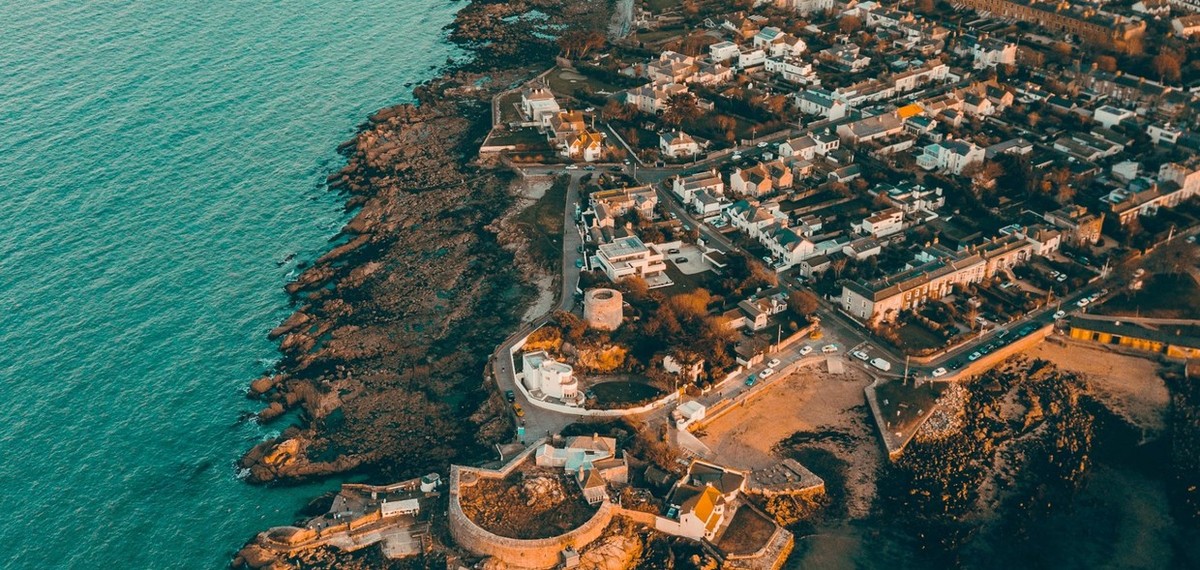
Atmospheric cobbled streets, with buskers scraping fiddles and characterful pubs inviting passersby inside, is Dublin in a snapshot. A city of irrepressible energy and lust for life, Ireland's capital is as welcoming a place as you'll find. Horse-drawn carriages plod along cobbled centuries-old streets, blending with an easy-going, cosmopolitan outlook. Known for its fun-filled gathering of pubs, any excuse works to enjoy a celebratory toast and chat among good company. Home to perhaps the world's most famous beer - slurp perfect pourings of thick, dark Guinness - cranked out for the city's thirsty patrons. Learn more about the humble pint's journey at the Guinness Storehouse. Dublin has come a long way since the Vikings established a trading port here, back in the 9th Century. In the time since, the city became the British Empire's de facto second city, and the Georgian imprint still adds oodles of historic character. Learn of 1916's Easter Uprising, when the Irish rebelled and established their independence here, as you visit the infamous, haunting Kilmainham Gaol. The uprising's leaders were tried and executed in these dark confines. Dublin's St. Patrick's Cathedral has immense history below its steep spire, which dates back to 1191. There's rich literary heritage to leaf through too, and the city's streets were rendered vividly in James Joyce's classic Ulysses. The Museum of Literature celebrates the full scope of Dublin's lyrical talents. Trinity College also has a prestigious roll-call of alumni - visit to see the Book of Kells, a beautifully illustrated bible of the medieval era.
Reborn as a cool, modern city, Belfast has successfully left its troubles behind, emerging as a hotbed of culture and architecture, where the comfort of a cozy pub is never far away. Take a voyage of discovery in its maritime quarter, home to a celebrated museum dedicated to the most famous ship ever built, which was constructed right here in the city's shipyards. A walk across the Lagan Weir Footbridge brings you to Belfast's fascinating Titanic District - an area of the city devoted to its rich shipbuilding heritage. The state-of-the-art Titanic Museum brings the story of the doomed vessel to life and is the largest museum dedicated to the infamously 'unsinkable' ship. Wind up a nautical-themed ramble along the Maritime Mile with a visit to SS Nomadic, the smaller cousin of the Titanic, and a ship that serves as a fascinating time capsule back to the pomp and grandeur of the Titanic, while also telling its own stories of service in both World Wars. There is just enough time to give the 10-meter-long Salmon of Knowledge sculpture a quick peck for luck, before continuing to explore. A stark barbed wire and graffitied sheet metal barrier mark an abrupt scar through the city's residential areas. The Peace Line was constructed during the height of the Troubles, when Belfast was plagued by sectarian divisions between Protestants and Catholics. Nowadays, you can jump in a black taxi tour to see the colorful murals and living history of the walls, which stand as a stark reminder of the fragility of peace. After exploring the city's historic divisions, a reminder of Belfast's uniting creativity can be found at the Metropolitan Arts Centre - a seven-story tall building, which invites light to gloriously cascade inside. The Cathedral Quarter is a cobbled blend of flower-adorned pubs, restaurants, and theaters, and venues where music spills out onto the streets at night, and many a pint is cheerily shared.
Many different groups of people have lived on the small Canna Isle. Neolithic people settled thousands of years ago. Later, Christian Celtic monks, Norse settlers and various Scottish groups lived on Canna. Evidence of most are still present, notably stone churches. One unusual relic is a standing stone with a hole above people’s heads in which the thumb of a lawbreaker was jammed. The accused was left for a time to reflect on his or her deeds. Canna is one of the Little Isles group of the Inner Hebrides. A bridge connects it to the adjacent Sanday Island. Both islands are small, with a tiny resident population. Today, the island is managed by the National Trust of Scotland. Compass Hill, 139 metres (456 feet) high, is a prominent landmark. It is named after the high iron content of the tuff—consolidated volcanic ash—makes up the hill. This attracted the needles of compasses on nearby ships causing confusion to pre-satellite navigators. The hill slopes have a variety of wildflowers that take advantage of good soils, and warm springs and summers. Canna is a bird sanctuary, with 15,000 breeding seabirds of 14 species. Half of the birds are Common Guillemots who nest on cliff ledges. A long-term National Trust bird ringing study has found guillemots live for a long time, with the oldest ever recorded for Britain being a 38 -year-old bird on Canne. As well as abundant seabirds, we may see scarcer birds including birds of prey. The majestic White-tailed Sea-eagle is one to look out for.
Scattered just off the northern tip of Scotland, Kirkwall is the capital of the Orkney Islands - a scenic archipelago of fascinating, dual heritage. The Viking influence is deep, while a prehistoric past and World War history add to the endless stories that these dramatic islands have to tell. Sparse and beautiful, let the sweeping seascapes of frothing waves, and dance of the northern lights, enchant you as you explore. Windswept beaches are inhabited by whooping swans, while grassy cliffs hide puffins amid their wavy embrace. Sea caves and crumbling castles - and the dramatic meeting of the North Sea and the Atlantic Ocean add to the romantic beauty of these lands, which may be physically close to the UK, but feel an entire world away. The sandstone St. Magnus Cathedral is the centerpiece of Orkney's main town - a place of winding lanes and atmospheric walks - and Britain's northernmost cathedral is a masterpiece that took 300 years to complete. Started in 1137, the beautiful cathedral is adorned with mesmerizing stain-glass windows and has been evocatively named the Light of the North. Look down over the ruined Bishop's and Earl's Palaces nearby from the tip of the cathedral's tower. Or, test out the islands' history-rich distilleries, which produce smokey single malts - said to be the best in the world. You can also venture out to Europe's best-preserved Stone Age Village, at the extraordinary World Heritage Site of Skara Brae, which offers an unparalleled vision into prehistoric life.
Exploring the sandstone cliff faces of the Isle of Noss will reveal ledges loaded with gannets, puffins, guillemots, shags, kittiwakes, Razorbills, fulmars, and Great Skuas. The island was recognized as a National Nature Reserve in 1955, and has one of Europe's largest and most diverse seabird colonies. Sheep have grazed the inland hillsides of Noss since the late 1800s and early 1900s when around twenty people lived on the island to manage the sheep farm. Along with the sheep, shaggy Shetland ponies graze the windblown slopes of Noss.
Norway’s advertising slogan is that it is “powered by nature”. One trip to Bronnoysund and it’s easy to see why. This is quintessential Norway, vast, wild and beautiful, with a few surprises to keep you on your toes! Arrival by sea in Bronnoysund is a bit of an experience. Norway is famously the land of the midnight sun, and with Bronnoysund enjoying the favourable position of being just beneath the Arctic Circle, early morning arrival is both eerie and awe inspiring. The otherworldliness is amplified by the sun shining through the giant hole in Torghatten Mountain. The vast (258 metre) granite mountain is pierced right through centre by a natural hole. Never forgetting that Norway is the country of pixies and trolls, local legend has the answer to this scientifically unexplainable phenomenon: it was created when an arrow ripped through the troll king’s hat, which was thrown into the air to protect a fleeing girl. The hat turned to stone, and the arrow’s hole is preserved there to this day. It is possible to walk through it and enjoy the fabulous views beyond. The rest of Bronnoysund’s surroundings are no less spectacular. The 13,000-plus nearby islands include the Vega Archipelago, a cluster of 6,500 islands that enjoy UNESCO World Heritage Site status. The outstanding universal value of the islands is seen not only in stone age indications but in the unique cultural landscape (particularly that of Eider duck farming) that has provided at least 1,500 islanders with income from the 9th century.
Salt and pepper coloured mountains erupt from the ground behind the pretty port of Svolvaer, which opens up the extraordinary beauty of the Lofoten Islands. You'll never quite get over the majesty of the mountainous backdrop as you explore, although with natural wonders like the rippling Northern Lights, the Midnight Sun, and cruising pods of orcas to admire, there are plenty of distractions. The Gulf Stream shuffles warmer air here, so the climate is surprisingly mild considering how northerly the town is. Wander the compact streets, to see the morning's haul of fish and shrimp on-sale in the harbour, and watch sightseeing boats heading off to some of Norway’s most incredible natural scenery.
Feel your heart flutter, as you catch your first glimpse of that famous emerald haze dancing across the stars, during your visit to this wonderful Arctic gateway. Located in the far north of Norway, a visit to Tromso beckons you to the extremes of this magical country, to explore a fairytale land of jagged mountains, glistening glaciers, and husky-pulled sleds. Despite its remote location, you'll discover a perhaps surprisingly cosmopolitan city, with a healthy student population injecting plenty of energy. Sat 250 miles above the Arctic Circle - at 69° north - you can bathe in the midnight sun's glow during summer before winter brings the thick blackness and starry skies of endless polar nights. The darkness doesn't stop the fun - with a polar night half-marathon taking place in January - but the return of the sun is always a reason for a celebration here. To get the best view over the city, take the cable car to Storsteinen's amazing viewpoint. Magnificent views down over the city, fjord, and Tromso's arching bridge will unravel before you. Learn more about northerly traditions, polar expeditions, and arctic hunting at the Polar Museum. The Science Centre, meanwhile, explains how humans have harnessed and survived these epic landscapes over the years, and explores Tromso's breathtaking natural spectacle - the northern lights. The city is famed for its extraordinary viewing opportunities, which are often said to be the best in the world. The Alpine Botanic Garden is the most northern such garden on the planet, showcasing some of Norway's hardiest plant life, which survives and thrives at this nose-bleeding altitude.
For those who like to travel far (very far) off the beaten track, then you have found your Nordic nirvana in Skarsvag. Large, sparsely populated (there are just 60 human year-round residents), and a joy to all those who revel in stark, unbridled beauty, Skarsvag also enjoys the auspicious title of being the world’s most northerly fishing village. But rolling hills, prolific birdlife, and arctic fjords aside, Skarsvag is above all famous for its proximity to the North Cape. Found on the island of Magerøya, the most northernmost point of Europe above the Arctic Circle is a bucket list basic. Stand beneath the massive metal globe and gaze out onto the Barents Sea, where the only land between you and the North Pole is the Svalbard archipelago. This is truly the land of the midnight sun – in fact, you are so far north that the sun doesn’t even dip beneath the horizon between May and mid-July. The island’s famous bird cliffs are quite spectacular, and home to thousands of puffins, gannets, and cormorants. Those willing to hike to Cape Knivskjellodden, the northernmost point on Magerøya, will be rewarded with stunning cliff-face views of the North Cape Plateau. Before leaving, head into the impressive North Cape Hall for exhibitions on the North Cape’s history. Travelers have been visiting since 1664, when Italian priest Francesco Negri arrived, so there are some tales to tell! More intriguingly, a tunnel has been hewn into the rock, leading down to the cliff face, complete with a chapel.
Situated at the very north tip of Norway and inside the Arctic Circle, there is something very special about being (almost) at the top of the world. Called the northernmost point of Europe, the North Cape (Nordkapp in Norwegian) lies about 1,306.3 miles from the North Pole, with no dry land between except for the Svalbard archipelago. Home to where the Atlantic and Arctic oceans meet, this is the true land of the midnight sun - constant spectacular scenic views and 24-hour sunlight lends itself to a sense of giddy informality aboard. Just imagine sipping a chilled glass of champagne at the very top of the world in full daylight at midnight - sensational. Be sure to be on the lookout for hundreds of thousands of puffins, gannets, cormorants, seals, dolphins, and whales that make this stretch of chilly water their home. Not forgetting the colorful, compact fishing villages, so at odds with the otherwise stark, barren landscape.
Bear Island is considered Svalbard’s southernmost island, roughly halfway between Spitsbergen and Norway’s North Cape. Although the last polar bears were seen in 2004, the name goes back to Dutch explorer Willem Barentsz and his visit in 1596. The island has been used to hunt walrus, for whaling, and even coal mining has taken place. The strategic location on the border of the Norwegian Sea and the Barents Sea has led to a meteorological station being set up by Norway near Gravodden on Bear Island’s north coast. Some two-thirds of the island is a relatively flat plain with shallow freshwater lakes and Ramsar Wetland, while the entire island and the surrounding waters are a Nature Reserve. Bear Island has also been designated an Import Bird Area as it is a staging area for Pink-footed and Barnacle Geese and the steep cliffs south of Sørhamna are home to thousands of breeding seabirds. This is a specially protected area where Zodiacs are allowed to cruise along the cliffs around Kapp Kolthoff. In smaller amounts Atlantic Puffins, Northern Gannets, Glaucous Gulls, and Great Skuas are found in between the large Black-legged Kittiwake, Little Auk, Common Guillemot, and Brünnich’s Guillemot colonies. The constant battering of the sea has not only created impressive sea caves and tunnels, but unfortunately, the Russian vessel Petrozavodsk shipwrecked near Revdalen at the base of the limestone cliffs, and the waves are causing a continuous disintegration of the remains of the ship.
Svalbard’s northern region is less influenced by the Norwegian Current coming through the Greenland Sea than the southern region and shows more ice. The northern part of the island of Spitsbergen shows quite a number of impressive fjords, bays, and glaciers. The Nordaust Svalbard Nature Reserve includes Spitsbergen’s east coast, the Hinlopen Strait, Nordaustlandet, and some islands further east like Kvitoya and Storoya. Several walrus haul-outs, spectacular glaciers, bird cliffs, and bird islands, as well as surprising flora in Arctic deserts and the possibility to visit historically important sites, make this an area prone for exploration. Ice conditions will dictate which sites can be seen.
Longyearbyen is the biggest settlement in Svalbard. Seat of the Norwegian administration, it also has the best services and infrastructure in the archipelago. Located deep in the Adventfjord, a sidearm of the Isfjorden (Icefjord), Longyearbyen’s airport can be used all year round, but its harbor is blocked by ice in winter. Most shops, hotels, restaurants and a hospital are within easy walking distance of the port. One of the most prominent buildings in town is the UNIS center, where several Norwegian universities have joined forces to operate and offer the northernmost higher education to both Norwegian and international students. Adjacent to UNIS, and well worth a visit, is the Svalbard Museum, covering the natural history and exploitation of Svalbard. Remnants of the former mining activity can be seen all around Longyearbyen and even in town.
Post Cruise Benefits
Charter flights
Hotel
Itineraries are subject to change.
Silver Endeavour
| Built | 2021 |
|---|---|
| Capacity | 200 passengers |
| Wheelchairs | Accessible suites available |
| Length | 164.40 metres |
Designed for polar exploration, Silver Endeavour breaks the ice of luxury expedition travel.
Built to PC6 Polar Class specifications – one of the highest Polar Class classifications there is – Silver Endeavour revolutionises our expedition voyages, and allows travel deeper to some of the planet’s farthest flung coasts. Her statistics speak for themselves: from unrivalled, industry-leading crew-to-guest, zodiac-to-guest and expert-to-guest ratios, to cutting-edge navigation and exploration technology and hallmark Silversea comfort make her the most luxurious expedition ship ever built.
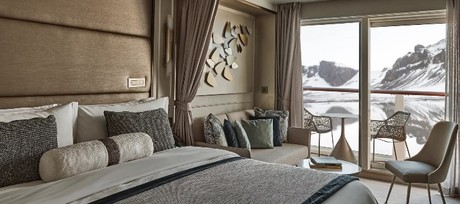
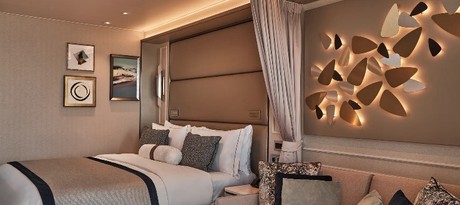
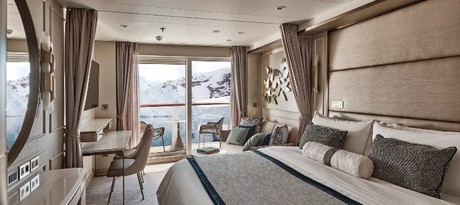
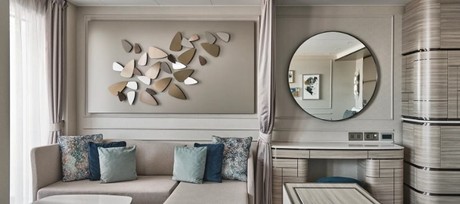
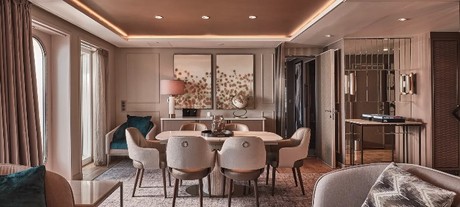
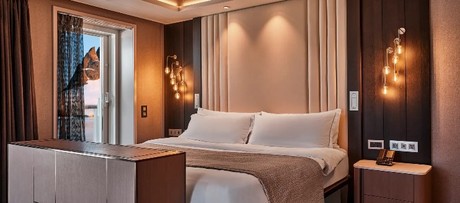
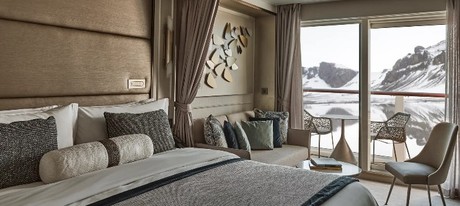
Spread over eight public decks, not only does she feature ample onboard space, multiple restaurants, plus a huge choice of bars and lounges, but her large and luxurious suites are some of the best in expedition cruising. Superbly designed, all her suites feature a balcony and our highest standards of service thanks to an impressive crew-to-guest ratio of 1:1.
Mud Room
Silver Endeavour’s Mud Room is the perfect place to prepare for all your expedition activities. Spaciously designed, the two mud rooms are superbly modern, and equipped with state-of-the-art equipment.
Explorer Lounge
Strategically located mid-ship on deck 4, the Explorer Lounge is the operational heart of shore excursions while onboard. This is where you’ll attend your daily recap and briefing sessions or attend lectures.
Connoisseur’s Corner
The Connoisseur’s Corner is an indulgent and sophisticated cigar lounge, where you can enjoy an after dinner drink in a cosy private club atmosphere.
Otium Spa
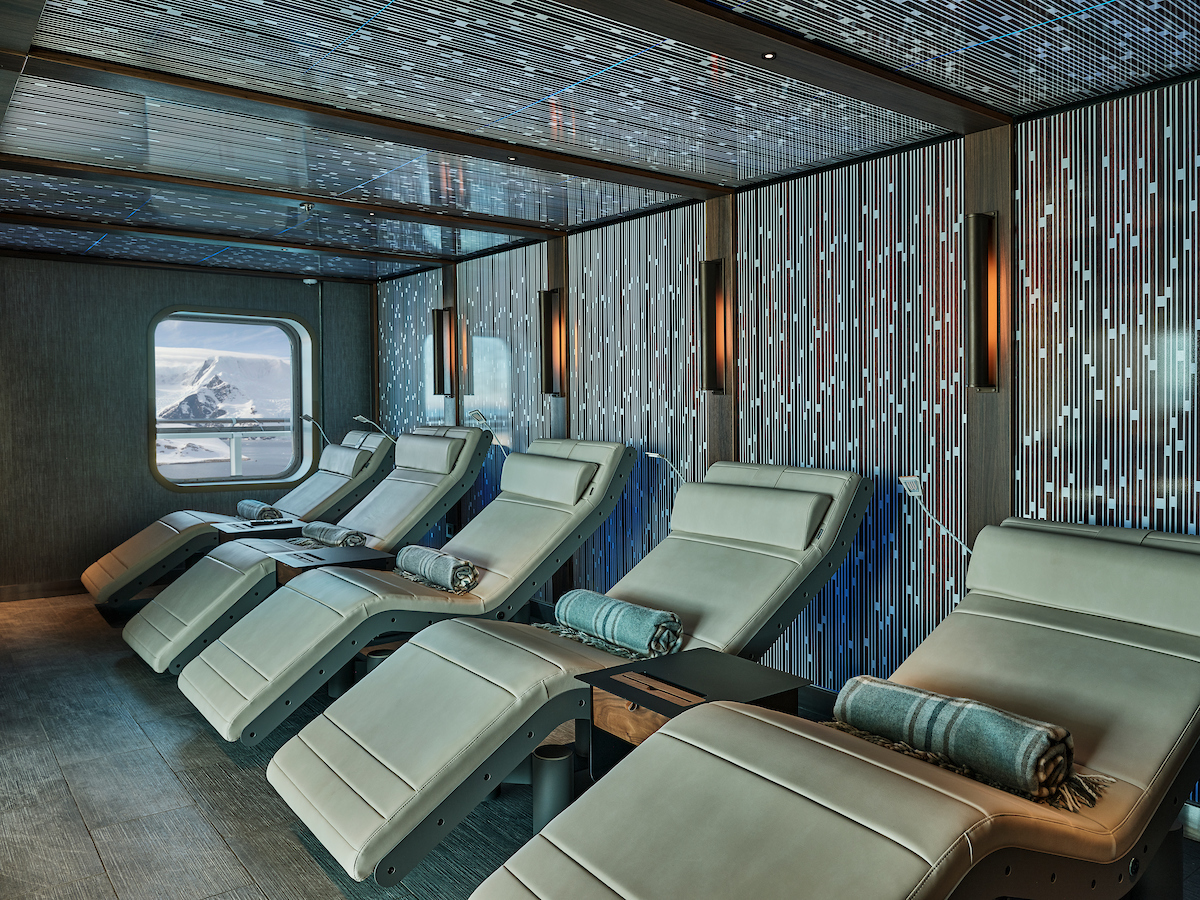
Otium is where you can relax and unwind, but also where you can enjoy world class treatments that make sure you look as good as you feel and that even Venus herself would envy.
Observation Lounge
The Observation Lounge offers one of our favourite vantage points of Silver Endeavour. Plus 270-degree surrounding glass windows make this immersive venue ideal whatever time of the day.
Beauty Salon
Our committed and competent team of beauty therapists is here to help keep your hair, nails, skin, and body healthy and happy.
Fitness Centre
Whether you are a serious keep fit fanatic or casual athlete, you’ll find what you’re looking for in Silver Endeavour’s Fitness Centre. Expertly designed classes and personal training sessions make sure that you keep in shape.
Boutique
Located mid-ship on Deck 5, the Boutique aboard Silver Endeavour means luxury shopping experiences do not end just because you’re at sea! Carefully selected partners offer a wide selection of the latest fashions.
Pool Deck
Surrounded by glazing extended all the way to the top of the venue, the Pool Deck gives you the feeling of always being connected to the sea. The glass-enclosed pool deck is the ideal place to enjoy breathtaking views.
Library
Whether you’re an avid bibliophile or simply prefer a quiet place while at sea, it’s hard not to fall in love with Silver Endeavour’s onboard library, with its beautiful reference books, comfortable chairs and stunning scenery.
Deck plans are for illustrative purposes only – The actual ship and cabin layout may differ.