The Ultimate South Georgia, Falklands & Antarctic Peninsula Cruise

date_range
21 days from

£11489 GBP pp

* Current p/p indicative rate.

Overview
Highlights
Dates & Prices
Itinerary
Map
Ships
What's Included
Promotions

Highlights

  • Explore the wildlife-rich Falkland Islands, South Georgia and Antarctica on an epic 21-day expedition.
  • Encounter iconic penguins, whales, seals and seabirds across some of the world’s most remote landscapes.
  • Travel aboard Heritage Discoverer with expert guides, daily excursions and optional sea kayaking adventures.

Highlights

  • Explore the wildlife-rich Falkland Islands, South Georgia and Antarctica on an epic 21-day expedition.
  • Encounter iconic penguins, whales, seals and seabirds across some of the world’s most remote landscapes.
  • Travel aboard Heritage Discoverer with expert guides, daily excursions and optional sea kayaking adventures.
Capacity: 130
Feture image for The Ultimate South Georgia, Falklands & Antarctic Peninsula Cruise

Join expedition cruise pioneers Heritage Expeditions as we return to the Antarctic Peninsula on the ultimate Antarctic Peninsula Cruise. Explore the iconic wildlife havens of the Falkland Islands and South Georgia Island before discovering the wild, pristine beauty of Antarctica.

Across 21 days, you will be transported to a world like no other, exploring some of the most isolated and breathtaking landscapes on Earth, where wildlife thrives and history abounds.

Travelling with Heritage Expeditions you will benefit from our more than 35 years of experience exploring Antarctica and the world’s most experienced Southern Ocean operators. Travel is aboard the ice-strengthened Heritage Discoverer, crewed by some of the world’s most experienced officers and sailors, and supported by an industry-leading, passionate and knowledgeable expedition team.

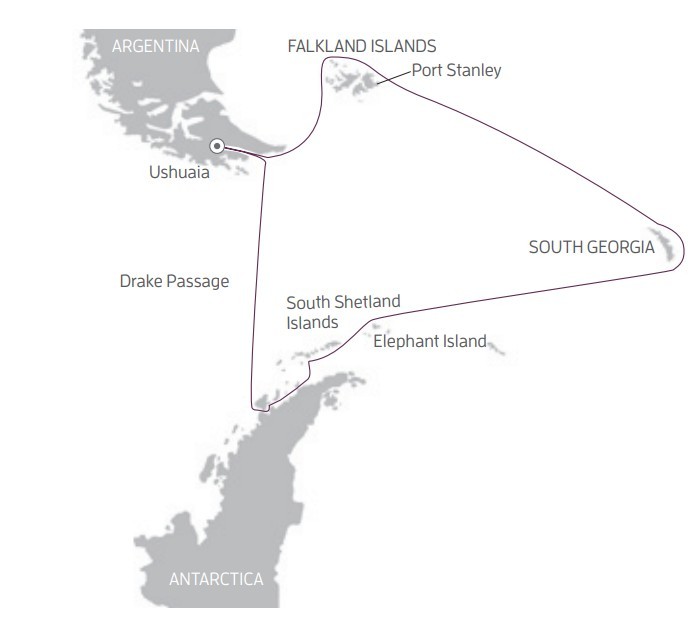
Your adventure begins in the world’s southernmost city, Ushuaia, known as the ‘end of the world’. Wave goodbye to the rugged beauty of Patagonia as we head to the Falkland Islands, a region rich in both wildlife and history. Home to five penguin species — Gentoo, Southern Rockhopper, Magellanic, King and Macaroni — and the world’s largest Black-browed Albatross colony, the Falkland Islands also witnessed a conflict of sovereignty between Argentina and the United Kingdom. During our time here, we will immerse ourselves in both the abundant biodiversity and colourful history.

Next, we have four days to explore the Subantarctic oasis of South Georgia Island, location of one of the greatest wildlife spectacles on the planet. Among the rugged, snow-capped mountains, wildlife numbers are unparalleled, with over one million King Penguins, millions of South American Fur Seals, Southern Elephant Seals, and tens of millions of seabirds calling this small island home. We also plan to pay our respects at the grave of legendary Antarctic explorer Sir Ernest Shackleton at Grytviken and discover the century-old ruins of a once-thriving whaling industry.

As we cross the Antarctic Convergence, expect to see an increase in whale activity along with a wealth of birdlife feeding in these nutrient-rich waters. Arriving in the frozen continent, we will have five days, each with more than 20 hours of daylight, to maximise our time here as we explore the surreal, unrestrained beauty of Antarctica. With so much to see and do, our voyage is timed to coincide with the arrival of the breeding season when wildlife is at its most active. Our adventure includes iconic highlights, penguin rookeries, towering glaciers and secluded beaches, all while being dwarfed by nature, surrounded by diverse wildlife and following in the footsteps of heroic explorers.

There are many ways to explore this otherworldly paradise, and we will make full use of our time here, with daily landings, hikes, Zodiac excursions and ship cruises all possible. Gaze in awe at glaciers, icebergs and towering peaks in constantly changing light, ideal for photographers wanting to capture the beauty of this expansive region, or for those wishing to soak it all in from the deck, observation lounge, and your stateroom or suite during the long hours of daylight.

Crossing the legendary Drake Passage on your journey home cements your place among the mariners who have navigated these famous waters. Join Heritage Expeditions on The Ultimate Antarctic Peninsula Cruise and experience the raw beauty, remarkable wildlife and timeless history exploring the wild and remote reaches of the South Atlantic and Southern Oceans.

This voyage includes the option to join sea kayaking excursions with an expert guide. Kayaking around the Falklands, South Georgia and Peninsula Antarctica offers a once-in-a-lifetime opportunity to explore a wide array of habitats beyond the reach of our Zodiacs.

  • Explore the wildlife-rich Falkland Islands, South Georgia and Antarctica on an epic 21-day expedition.
  • Encounter iconic penguins, whales, seals and seabirds across some of the world’s most remote landscapes.
  • Travel aboard Heritage Discoverer with expert guides, daily excursions and optional sea kayaking adventures.

Availability is always subject to confirmation. Please check with us before booking flights

19 November, 2026 to 09 December, 2026 on Heritage Discoverer
Prices
SALE

Prices quoted here are often dependent on currency fluctuations. Please check with (01432 507450 or info@small-cruise-ships.com) for the very latest price, which may well be cheaper than the one advertised here.
Deck 3 Superior Stateroom
£11489 GBP pp (£ 17675 GBP pp)
save £ 6186 GBP
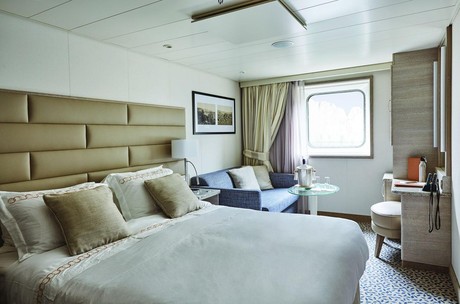
Deck 3 Superior Staterooms are 18m2 and feature a picture window, queen-size bed with twin option, and marble bathroom with shower.
Deck 4 Superior Stateroom
£11944 GBP pp (£ 18375 GBP pp)
save £ 6431 GBP
Deck 4 Superior Staterooms are 18m2 and feature a large picture window, queen-size bed with twin option, and marble bathroom with shower.
Deck 3 Single Stateroom
£13361 GBP pp (£ 20555 GBP pp)
save £ 7194 GBP
Deck 3 Single Staterooms are 14m2 -15m2 and feature two porthole windows, queen-size bed with twin option, and marble bathroom with shower.
Deck 4 Superior Single Stateroom
£14284 GBP pp (£ 21975 GBP pp)
save £ 7691 GBP
Deck 4 Superior Single Staterooms are 16m2 -18m2 and feature a large picture window, queen-size bed with twin option, and marble bathroom with shower.
Superior Balcony Stateroom
£14284 GBP pp (£ 21975 GBP pp)
save £ 7691 GBP
Deck 5 Superior Balcony Staterooms are 19m2 -20m2 including a 1.5m2 French balcony, queen-size bed with twin option, and marble bathroom with shower.
Navigator Suite
£16624 GBP pp (£ 25575 GBP pp)
save £ 8951 GBP
Located on Deck 7, Navigator Suites are 37m2 including an 8m2 furnished balcony, queen-size bed with twin option, and marble bathroom with separate shower and bathtub.
Discovery Suite
£17098 GBP pp (£ 26305 GBP pp)
save £ 9207 GBP
Located on Deck 5, Discovery Suites are 39m2 including a 1.5m2 French balcony, living room with desk and sofa (converts to single bed), vanity table, walk-in closet and marble bathroom with separate shower and bathtub.
Worsley Suite
£21304 GBP pp (£ 32775 GBP pp)
save £ 11471 GBP
Located on Deck 7, Worsley Suites are 57m2 including a 8m2 furnished private balcony, living room with desk and sofa (converts to single bed), espresso machine, vanity table, walk-in closet and marble bathroom with separate shower and bathtub.
Heritage Suite
£21778 GBP pp (£ 33505 GBP pp)
save £ 11727 GBP
Located on Deck 7, Heritage Suites are 67m2 including a 15m2 furnished private balcony, living room with desk and sofa (converts to single bed), espresso machine, vanity table, walk-in closet and marble bathroom with separate shower and bathtub.
show reverse itinerary
Day 1: Ushuaia, Argentina

Arrive at Ushuaia, the world’s southernmost city surrounded by the wilds of southern Patagonia and framed by the jagged peaks of the Martial Mountains, this end-of-the-world outdoor playground is also the gateway to Heritage Expeditions Ultimate South Georgia, Falklands & Antarctic Peninsula Cruise. Make your way to your hotel where you will spend the first night of the expedition. This evening meet your fellow voyagers and some of our expedition guides over dinner at the hotel.

Day 2: Ushuaia

Enjoy breakfast in the hotel restaurant and have the morning free to explore Ushuaia before returning to the hotel and departing for the Ushuaia Cruise Port to embark Heritage Discoverer. The captain and expedition team will welcome you on board and you will have time to settle into your accommodations and familiarise yourself with the ship. You are invited to join the expedition team in the Observation Lounge as we set our course for the Falkland Islands and our adventure begins.

Day 3: At Sea

Learn more about the biology and history of the Falkland Islands through a series of lectures and presentations and ease into ship life as we cross the South Atlantic Ocean. Scan the sky for Black-browed Albatross, countless Prions and Shearwaters, and look for Orca and Sei Whales during our day at sea.

Days 4 & 5: Falkland Islands

We have two days to explore the pristine wilderness of the Falkland Islands as we navigate East and West Falkland Islands and their remote satellite islands. This stunning landscape spanning more than 700 islands, quiet villages, white sandy beaches, spectacular towering cliffs and grassy fields of wildflowers is a birder’s paradise and home to five species of penguin - Gentoo, Southern Rockhopper, Magellanic, King and Macaroni – and the world’s largest Black-browed Albatross colony. We will also look be looking for the endemic flightless Falkland Steamer Duck and, if lucky, the elusive Cobb’s Wren among Black-Crowned Night Herons, Long-Tailed Meadowlarks, Two-Banded Plovers, and Upland and Kelp Geese.

Our adventures may see us stretching our legs on Carcass Island where Southern Sea Lions, South American Fur Seals and Southern Elephant Seals can be found lazing on the beaches and among the tussac grass. If weather conditions are favourable, we hope to explore Steeple Jason where some 200,000-plus breeding pairs of Black-browed Albatross, 70% of the world’s population, are joined by Rockhopper and Gentoo Penguins, and attract the largest numbers of predatory Striated Caracara and Falkland Skua in the region.

The flora also punches above its weight here with some 417 different plant species found across the Falkland Islands including the Dog Orchid and Vanilla Daisy.

History buffs will look forward to exploring colourful British outpost and Falklands capital the ‘city’ of Stanley where nature preserves meet maritime exploration, hilltop memorials to the 1982 Falklands War, the Jubilee Villas and the opportunity to enjoy a pint with the friendly locals.

Days 6 & 7: At Sea

At sea en route to South Georgia, there’s time to unwind after the adventures of the Falkland Islands. Look for cetaceans, Wandering and Southern Royal Albatross, Sooty Shearwater, Antarctic Prion and Soft Plumaged Petrel, join a lecture or catch up on your photos and journaling.

On the afternoon of Day 7 we plan to ship cruise the 150-million-year-old Shag Rocks. Despite their inhospitable appearance, this collection of six, wind and wave carved jagged islets rising up to 75 metres (246ft) out of the Southern Ocean, are an important seabird breeding site, in particular the South Georgia Shag after which the rocks are named. These nutrient rich waters filled with krill, fish and squid, located near the Antarctic Convergence where the cold Antarctic waters meet warmer Subantarctic currents, also makes Shag Rocks perfect for cetacean spotting.

Days 8 – 11: South Georgia

We have 4 days and a flexible itinerary to explore the astounding wildlife sanctuary that is South Georgia, also known as the ‘Serengeti of the Southern Ocean’ – for reasons which will quickly become apparent. Here, among the rugged, unrestrained beauty of towering, ice-capped mountains, glaciers, endless beaches, grasses and the clear emerald water of this British Overseas Territory resides one of the world’s wildlife hot spots.

Our voyage is timed to coincide with the start of breeding season, when it is believed South Georgia has more wildlife per square metre than anywhere else on Earth.

The sheer spectacle and numbers are mind-boggling: more than 60 million seabirds (including White-chinned Petrel, Diving Petrel and 50 million Antarctic Prion), 1 million King Penguins (the world’s largest population), 3.5 million Antarctic Fur Seals (more than 95% of the world’s population) and 400,00-plus Southern Elephant Seals (half the worlds’ population). Other wildlife to look out for with our guides include Macaroni, and Gentoo Penguins; Wandering, Black-browed, Grey-headed and Light-mantled Sooty Albatross; South Georgia Shag, South Georgia Pipit, Pintail Duck, Weddell Seals and, occasionally, Leopard Seals. While Humpback, Blue and Southern Right Whales are also known to visit these waters. High on our agenda are visits to Salisbury Plain, St Andrews Bay and Gold Harbour, where the chaos of thousands of King Penguins blanketing these shores offers some of the world’s best birding. Despite the abundance of wildlife, Antarctic Fur Seals were once hunted to almost extinction for their fur in the early 19th Century, and the settlement of Grytviken was once a productive whaling centre. Although the historic whaling station is still a feature, Grytviken’s legacy is now the final resting place of heroic explorer Sir Ernest Shackleton, where we plan to pay our respects. Like the Subantarctic Islands below New Zealand and Australia, South Georgia was also an important stopover during heroic-era Antarctic expeditions, and we look forward to sharing this history with you.

Days 12 & 13: At Sea

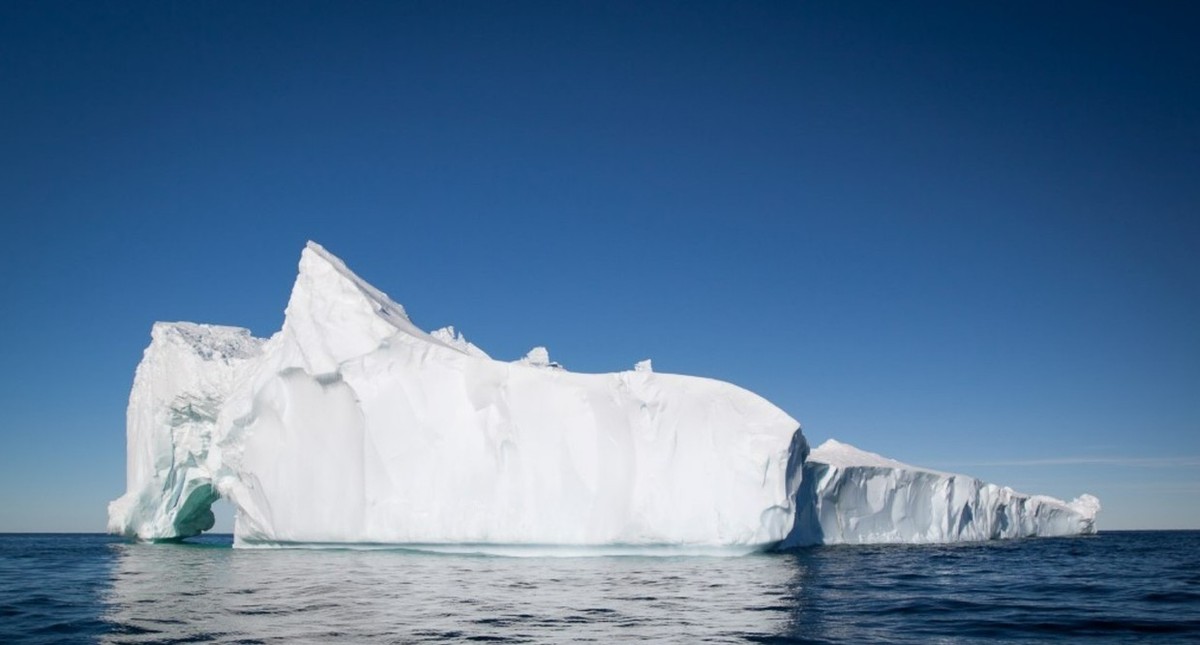
Soaring albatross and petrels circle the vessel as we steam southward through the cetacean-filled Scotia Sea. Our lectures will now concentrate on Antarctica and there is some good whale watching to be enjoyed. Look out for our first iceberg, these otherworldly frozen cathedrals will become part of our daily adventures, each one a unique natural sculpture as we enter the realm of more than 20-hours daylight. Relax in the ship’s bar, catch up with some reading in the library or download and edit photos to free up space on your memory card.

Days 14 – 18: Antarctica

Early season Antarctica is an especially magical time pairing long clear days with an abundance of wildlife and spectacular lighting. Even the most novice photographer can’t help but take exceptional photos with the low hanging sun creating epic sunrises and sunsets, washing icebergs, ice, sea and sky in vivid colours.

Our voyage is timed to coincide with the arrival of the breeding season, when Antarctica’s wildlife converges in full force and mating behaviours at chaotic penguin cities can be observed. Icebergs, frequently clad with Chinstrap and Adélie Penguins, are also at their most captivating. Landings here are frequent, maximising the long daylight hours and the opportunities they present, eventful, occasionally unexpected and always exciting.

We have 5 days, each with more than 20-hours of daylight, to explore multiple historic and wildlife rich landing sites, hidden bays, quiet coves and walk on the ice and snow of the Seventh Continent. Prepare to be dwarfed by nature as we discover alien landscapes and elaborate icescapes of unimaginable beauty carved by wind and waves. Look for, and walk among Gentoo, Chinstrap and Adélie Penguins; Weddell, Leopard and Crabeater Seals; in the water Humpback and Minke Whales fill these important feeding grounds along with Orca. Birders can gaze skywards for Cape, Storm and Snow Petrels, our constant companions while in Antarctica, along with predatory Antarctic Skua and the curious, ground-dwelling Snowy Sheathbill – the only bird in Antarctica without webbed feet.

While specific landings cannot be guaranteed, they could include the following, and many other exciting opportunities:

Elephant Island

It’s hard to believe this hostile environment of mostly vertical rock and ice cliffs sustained 22 crew from Shackleton’s Imperial Trans-Antarctic Expedition/Endurance Expedition for four-and-a-half months after their ship Endurance sank in the Weddell Sea. Elephant Island, part of the South Shetland archipelago, is also the starting point of Shackleton’s legendary rescue mission which would see him, and five of his crew, sailing the small lifeboat James Caird to South Georgia followed by a 36-hour hike to Stromness.

Brown Bluff

This scenic setting in the Antarctic Sound marries sheer stone walls, fallen boulders and ice-capped peaks is the location of a large, bustling Adélie Penguin rookery, where Gentoo Penguins and Snow Petrels can also be observed. Brown Bluff also offers exceptional views of the pink-tinged Madder Cliffs in Kinnes Cove.

Whalers Bay, Deception Island

Taking its name from a prolific whaling history and the island’s ‘hidden’ entrance, Whalers Bay is a designated Historic Site tucked away in a small natural harbour used by sealers and then whalers from the 1820s. The buildings, structures and artefacts linked to these activities represent the most significant whaling remains in the Antarctic. It’s also the location of a ‘heated lagoon’ and fascinating microclimate courtesy of volcanic activity with Antarctic Tern, Cape Petrel, Kelp Gull, Skua and Wilson’s Storm Petrel all breeding here.

Cierva Cove

A visit to Cierva Cove is sure to be a highlight as you weave through this magnificent body of water navigating astounding calved icebergs and ice sculptures set to the soundtrack of pops and crackles as air bubbles trapped for millennia escape the brash ice surrounding your Zodiac. Cutting deep into the spine of the Antarctic Peninsula, if we are lucky, we may see huge slabs of ice sliding down the 1,300-metre mountain chain. Ten species of bird breed here including a Chinstrap Penguin colony, Humpback Whales are regular visitors and the plant life includes mosses (Drepanocladus uncinatus), turf (Polytrichum alpestre) and Antarctic hair grass (Deschampsia Antarctica). Argentine research station Base Primavera is also located here.

Petermann Island

Petermann Island might be small, at just 1-kilometre long, but this volcanic outpost boasts some incredible features. More than half the island is covered by a permanent icecap and the island is both Antarctica’s northernmost Adélie Penguin colony, and southernmost Gentoo colony. It’s also the wintering site of renowned French Explorer Captain Jean-Baptiste Charcot’s second French Antarctic Expedition (1908–1910) aboard his aptly named ship Pourquoi-Pas? (Why Not?). Anchoring in a cove he named Port Circumcision, Charcot carried out extensive scientific, cartographic, and biological research and left behind a number of artifacts still visible today including the letters ‘PP’ engraved in stone. An Argentine refuge hut and commemorative cross signifying the deaths of three members of the British Antarctic Survey in 1982 can also be found on the island.

Port Lockroy, Goudier Island

Location of the famed Penguin Post Office, the world’s southernmost post office, Port Lockroy’s safe harbour in the Palmer Archipelago has attracted explorers, whalers, scientists, and sailors for more than a century. Featuring a young-ish (mid-80s established) Gentoo Colony, and historic sites and museum including Britain’s Base A, part of a wartime mission code-named Operation Tabarin, all set among a backdrop of snowy mountain ranges and ice caps, a visit to the time capsule that is Port Lockroy never disappoints.

Paradise Bay

Once the anchorage site for whalers’ floating factory ships, Paradise Bay is now considered one of Antarctic Peninsula’s most stunning locations delivering the ultimate, unrestrained, iconic and pristine Antarctic wilderness experiences just north of the legendary Lemaire Channel. Going beyond otherworldly to other planetary, expect towering mountain peaks, ancient glaciers jutting out of steely blue water and shimmering icebergs the size of buildings floating on water so millpond calm (weather permitting) it perfectly mirrors this incredible scene. Whales, Gentoo Penguins and Crabeater Seals are all known to frequent these waters and both Argentina’s Almirante Brown and Chile’s González Videla research stations are located here.

Cuverville Island

Cuverville Island combines a stunning, ice-capped landscape where steep cliffs and a boulder-strewn beach meet Antarctic Peninsula’s largest Gentoo Penguin population (home to some 14,000 birds), while its shallow bay features astounding monolithic grounded icebergs perfect for Zodiac exploration. With two-thirds of the island covered by a huge, pointed dome icecap and mostly steep surrounds, there is just one landing site where whaling artefacts, including whale bones and a whalers’ dam, can still be found. There is also the opportunity to stretch your legs where a moderately challenging uphill hike rewards with a new perspective and jaw-slackening panoramic views over the Errera Channel and the surrounding glaciers.

Days 19 – 20: At Sea

En route to Ushuaia we cross the legendary Drake Passage and experience one of the world’s great ocean crossings. Take time to rest after the adventures of Antarctica, look for whales and enjoy shipboard life.

Day 21: Ushuaia

Early this morning we will arrive in the Ushuaia Cruise Port. After a final breakfast, we bid farewell to our fellow voyagers and take a complimentary coach transfer to Ushuaia International Airport. In case of unexpected delays due to weather and/or port operations we ask you not to book any onward travel until after 12 noon.

Please note:

During our voyage, circumstances may make it necessary or desirable to deviate from the proposed itinerary. This can include poor weather and opportunities for making unplanned excursions. Your Expedition Leader will keep you fully informed. This tour offers a variety of activities and excursions. Your personal interests will determine which of these you wish to join. Please note that some activities and excursions will run at similar times, and it will not be possible to participate in both. Accordingly, refunds for excursions and missed landings are not available. Voyages are planned and scheduled pending final regulatory approval.

Day 1: Ushuaia, Argentina

Arrive at Ushuaia, the world’s southernmost city surrounded by the wilds of southern Patagonia and framed by the jagged peaks of the Martial Mountains, this end-of-the-world outdoor playground is also the gateway to Heritage Expeditions Ultimate South Georgia, Falklands & Antarctic Peninsula Cruise. Make your way to your hotel where you will spend the first night of the expedition. This evening meet your fellow voyagers and some of our expedition guides over dinner at the hotel.

Day 2: Ushuaia

Enjoy breakfast in the hotel restaurant and have the morning free to explore Ushuaia before returning to the hotel and departing for the Ushuaia Cruise Port to embark Heritage Discoverer. The captain and expedition team will welcome you on board and you will have time to settle into your accommodations and familiarise yourself with the ship. You are invited to join the expedition team in the Observation Lounge as we set our course for the Falkland Islands and our adventure begins.

Day 3: At Sea

Learn more about the biology and history of the Falkland Islands through a series of lectures and presentations and ease into ship life as we cross the South Atlantic Ocean. Scan the sky for Black-browed Albatross, countless Prions and Shearwaters, and look for Orca and Sei Whales during our day at sea.

Days 4 & 5: Falkland Islands

We have two days to explore the pristine wilderness of the Falkland Islands as we navigate East and West Falkland Islands and their remote satellite islands. This stunning landscape spanning more than 700 islands, quiet villages, white sandy beaches, spectacular towering cliffs and grassy fields of wildflowers is a birder’s paradise and home to five species of penguin - Gentoo, Southern Rockhopper, Magellanic, King and Macaroni – and the world’s largest Black-browed Albatross colony. We will also look be looking for the endemic flightless Falkland Steamer Duck and, if lucky, the elusive Cobb’s Wren among Black-Crowned Night Herons, Long-Tailed Meadowlarks, Two-Banded Plovers, and Upland and Kelp Geese.

Our adventures may see us stretching our legs on Carcass Island where Southern Sea Lions, South American Fur Seals and Southern Elephant Seals can be found lazing on the beaches and among the tussac grass. If weather conditions are favourable, we hope to explore Steeple Jason where some 200,000-plus breeding pairs of Black-browed Albatross, 70% of the world’s population, are joined by Rockhopper and Gentoo Penguins, and attract the largest numbers of predatory Striated Caracara and Falkland Skua in the region.

The flora also punches above its weight here with some 417 different plant species found across the Falkland Islands including the Dog Orchid and Vanilla Daisy.

History buffs will look forward to exploring colourful British outpost and Falklands capital the ‘city’ of Stanley where nature preserves meet maritime exploration, hilltop memorials to the 1982 Falklands War, the Jubilee Villas and the opportunity to enjoy a pint with the friendly locals.

Days 6 & 7: At Sea

At sea en route to South Georgia, there’s time to unwind after the adventures of the Falkland Islands. Look for cetaceans, Wandering and Southern Royal Albatross, Sooty Shearwater, Antarctic Prion and Soft Plumaged Petrel, join a lecture or catch up on your photos and journaling.

On the afternoon of Day 7 we plan to ship cruise the 150-million-year-old Shag Rocks. Despite their inhospitable appearance, this collection of six, wind and wave carved jagged islets rising up to 75 metres (246ft) out of the Southern Ocean, are an important seabird breeding site, in particular the South Georgia Shag after which the rocks are named. These nutrient rich waters filled with krill, fish and squid, located near the Antarctic Convergence where the cold Antarctic waters meet warmer Subantarctic currents, also makes Shag Rocks perfect for cetacean spotting.

Days 8 – 11: South Georgia

We have 4 days and a flexible itinerary to explore the astounding wildlife sanctuary that is South Georgia, also known as the ‘Serengeti of the Southern Ocean’ – for reasons which will quickly become apparent. Here, among the rugged, unrestrained beauty of towering, ice-capped mountains, glaciers, endless beaches, grasses and the clear emerald water of this British Overseas Territory resides one of the world’s wildlife hot spots.

Our voyage is timed to coincide with the start of breeding season, when it is believed South Georgia has more wildlife per square metre than anywhere else on Earth.

The sheer spectacle and numbers are mind-boggling: more than 60 million seabirds (including White-chinned Petrel, Diving Petrel and 50 million Antarctic Prion), 1 million King Penguins (the world’s largest population), 3.5 million Antarctic Fur Seals (more than 95% of the world’s population) and 400,00-plus Southern Elephant Seals (half the worlds’ population). Other wildlife to look out for with our guides include Macaroni, and Gentoo Penguins; Wandering, Black-browed, Grey-headed and Light-mantled Sooty Albatross; South Georgia Shag, South Georgia Pipit, Pintail Duck, Weddell Seals and, occasionally, Leopard Seals. While Humpback, Blue and Southern Right Whales are also known to visit these waters. High on our agenda are visits to Salisbury Plain, St Andrews Bay and Gold Harbour, where the chaos of thousands of King Penguins blanketing these shores offers some of the world’s best birding. Despite the abundance of wildlife, Antarctic Fur Seals were once hunted to almost extinction for their fur in the early 19th Century, and the settlement of Grytviken was once a productive whaling centre. Although the historic whaling station is still a feature, Grytviken’s legacy is now the final resting place of heroic explorer Sir Ernest Shackleton, where we plan to pay our respects. Like the Subantarctic Islands below New Zealand and Australia, South Georgia was also an important stopover during heroic-era Antarctic expeditions, and we look forward to sharing this history with you.

Days 12 & 13: At Sea

Soaring albatross and petrels circle the vessel as we steam southward through the cetacean-filled Scotia Sea. Our lectures will now concentrate on Antarctica and there is some good whale watching to be enjoyed. Look out for our first iceberg, these otherworldly frozen cathedrals will become part of our daily adventures, each one a unique natural sculpture as we enter the realm of more than 20-hours daylight. Relax in the ship’s bar, catch up with some reading in the library or download and edit photos to free up space on your memory card.

Days 14 – 18: Antarctica

Early season Antarctica is an especially magical time pairing long clear days with an abundance of wildlife and spectacular lighting. Even the most novice photographer can’t help but take exceptional photos with the low hanging sun creating epic sunrises and sunsets, washing icebergs, ice, sea and sky in vivid colours.

Our voyage is timed to coincide with the arrival of the breeding season, when Antarctica’s wildlife converges in full force and mating behaviours at chaotic penguin cities can be observed. Icebergs, frequently clad with Chinstrap and Adélie Penguins, are also at their most captivating. Landings here are frequent, maximising the long daylight hours and the opportunities they present, eventful, occasionally unexpected and always exciting.

We have 5 days, each with more than 20-hours of daylight, to explore multiple historic and wildlife rich landing sites, hidden bays, quiet coves and walk on the ice and snow of the Seventh Continent. Prepare to be dwarfed by nature as we discover alien landscapes and elaborate icescapes of unimaginable beauty carved by wind and waves. Look for, and walk among Gentoo, Chinstrap and Adélie Penguins; Weddell, Leopard and Crabeater Seals; in the water Humpback and Minke Whales fill these important feeding grounds along with Orca. Birders can gaze skywards for Cape, Storm and Snow Petrels, our constant companions while in Antarctica, along with predatory Antarctic Skua and the curious, ground-dwelling Snowy Sheathbill – the only bird in Antarctica without webbed feet.

While specific landings cannot be guaranteed, they could include the following, and many other exciting opportunities:

Elephant Island

It’s hard to believe this hostile environment of mostly vertical rock and ice cliffs sustained 22 crew from Shackleton’s Imperial Trans-Antarctic Expedition/Endurance Expedition for four-and-a-half months after their ship Endurance sank in the Weddell Sea. Elephant Island, part of the South Shetland archipelago, is also the starting point of Shackleton’s legendary rescue mission which would see him, and five of his crew, sailing the small lifeboat James Caird to South Georgia followed by a 36-hour hike to Stromness.

Brown Bluff

This scenic setting in the Antarctic Sound marries sheer stone walls, fallen boulders and ice-capped peaks is the location of a large, bustling Adélie Penguin rookery, where Gentoo Penguins and Snow Petrels can also be observed. Brown Bluff also offers exceptional views of the pink-tinged Madder Cliffs in Kinnes Cove.

Whalers Bay, Deception Island

Taking its name from a prolific whaling history and the island’s ‘hidden’ entrance, Whalers Bay is a designated Historic Site tucked away in a small natural harbour used by sealers and then whalers from the 1820s. The buildings, structures and artefacts linked to these activities represent the most significant whaling remains in the Antarctic. It’s also the location of a ‘heated lagoon’ and fascinating microclimate courtesy of volcanic activity with Antarctic Tern, Cape Petrel, Kelp Gull, Skua and Wilson’s Storm Petrel all breeding here.

Cierva Cove

A visit to Cierva Cove is sure to be a highlight as you weave through this magnificent body of water navigating astounding calved icebergs and ice sculptures set to the soundtrack of pops and crackles as air bubbles trapped for millennia escape the brash ice surrounding your Zodiac. Cutting deep into the spine of the Antarctic Peninsula, if we are lucky, we may see huge slabs of ice sliding down the 1,300-metre mountain chain. Ten species of bird breed here including a Chinstrap Penguin colony, Humpback Whales are regular visitors and the plant life includes mosses (Drepanocladus uncinatus), turf (Polytrichum alpestre) and Antarctic hair grass (Deschampsia Antarctica). Argentine research station Base Primavera is also located here.

Petermann Island

Petermann Island might be small, at just 1-kilometre long, but this volcanic outpost boasts some incredible features. More than half the island is covered by a permanent icecap and the island is both Antarctica’s northernmost Adélie Penguin colony, and southernmost Gentoo colony. It’s also the wintering site of renowned French Explorer Captain Jean-Baptiste Charcot’s second French Antarctic Expedition (1908–1910) aboard his aptly named ship Pourquoi-Pas? (Why Not?). Anchoring in a cove he named Port Circumcision, Charcot carried out extensive scientific, cartographic, and biological research and left behind a number of artifacts still visible today including the letters ‘PP’ engraved in stone. An Argentine refuge hut and commemorative cross signifying the deaths of three members of the British Antarctic Survey in 1982 can also be found on the island.

Port Lockroy, Goudier Island

Location of the famed Penguin Post Office, the world’s southernmost post office, Port Lockroy’s safe harbour in the Palmer Archipelago has attracted explorers, whalers, scientists, and sailors for more than a century. Featuring a young-ish (mid-80s established) Gentoo Colony, and historic sites and museum including Britain’s Base A, part of a wartime mission code-named Operation Tabarin, all set among a backdrop of snowy mountain ranges and ice caps, a visit to the time capsule that is Port Lockroy never disappoints.

Paradise Bay

Once the anchorage site for whalers’ floating factory ships, Paradise Bay is now considered one of Antarctic Peninsula’s most stunning locations delivering the ultimate, unrestrained, iconic and pristine Antarctic wilderness experiences just north of the legendary Lemaire Channel. Going beyond otherworldly to other planetary, expect towering mountain peaks, ancient glaciers jutting out of steely blue water and shimmering icebergs the size of buildings floating on water so millpond calm (weather permitting) it perfectly mirrors this incredible scene. Whales, Gentoo Penguins and Crabeater Seals are all known to frequent these waters and both Argentina’s Almirante Brown and Chile’s González Videla research stations are located here.

Cuverville Island

Cuverville Island combines a stunning, ice-capped landscape where steep cliffs and a boulder-strewn beach meet Antarctic Peninsula’s largest Gentoo Penguin population (home to some 14,000 birds), while its shallow bay features astounding monolithic grounded icebergs perfect for Zodiac exploration. With two-thirds of the island covered by a huge, pointed dome icecap and mostly steep surrounds, there is just one landing site where whaling artefacts, including whale bones and a whalers’ dam, can still be found. There is also the opportunity to stretch your legs where a moderately challenging uphill hike rewards with a new perspective and jaw-slackening panoramic views over the Errera Channel and the surrounding glaciers.

Days 19 – 20: At Sea

En route to Ushuaia we cross the legendary Drake Passage and experience one of the world’s great ocean crossings. Take time to rest after the adventures of Antarctica, look for whales and enjoy shipboard life.

Day 21: Ushuaia

Early this morning we will arrive in the Ushuaia Cruise Port. After a final breakfast, we bid farewell to our fellow voyagers and take a complimentary coach transfer to Ushuaia International Airport. In case of unexpected delays due to weather and/or port operations we ask you not to book any onward travel until after 12 noon.

Please note:

During our voyage, circumstances may make it necessary or desirable to deviate from the proposed itinerary. This can include poor weather and opportunities for making unplanned excursions. Your Expedition Leader will keep you fully informed. This tour offers a variety of activities and excursions. Your personal interests will determine which of these you wish to join. Please note that some activities and excursions will run at similar times, and it will not be possible to participate in both. Accordingly, refunds for excursions and missed landings are not available. Voyages are planned and scheduled pending final regulatory approval.

Itinerary also available in reverse
Heritage Discoverer
Vessel Type: Expedition Ship Length: 108 metres Passenger Capacity: 130 Built / Refurbished: 1989 / 2023 / 2026 Heritage Discoverer is a purpose-built expedition ship designed to navigate some of…

Heritage Discoverer

Vessel Type: Expedition Ship

Length: 108 metres

Passenger Capacity: 130

Built / Refurbished: 1989 / 2023 / 2026

Heritage Discoverer is a purpose-built expedition ship designed to navigate some of the world’s most remote and challenging regions, from Antarctica and the Northwest Passage to tropical islands and remote atolls. With a 1A ice-class rating and a history of exploration, she combines serious expedition capability with refined comfort. Following extensive renovations in 2018 and 2023, the ship offers a fresh and contemporary onboard experience while retaining the strength and functionality required for polar and remote cruising.

Accommodating up to 130 guests, Heritage Discoverer features 70 ocean-view accommodations, including spacious suites with private balconies, as well as a range of inviting public spaces designed for relaxation, learning, and scenic viewing. Guests can enjoy gourmet dining across two restaurants, unwind in the Observation Lounge, Bar and Lounge, or Wellness Centre, and take advantage of amenities including a gym, sauna, massage room, and outdoor Jacuzzis. Supported by a 15-member Expedition Team and 14 Zodiacs, the ship delivers an immersive and comfortable expedition experience with personalised service throughout.

Includes

Landing fees, pre/post cruise transfers, one night hotel accommodation in a twin share room (incl. dinner/breakfast), all on board ship accommodation with meals, house beer, wine and soft drinks with lunch and dinner and all shore excursions and activities. Programme of lectures by noted naturalists.

Book before 02 November, 2026 and save 35%

35% off special offer for new South Georgia Cruise

Next departure on 19 November, 2026.

Overview
Highlights
Dates & Prices
Itinerary
Map
Ship
What's Included
Promotions

21 days from £11489 GBP pp

Trip Tags
Wildlife Cruises
Find your favorite region