Northeast Greenland Extreme - Remote Greenland Off the Beaten Path

date_range
14 days from

£6430 GBP pp

* Current p/p indicative rate.

Overview
Highlights
Dates & Prices
Itinerary
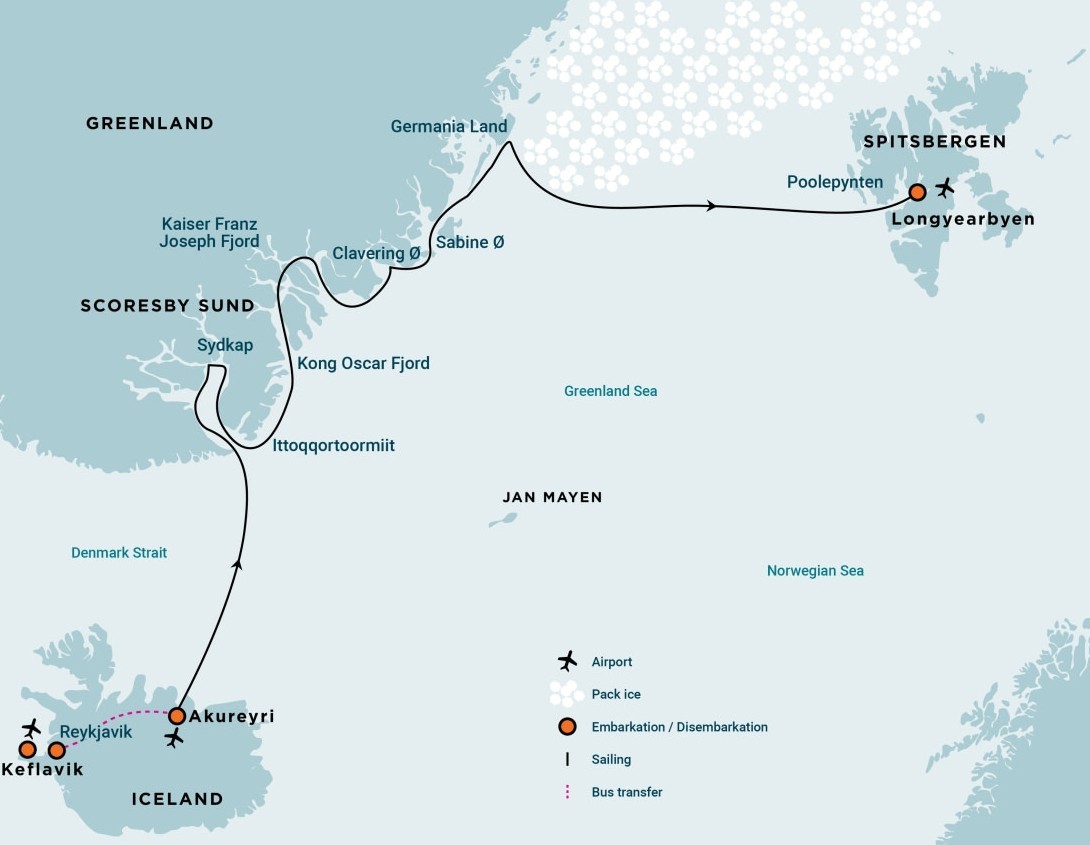
Map
Ships
What's Included

Highlights

  • Icebergs - Slabs of frozen fresh water, icebergs are the free-floating offspring of glaciers and ice shelves
  • Ittoqqortoormiit - A small settlement on Greenland’s rugged eastern coast, Ittoqqortoormiit is one of the most remote towns on the island and in the world
  • Kaiser Franz Joseph Fjord - This large East Greenland fjord system lies between Cape Mackenzie and Cape Franklin

Highlights

  • Icebergs - Slabs of frozen fresh water, icebergs are the free-floating offspring of glaciers and ice shelves
  • Ittoqqortoormiit - A small settlement on Greenland’s rugged eastern coast, Ittoqqortoormiit is one of the most remote towns on the island and in the world
  • Kaiser Franz Joseph Fjord - This large East Greenland fjord system lies between Cape Mackenzie and Cape Franklin
Capacity: 114, Type: Expedition
Feture image for Northeast Greenland Extreme - Remote Greenland Off the Beaten Path

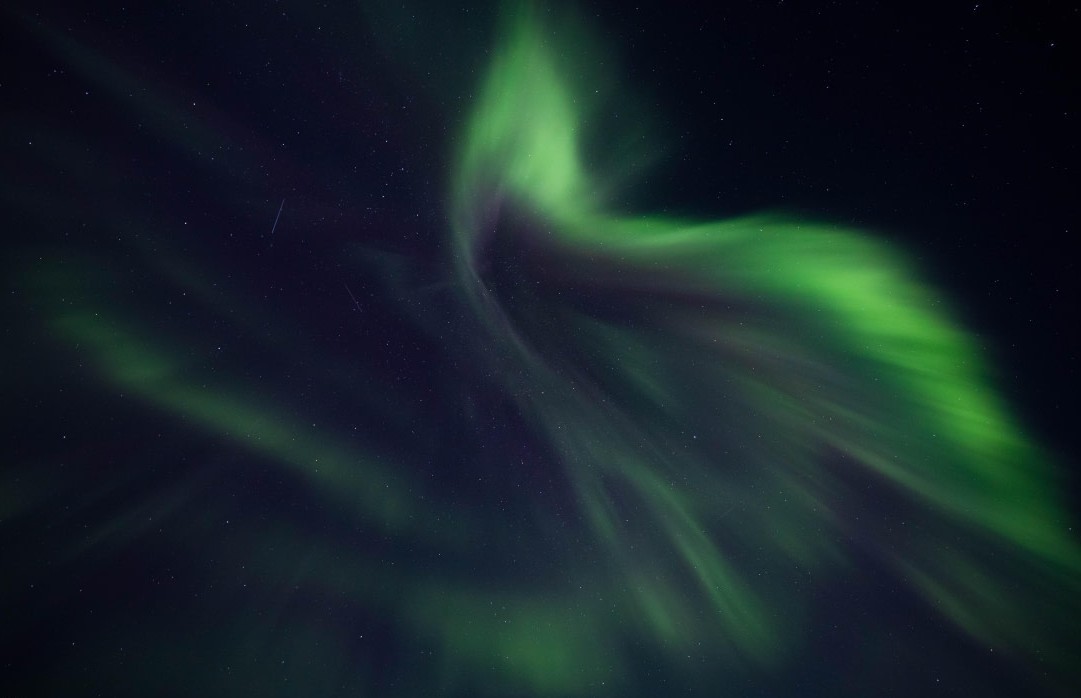
Venturing to the dramatic, rugged coastline of Northeast Greenland, you'll enter the world's largest fjord, Scoresby Sund, encountering whales, seabirds, and musk oxen before voyaging north through the most beautiful straits and fjords. Along the way, sea ice, polar bears, and landing opportunities will guide your Arctic adventure through historical, natural, and scientific wonder.

  • Icebergs - Slabs of frozen fresh water, icebergs are the free-floating offspring of glaciers and ice shelves
  • Ittoqqortoormiit - A small settlement on Greenland’s rugged eastern coast, Ittoqqortoormiit is one of the most remote towns on the island and in the world
  • Kaiser Franz Joseph Fjord - This large East Greenland fjord system lies between Cape Mackenzie and Cape Franklin

Availability is always subject to confirmation. Please check with us before booking flights

25 August, 2026 to 08 September, 2026 on Plancius
Prices

Prices quoted here are often dependent on currency fluctuations. Please check with (01432 507450 or info@small-cruise-ships.com) for the very latest price, which may well be cheaper than the one advertised here.
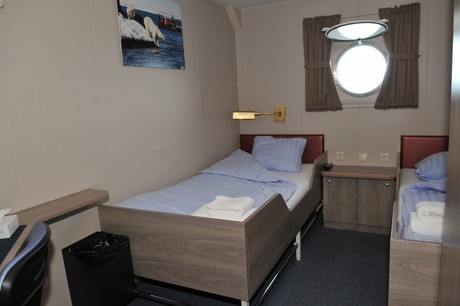
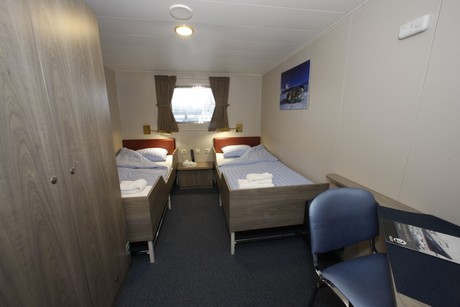
Quadruple Porthole
£6430 GBP pp
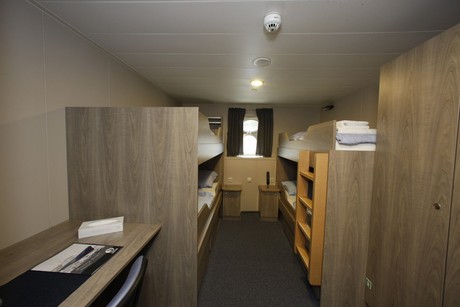
Quadruple Porthole
1 porthole 2 upper & lower berths Private shower & toilet Desk & chair Flatscreen TV Telephone & WiFi (supplemented) Hair dryer Ample storage space This cabin is suitable for families traveling with children, or passengers who do not require a twin or more luxurious cabin
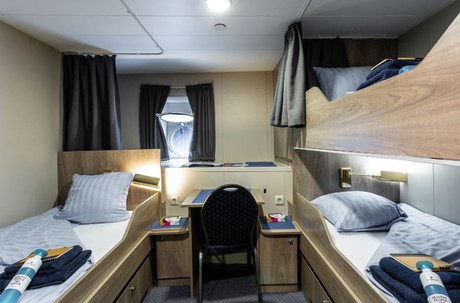
Triple Porthole
£7777 GBP pp
Triple Porthole
1 porthole 1 upper berth & 2 lower berths Private shower & toilet Desk & chair Flatscreen TV Telephone & WiFi (supplemented) Hair dryer Ample storage space This cabin is suitable for families traveling with children, or passengers who do not require a twin or more luxurious cabin
Twin Porthole
£8970 GBP pp
Twin Porthole
1 porthole 2 lower berths Private shower & toilet Desk & chair Flatscreen TV Telephone & WiFi (supplemented) Hair dryer Ample storage space
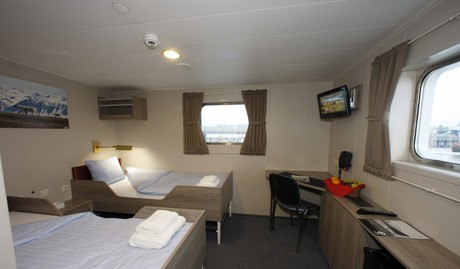
Twin Window
£9894 GBP pp
Twin Window
1 window 2 lower berths Private shower & toilet Desk & chair Flatscreen TV Telephone & WiFi (supplemented) Hair dryer Ample storage space
Twin Deluxe
£10510 GBP pp
Twin Deluxe
2 windows 2 lower berths Private shower & toilet Desk & chair Flatscreen TV Telephone & WiFi (supplemented) Hair dryer Ample storage space These cabins are corner cabins and are slightly more spacious than the normal twin porthole/window cabins
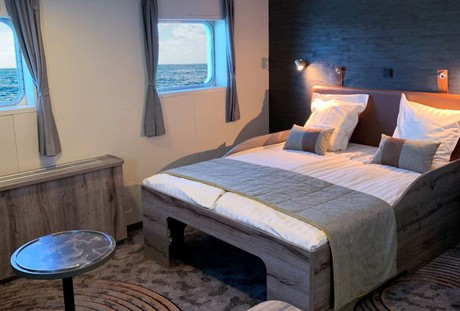
Superior
£11666 GBP pp
Superior
2 windows 1 double bed 1 sofa bed Private shower & toilet Desk & chair Flatscreen TV Telephone & WiFi (supplemented) Refrigerator Coffee & tea maker Hair dryer Ample storage space
show reverse itinerary
Day 1: On the Iceland road
Itinerary image for Day 1: On the Iceland road

Your journey begins in the morning. By request, you can transfer via chartered bus (T) from bus stop Harpa Concert Hall and Conference Centre at Austurbakki, Reykjavik (the meeting point) to the ship in Akureyri (the embarkation point). You arrive in the afternoon after a six-hour drive through northern Iceland.

PLEASE NOTE: This transfer (T) must be booked and paid for in advance.

In the early evening, the ship departs from the port of Akureyri, where, we often see whales at the mouth of the fjord. At night, we cross the Arctic Circle.

Day 2: Sailing to East Greenland
Itinerary image for Day 2: Sailing to East Greenland

While sailing north, you’re likely to see fulmars, kittiwakes, gannets, common guillemots, and possibly whales. By evening, the first icebergs flash into sight as you approach the east Greenland coast near Kap Brewster. The scent of adventure is in the air.

Day 3: Arriving at Earth’s largest fjord
Itinerary image for Day 3: Arriving at Earth’s largest fjord

Today, you reach Scoresby Sund, sailing along the glaciated Volquart Boons Kyst. You may also enjoy a Zodiac cruise past one of the glacier fronts, along with a visit to the basalt columns and ice formations of Vikingebugt.

In the afternoon, we plan to sail by the east coast of Milne Land among a multitude of giant icebergs. If we can also land at Charcot Havn, we may walk to the Charcot Glacier. We will then continue by Bjørneøer, a small group of islands – Bear Islands in English.

Day 4: Enormous icebergs & Arctic hares
Itinerary image for Day 4: Enormous icebergs & Arctic hares

In the morning, you will likely encounter colossal icebergs, some over 100 meters (328 feet) high and more than a kilometer (.62 mile) long. Most are grounded, as the fjord is only about 400 meters deep (1,312 feet). You then land near Sydkap, with fine views of Hall Bredning and a good shot of seeing Arctic hares.

Today’s long walk goes from Sydkap to Nordøstbugt (12 km, 7.5 miles to the northeast), where the river coming from Holger Danskes Briller flows into the sea. We plan to walk south along the shore to Satakajik, seeing whale vertebrae and the remains of Thule summer houses. Passengers who opt out of the long walking group will join us at this location for their second excursion of the day.

Day 5: Landfall at Ittoqqortoormiit

The morning stop is at Ittoqqortoormiit, the only settlement in Scoresby Sund with about four hundred inhabitants. At the post office, you can buy stamps for your postcards or just stroll around to see the sled dogs and drying skins of seals, polar bears, and musk oxen. In the afternoon, you sail north, passing the picturesque landscapes of Liverpool Land. In the night, we sail into Kong Oscar Fjord.

Day 6: Alpefjord’s lofty peaks

Today, you will enter Segelsällskapets Fjord, with the striped slopes of the Berzelius Mountains bordering the north side. You will land on the south shore, where ancient sedimentary formations lie at your feet. A hike takes you near a small lake with good chances to see musk oxen, Arctic hares, and ptarmigans.

Alternatively, the ship ventures into Alpefjord, which is aptly named for the spire-like peaks that thrust up around it. You may then embark on a Zodiac cruise around Gully Glacier, which once blocked access to the interior of these waters. Continuing deep into the fjord, you experience a definitive Greenland adventure.

Day 7: The islands of Antarctic Sound

In the early morning, you pass by the islands of Ruth, Maria, and Ella. Then you arrive at Teufelschloss (Devil’s Castle), a mountain with impressive layered geology. Blomsterbugt and the intended landing site are on the other side of the fjord. In the afternoon, you sail, among icebergs, through the majestic Kaiser Franz Joseph Fjord and Mackenzie Bugt.

Day 8: Remains of Thule Culture at Eskimonaes

We hope to land at Eskimonaes on the southern shore of Clavering Ø, where Douglas Clavering met a small group of Thule culture people in 1823. This group represents the only living Thule people ever seen in Northeast Greenland. The remains of their existence can be found across Greenland.

Day 9: Islands with polar history

From early in the morning until late in the day, we sail by a choice of islands, where more than a century ago, the first polar expeditions set feet on land: Sabine Ø and Bass Rock (Pendulum Islands), where Edward Sabine did his Pendulum experiments in 1823, and cabins built by the Baldwin-Ziegler Polar Expedition were constructed. In the night, we will pass Shannon Ø.

Day 10: Store Koldewey

This long island was named by the second German Polar Expedition of Koldewey 1869 –’70. We will try to land on historical Kap Alf Trolle or Kap Ahrend. We are now well into the High Arctic climate regime. The landscape is getting lower and rounded, being much less alpine than more to the south. We may encounter heavier sea ice streaming south. Proposed landing sites may be given up due to sea ice, and others may be reachable.

Day 11: Germania Land

Today, we could land at Thoms Thomsen Naes, Fyrretyvekilometersnaesset, or another site in Germania Land, an area with musk oxen and sometimes a lonely wolf. The landing sites depend on ice and weather conditions and wildlife opportunities.

Day 12: Through or around the sea ice

When sailing eastward through and along the jagged edge of the Northeast Greenland sea ice, we keep watch for whales, seals, polar bears, and migrating seabirds. This is a landscape of constant change, and a real frontier for many species found in the Arctic.

Day 13: Approaching Spitsbergen

At open sea now, we sail eastward in the northernmost branch of the warm Gulf Stream toward Spitsbergen. If time allows, we may land late in the day at the walrus haul-out at Poolepynten.

Day 14: Longyearbyen

In Longyearbyen, the administrative center of Spitsbergen, you may enjoy strolling around this former mining town, whose parish church and Svalbard Museum are fascinating attractions. Alternatively, you can board the first plane to Oslo for your onward journey.

Please Note:

Itineraries are subject to change. 

Day 1: On the Iceland road
Itinerary image for Day 1: On the Iceland road

Your journey begins in the morning. By request, you can transfer via chartered bus (T) from bus stop Harpa Concert Hall and Conference Centre at Austurbakki, Reykjavik (the meeting point) to the ship in Akureyri (the embarkation point). You arrive in the afternoon after a six-hour drive through northern Iceland.

PLEASE NOTE: This transfer (T) must be booked and paid for in advance.

In the early evening, the ship departs from the port of Akureyri, where, we often see whales at the mouth of the fjord. At night, we cross the Arctic Circle.

Day 2: Sailing to East Greenland
Itinerary image for Day 2: Sailing to East Greenland

While sailing north, you’re likely to see fulmars, kittiwakes, gannets, common guillemots, and possibly whales. By evening, the first icebergs flash into sight as you approach the east Greenland coast near Kap Brewster. The scent of adventure is in the air.

Day 3: Arriving at Earth’s largest fjord
Itinerary image for Day 3: Arriving at Earth’s largest fjord

Today, you reach Scoresby Sund, sailing along the glaciated Volquart Boons Kyst. You may also enjoy a Zodiac cruise past one of the glacier fronts, along with a visit to the basalt columns and ice formations of Vikingebugt.

In the afternoon, we plan to sail by the east coast of Milne Land among a multitude of giant icebergs. If we can also land at Charcot Havn, we may walk to the Charcot Glacier. We will then continue by Bjørneøer, a small group of islands – Bear Islands in English.

Day 4: Enormous icebergs & Arctic hares
Itinerary image for Day 4: Enormous icebergs & Arctic hares

In the morning, you will likely encounter colossal icebergs, some over 100 meters (328 feet) high and more than a kilometer (.62 mile) long. Most are grounded, as the fjord is only about 400 meters deep (1,312 feet). You then land near Sydkap, with fine views of Hall Bredning and a good shot of seeing Arctic hares.

Today’s long walk goes from Sydkap to Nordøstbugt (12 km, 7.5 miles to the northeast), where the river coming from Holger Danskes Briller flows into the sea. We plan to walk south along the shore to Satakajik, seeing whale vertebrae and the remains of Thule summer houses. Passengers who opt out of the long walking group will join us at this location for their second excursion of the day.

Day 5: Landfall at Ittoqqortoormiit

The morning stop is at Ittoqqortoormiit, the only settlement in Scoresby Sund with about four hundred inhabitants. At the post office, you can buy stamps for your postcards or just stroll around to see the sled dogs and drying skins of seals, polar bears, and musk oxen. In the afternoon, you sail north, passing the picturesque landscapes of Liverpool Land. In the night, we sail into Kong Oscar Fjord.

Day 6: Alpefjord’s lofty peaks

Today, you will enter Segelsällskapets Fjord, with the striped slopes of the Berzelius Mountains bordering the north side. You will land on the south shore, where ancient sedimentary formations lie at your feet. A hike takes you near a small lake with good chances to see musk oxen, Arctic hares, and ptarmigans.

Alternatively, the ship ventures into Alpefjord, which is aptly named for the spire-like peaks that thrust up around it. You may then embark on a Zodiac cruise around Gully Glacier, which once blocked access to the interior of these waters. Continuing deep into the fjord, you experience a definitive Greenland adventure.

Day 7: The islands of Antarctic Sound

In the early morning, you pass by the islands of Ruth, Maria, and Ella. Then you arrive at Teufelschloss (Devil’s Castle), a mountain with impressive layered geology. Blomsterbugt and the intended landing site are on the other side of the fjord. In the afternoon, you sail, among icebergs, through the majestic Kaiser Franz Joseph Fjord and Mackenzie Bugt.

Day 8: Remains of Thule Culture at Eskimonaes

We hope to land at Eskimonaes on the southern shore of Clavering Ø, where Douglas Clavering met a small group of Thule culture people in 1823. This group represents the only living Thule people ever seen in Northeast Greenland. The remains of their existence can be found across Greenland.

Day 9: Islands with polar history

From early in the morning until late in the day, we sail by a choice of islands, where more than a century ago, the first polar expeditions set feet on land: Sabine Ø and Bass Rock (Pendulum Islands), where Edward Sabine did his Pendulum experiments in 1823, and cabins built by the Baldwin-Ziegler Polar Expedition were constructed. In the night, we will pass Shannon Ø.

Day 10: Store Koldewey

This long island was named by the second German Polar Expedition of Koldewey 1869 –’70. We will try to land on historical Kap Alf Trolle or Kap Ahrend. We are now well into the High Arctic climate regime. The landscape is getting lower and rounded, being much less alpine than more to the south. We may encounter heavier sea ice streaming south. Proposed landing sites may be given up due to sea ice, and others may be reachable.

Day 11: Germania Land

Today, we could land at Thoms Thomsen Naes, Fyrretyvekilometersnaesset, or another site in Germania Land, an area with musk oxen and sometimes a lonely wolf. The landing sites depend on ice and weather conditions and wildlife opportunities.

Day 12: Through or around the sea ice

When sailing eastward through and along the jagged edge of the Northeast Greenland sea ice, we keep watch for whales, seals, polar bears, and migrating seabirds. This is a landscape of constant change, and a real frontier for many species found in the Arctic.

Day 13: Approaching Spitsbergen

At open sea now, we sail eastward in the northernmost branch of the warm Gulf Stream toward Spitsbergen. If time allows, we may land late in the day at the walrus haul-out at Poolepynten.

Day 14: Longyearbyen

In Longyearbyen, the administrative center of Spitsbergen, you may enjoy strolling around this former mining town, whose parish church and Svalbard Museum are fascinating attractions. Alternatively, you can board the first plane to Oslo for your onward journey.

Please Note:

Itineraries are subject to change. 

Itinerary also available in reverse
Plancius
M/V "Plancius" was built in 1976 as an oceanographic research vessel for the Royal Dutch Navy and was named "Hr. Ms. Tydeman". The ship sailed for the Dutch Navy until June 2004 when she was converte…

Plancius

Length 89 metres
Speed 10-12 knots
Crew 37
Expedition staff 8
Doctor 1 on board

M/V "Plancius" was built in 1976 as an oceanographic research vessel for the Royal Dutch Navy and was named "Hr. Ms. Tydeman". The ship sailed for the Dutch Navy until June 2004 when she was converted into an expedition cruise ship..The vessel was completely rebuilt as a 114-passenger vessel in 2009 and complies with the latest SOLAS-regulations (Safety Of Life At Sea). M/v "Plancius" is classed by Lloyd's Register in London and flies the Dutch flag.

"Plancius" accommodates 114 passengers in 53 passenger cabins with private toilet and shower in 4 quadruple private cabins, 39 twin private cabins (ca. 15 square meters) and 10 twin superior cabins (ca. 21 square meters).All cabins offer lower berths (either two single beds or one queen-size bed), except for the 4 quadruple cabins (for 4 persons in 2x upper and lower beds).The vessel offers a restaurant/lecture room on deck 3 and a spacious observation lounge (with bar) on deck 5 with large windows, offering full panorama view.

Plancius has large open deck spaces (with full walk-around possibilities on deck 3), giving excellent opportunities to enjoy the scenery and wildlife. She is furthermore equipped with 10 Mark V zodiacs, including 40 HP 4-stroke outboard engines and 2 gangways on the starboard side, guaranteeing a swift zodiac operation.M/v "Plancius" is comfortable and nicely decorated, but is not a luxury vessel. Our voyages in the Arctic and Antarctic regions are and will still be primarily defined by an exploratory educational travel programme, spending as much time ashore as possible. 

The vessel is equipped with a diesel-electric propulsion system which reduces the noise and vibration of the engines considerably. The 3 diesel engines generate 1.230 horse-power each, giving the vessel a speed of 10 - 12 knots. The vessel is ice-strengthened and was specially built for oceanographic voyages.M/v "Plancius" is manned by 17 nautical crew, 19 hotel staff (6 chefs, 1 hotel manager, 1 steward-barman and 11 stewards / cabin cleaners), 8 expedition staff (1 expedition leader and 7 guides-lecturers) and 1 doctor.

Ice class: Plancius was built for Ice conditions. To reach these ice-conditions she has a strengthened bow and stern. The hull is thicker and the whole construction on the waterline of the vessel is reinforced by using extra frames. Where the normal frame spacing is 65cm, we have on the bow-line and stern also frames in between so there the frame spacing is approx 30cm. Because Plancius was built to do surveys she has a special six blade bronze propeller, the shape of the propeller makes Plancius a very silent ship. Plancius has a Lloyds class notation 100A1 Passenger ship, Ice Class 1D at a draught of 5 meters (which is our waterline).Vessel Type:  Expedition


Deck plans are for illustrative purposes only – The actual ship and cabin layout may differ.

Cabin layout for Plancius

Includes

  • Voyage aboard the indicated vessel as indicated in the itinerary.
  • All meals throughout the voyage aboard the ship including snacks, coffee and tea.
  • All shore excursions and activities throughout the voyage by Zodiac.
  • Program of lectures by noted naturalists and leadership by experienced expedition staff.
  • Free use of rubber boots and snowshoes on Plancius, Ortelius, Hondius and Janssonius.
  • Free use snowshoes on Rembrandt van Rijn.
  • On Spitsbergen voyages: Transfers and baggage handling between the airport, hotels and ship only for those passengers on the group flights to and from Longyearbyen.
  • On Rembrandt voyages: Transfers and baggage handling between airport and ship at Constable Pynt on the chartered group flights.
  • Luggage transfer from pick-up point to the vessel on the day of embarkation, in Ushuaia.
  • Pre-scheduled group transfer from the vessel to the airport in Ushuaia (directly after disembarkation).
  • All miscellaneous service taxes and port charges throughout the program.
  • AECO fees and governmental taxes.
  • Comprehensive pre-departure material.
  • Voyage aboard the indicated vessel as indicated in the itinerary.
  • All meals throughout the voyage aboard the ship including snacks, coffee and tea.
  • All shore excursions and activities throughout the voyage by Zodiac.
  • Program of lectures by noted naturalists and leadership by experienced expedition staff.
  • Free use of rubber boots and snowshoes
  • Transfers and baggage handling between the airport, hotels and ship only for those passengers on the group flights to and from Longyearbyen.
  • All miscellaneous service taxes and port charges throughout the program.
  • AECO fees and governmental taxes.
  • Comprehensive pre-departure material.
Overview
Highlights
Dates & Prices
Itinerary
Map
Ship
What's Included

14 days from £6430 GBP pp

Find your favorite region