
Scoresby Sund - Aurora Borealis (Ortelius)

Find the perfect trip

8 days from

Contact us

* Current p/p indicative rate.

Overview
Highlights
Dates & Prices
Itinerary
Map
Ships
What's Included

Highlights

See several bird species
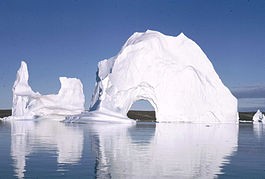
Encounter huge icebergs
Witness the Aurora borealis (Northern lights)

Highlights

See several bird species
Encounter huge icebergs
Witness the Aurora borealis (Northern lights)
Capacity: 106, Types: ExpeditionResearch
Feture image for Scoresby Sund - Aurora Borealis (Ortelius)

Cruise to Scoresby Sund - Aurora Borealis

Voyage to East Greenland, Scoresby Sund, where we may observe the Aurora Borealis. We cross the Arctic Circle and continue north, perhaps seeing whales. In the evening we will spot our first icebergs appear as we approach the east coast of Greenland near Kap Brewster. A group of pioneering trail runners have the opportunity to run at least one full day ashore at Cape Hofmann Halv. With Jacques Marais (one of South Africas most respected adventure photo-journalists) onboard.

Trail running
This is a new and very strenuous activity for pre-selected expert runners. Its a pilot project for 2016. Approved, well trained and skilled trail runners can participate in a remote Arctic trail running scout trip in East Greenland in September 2016. On this trip we offer expert pioneering trail runners the opportunity to run along the shores and inland of Cape Hofmann Halv which offers ground for an approx. 25+ km run. More (but shorter) warm up and test runs may be possible on other landings sites in the vicinity of the support ship. A lead navigator will be with this group of runners, an expert appointed for this task. The ship s expedition team will take care of the runners special needs onshore: transportation and landings with small inflatable zodiacs and check points with basic supplies, and the possibility to exit. Its a real Arctic challenge in open terrain (no tracks) when autumn colors are is fading and winter is kicking in with sub-zero temperatures at night and sometimes during the day as well. Harsh conditions with first snow fall must be expected and runners have to be prepared for this. The tundra can be slippery when wet and icy. Expert runners will have to submit a personal questionnaire which will highlight the running experience prior to signing on.

14 September, 2016 - Bilingual voyage: English German

See several bird species
Encounter huge icebergs
Witness the Aurora borealis (Northern lights)

Availability is always subject to confirmation. Please check with us before booking flights

There are no future departures for this trip at this stage.

show reverse itinerary
Day 1: Departure from Akureyri
Transfer by bus from Reykjavik hotels in the morning to the ship in Akureyri, where we arrive in the afternoon after six hours drive through North Iceland. In the early evening we leave Iceland and sail north towards the Denmark Strait.
Day 2: At sea
At sea, sailing north through the Denmark Strait. We are almost certain to see Fulmar, Kittiwake, Gannet and rafts of Common Guillemot. We cross the Arctic Circle and continue north, perhaps seeing whales. In the evening we will spot our first icebergs appear as we approach the east coast of Greenland near Kap Brewster.
Day 3: Volquart Boons Coast
In the morning we sail along the ragged and glaciated Volquart Boons Coast. Here we may organise a zodiac cruise along one of the glacier fronts of this coast, and have our first landing near a glacier, like Maanegletsjer or in Vikingebugt. Later we land on Danmarks where there are the remains of an Inuit settlement abandoned around 200 years ago. The circular tent rings of stones indicate the summer houses, while the winter houses can be seen closer to a small cape. The sites are well preserved, allowing entrances and even bear-proof meat caches to be identified. There are also grave sites. In the evening we continue our sailing through the beautiful fjords to the west, choked with icebergs.
Day 4: Cape Hofmann Halv
We go ashore at Cape Hofmann Halv, a reliable spot for viewing Musk Oxen. We may also spot Rock Ptarmigan and at sea Great Northern Diver. The landscape here is particularly beautiful, especially during autumn when the Dwarf Willow and Dwarf Birch change colour. Arctic Blueberry and Crowberry add their own colourful touch - the berries are tasty too! In the evening we sail through the fjord towards Scoresby Land enjoying the contrast between the warm autumnal colours of the vegetation on shore, backed by huge dark mountains, and the cold blue of the icebergs.
Day 5: Sydkap in Scoresby Land
On our way to Sydkap in Scoresby Land in the morning, we encounter huge icebergs, some over 100 m high and more than a kilometre in length. Most of the bergs are grounded as the fjord is only about 400 m deep here. We land near Sydkap to view the remains of the Thule culture winter houses. As many as 20 people lived in these tiny houses, hunting Greenland Whale and using their vertebrae to build the houses. The landscape here is gently undulating. Musk Oxen and Collared Lemming - survive on the meagre vegetation.
Day 6: Ittoqqortoormiit
In the morning we land at a lagoon at the south coast of Jameson Land, an area with waders and geese collecting for the autumn migration. The landscape here is gently undulating. Musk Oxen and Collared Lemming - survive on the meagre vegetation. In the afternoon we visit Ittoqqortoormiit, the biggest settlement near Scoresby Sund with about 400 inhabitants. At the post office you can buy stamps for your postcards, or just wander around to see the sledge dogs and the drying skins of seals, Musk Oxen and Polar Bear.
Day 7: At Sea
The whole day at sea offers excellent opportunities to see large whales and seabird migration and, at night the Aurora borealis (Northern Lights).
Day 8: Arrival in Akureyri
Arrive at Akureyri, and transfer by chartered bus to hotels in Reykjavik.
Day 1: Departure from Akureyri
Transfer by bus from Reykjavik hotels in the morning to the ship in Akureyri, where we arrive in the afternoon after six hours drive through North Iceland. In the early evening we leave Iceland and sail north towards the Denmark Strait.
Day 2: At sea
At sea, sailing north through the Denmark Strait. We are almost certain to see Fulmar, Kittiwake, Gannet and rafts of Common Guillemot. We cross the Arctic Circle and continue north, perhaps seeing whales. In the evening we will spot our first icebergs appear as we approach the east coast of Greenland near Kap Brewster.
Day 3: Volquart Boons Coast
In the morning we sail along the ragged and glaciated Volquart Boons Coast. Here we may organise a zodiac cruise along one of the glacier fronts of this coast, and have our first landing near a glacier, like Maanegletsjer or in Vikingebugt. Later we land on Danmarks where there are the remains of an Inuit settlement abandoned around 200 years ago. The circular tent rings of stones indicate the summer houses, while the winter houses can be seen closer to a small cape. The sites are well preserved, allowing entrances and even bear-proof meat caches to be identified. There are also grave sites. In the evening we continue our sailing through the beautiful fjords to the west, choked with icebergs.
Day 4: Cape Hofmann Halv
We go ashore at Cape Hofmann Halv, a reliable spot for viewing Musk Oxen. We may also spot Rock Ptarmigan and at sea Great Northern Diver. The landscape here is particularly beautiful, especially during autumn when the Dwarf Willow and Dwarf Birch change colour. Arctic Blueberry and Crowberry add their own colourful touch - the berries are tasty too! In the evening we sail through the fjord towards Scoresby Land enjoying the contrast between the warm autumnal colours of the vegetation on shore, backed by huge dark mountains, and the cold blue of the icebergs.
Day 5: Sydkap in Scoresby Land
On our way to Sydkap in Scoresby Land in the morning, we encounter huge icebergs, some over 100 m high and more than a kilometre in length. Most of the bergs are grounded as the fjord is only about 400 m deep here. We land near Sydkap to view the remains of the Thule culture winter houses. As many as 20 people lived in these tiny houses, hunting Greenland Whale and using their vertebrae to build the houses. The landscape here is gently undulating. Musk Oxen and Collared Lemming - survive on the meagre vegetation.
Day 6: Ittoqqortoormiit
In the morning we land at a lagoon at the south coast of Jameson Land, an area with waders and geese collecting for the autumn migration. The landscape here is gently undulating. Musk Oxen and Collared Lemming - survive on the meagre vegetation. In the afternoon we visit Ittoqqortoormiit, the biggest settlement near Scoresby Sund with about 400 inhabitants. At the post office you can buy stamps for your postcards, or just wander around to see the sledge dogs and the drying skins of seals, Musk Oxen and Polar Bear.
Day 7: At Sea
The whole day at sea offers excellent opportunities to see large whales and seabird migration and, at night the Aurora borealis (Northern Lights).
Day 8: Arrival in Akureyri
Arrive at Akureyri, and transfer by chartered bus to hotels in Reykjavik.
Itinerary also available in reverse
Ortelius
The ice-strengthened vessel “Ortelius” is an excellent vessel for Polar expedition cruises in the Arctic and Antarctica, providing possibilities to adventure remote locations such as the …

Ortelius

Length 91 metres

The ice-strengthened vessel “Ortelius” is an excellent vessel for Polar expedition cruises in the Arctic and Antarctica, providing possibilities to adventure remote locations such as the Ross Sea.

 The vessel has the highest ice-class notation (UL1 equivalent to 1A) and is therefore very suitable to navigate in solid one-year sea ice and loose multi-year pack ice. “Ortelius” is a great expedition vessel for 100 passengers with lots of open-deck spaces and a very large bridge which is accessible to the passengers. The vessel is manned by 34 highly experienced crew, 15 international catering staff, including stewardesses, 6 expedition staff (1 expedition leader and 5 guides/lecturers) and 1 doctor.

”Ortelius” offers a comfortable hotel standard, with two restaurants, a bar/lecture room and a sauna.   Ortelius' voyages are primarily developed to offer our passengers a quality exploratory wildlife program, trying to spend as much time ashore as possible. As the number of passengers is limited to approximately 100 on the “Ortelius”, flexibility assures maximum wildlife opportunities.

Passengers on a typical voyage range from in their 30s to their 80s, with the majority usually between 45 ― 65. Our expeditions attract independent travelers from around the globe who are characterized by a strong interest in exploring remote regions. The camaraderie that develops on board is an important part of the Oceanwide experience, and many passenger groups include several nationalities.

“Ortelius” was built in Gdynia, Poland in 1989, was named “Marina Svetaeva”, and served as a special purpose vessel for the Russian Academy of Science. The vessel is re-flagged and renamed “Ortelius”. Ortelius was a Dutch / Flemish cartographer. Abraham Ortelius (1527 – 1598) published the first modern world atlas, the Theatrum Orbis Terrarum or Theatre of the World in 1570. At that time, the atlas was the most expensive book ever printed. 

What to Wear
In keeping with the spirit of expedition, dress on board is informal. Bring casual and comfortable clothing for all activities, and keep in mind that much of the scenery can be appreciated from deck ― which can be slippery. Bring sturdy shoes with no-slip soles, and make sure your parka is never far away in case one of our crew shouts “Whales!” over the loudspeaker and you have to dash outside in a moment’s notice. Opt for layers, as it is comfortably warm aboard the ship though often cold on deck.

Electric Current
The electrical supply aboard ship is 220v, 60Hz. Electrical outlets are standard European with two thick round pins, so some passengers may need a 220v/110v converter.

Tipping
The customary gratuity to the ship’s service personnel is made as a blanket contribution at the end of the voyage and is divided among the crew. Tipping is a personal matter, and the amount you wish to give is at your sole discretion. As a generally accepted guideline, we suggest 8 ― 10 euros per passenger per day. It is better for the crew if you give cash.

Smoking Policy
Ortelius has a non-smoking policy inside, though you can smoke in certain designated areas. We ask that you please respect the wishes of non-smokers and please never throw your cigarette ends overboard or anywhere except the designated bin.

Deck plans are for illustrative purposes only – The actual ship and cabin layout may differ.

Cabin layout for Ortelius

Includes

  • Voyage aboard the indicated vessel as indicated in the itinerary.
  • All meals throughout the voyage aboard the ship including snacks, coffee and tea.
  • All shore excursions and activities throughout the voyage by Zodiac.
  • Program of lectures by noted naturalists and leadership by experienced expedition staff.
  • Free use of rubber boots and snowshoes on Plancius, Ortelius, Hondius and Janssonius.
  • Free use snowshoes on Rembrandt van Rijn.
  • On Spitsbergen voyages: Transfers and baggage handling between the airport, hotels and ship only for those passengers on the group flights to and from Longyearbyen.
  • On Rembrandt voyages: Transfers and baggage handling between airport and ship at Constable Pynt on the chartered group flights.
  • Luggage transfer from pick-up point to the vessel on the day of embarkation, in Ushuaia.
  • Pre-scheduled group transfer from the vessel to the airport in Ushuaia (directly after disembarkation).
  • All miscellaneous service taxes and port charges throughout the program.
  • AECO fees and governmental taxes.
  • Comprehensive pre-departure material.
Overview
Highlights
Dates & Prices
Itinerary
Map
Ship
What's Included

8 days from Contact us

Trip Tags
Northern Lights
Find your favorite region